Daily Catholic Lectio
Sun, 19 July 2026
XVI Week in Ordinary Time
Wis 12:13, 16-19. Rom 8:26-27. Mt 13:24-43
Two Seeds and Responses
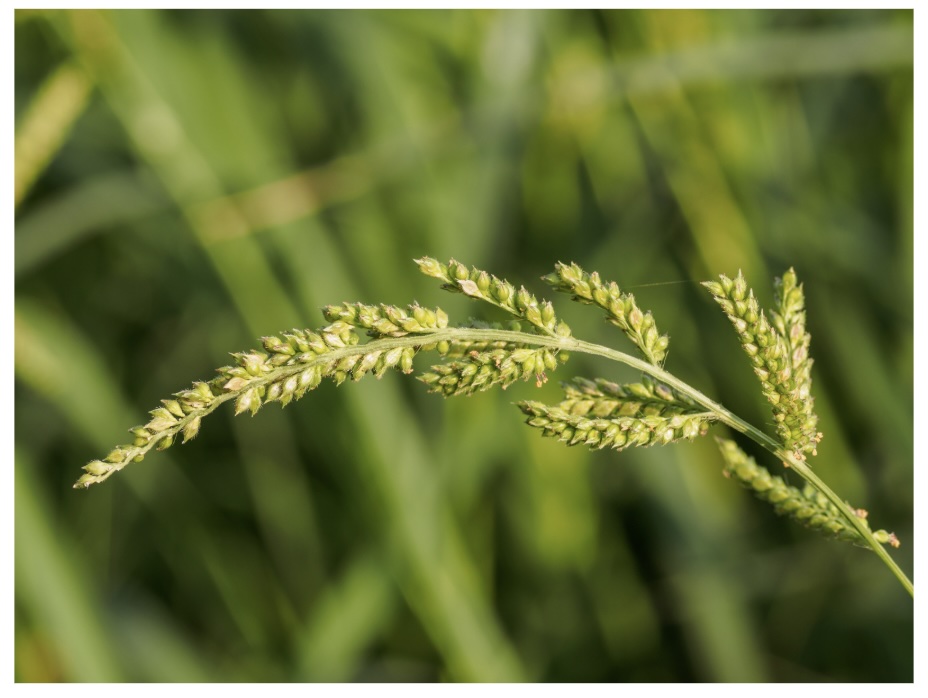
Today’s Gospel reading is the continuation of we heard last Sunday about the sower and the four types of soil. Today, three parables are given to us: the weeds in the field, the mustard seed, and the leaven. The first parable is found only in Matthew’s Gospel.
The background of this parable is the situation of Matthew’s community. There were two kinds of people in the community: the righteous and the wicked. Should the wicked be removed from the community? Or should they be allowed to remain? If they must be removed, when should it be done? If they must be allowed to remain, how long should they be allowed? What must be done with them? The first parable of today’s Gospel, the weeds in the field, answers these questions.
Usually, the parables in Matthew’s discourse speak about the Kingdom of heaven. But this parable has two purposes. First, it teaches what the Kingdom of heaven is like. Second, it speaks about the final day and the final judgement.
In today’s parable, everything appears in pairs. There are two kinds of seeds: wheat and weeds. There are two sowers: the landowner and the enemy. There are two responses: allowing everything to grow, and pulling out the weeds. There are two results: the wheat is gathered into the barn, and the weeds are burned in fire. There are two attitudes: the patience of the landowner and the haste of the servants. There are two kinds of people: the righteous and the evildoers. There are two ways of living: God’s patience and human haste.
Let us understand today’s readings through this final pair: God’s patience and human haste.
Patience can mean waiting. In ordinary life, when someone asks for something immediately, another may say, “Wait a little.” Here, patience means the ability to wait.
In psychology, patience can also mean the space between stimulus and response. For example, if a teacher is teaching and a student continues to disturb the class, that disturbance becomes a stimulus. The teacher’s immediate response may be to ask the student to leave the room. But if the teacher delays the response and waits, that space becomes patience. The longer one can create that space, the greater one’s emotional maturity becomes. In that space of patience, change can happen. The teacher may change within himself. The students too may change and begin to pay attention.
There is also a proverb: time heals all wounds. But time alone does not heal wounds. The wounded person faces the wound with patience. As days pass and experiences change, the wound slowly dissolves in time. Though the wounded person may appear to be still, healing is taking place within.
In the parable, when the servants see the weeds in the field, they become angry. They run to the master and ask: “Do you want us to go and pull them up?” The master understands their haste. He says, “No, because while you pull up the weeds, you may uproot the wheat along with them.”
The master is not only a farmer. He is also a good manager. If there are 50 wheat plants and 50 weeds in one part of the field, the wheat and the weeds may look similar when they are still growing. If the servants pull out 40 weeds but also destroy 10 wheat plants, the master loses 10 plants. For the servants, it may be only a mistake. For the master, it is his property. He is not ready to lose even one wheat plant.
Because the master remains patient, some problems continue. The weeds take the nourishment that belongs to the wheat. The weeds take the water given to the wheat. The weeds attract insects and worms that may harm the wheat. The weeds also spoil the beauty of the field. Still, the master remains calm. Why? Because he does not want even one wheat plant to be destroyed.
This is the patience of God. God waits.
In human patience, the nature of a person may change. But in the parable, the nature of the weed does not change. A weed remains a weed. After growing halfway as a weed, it cannot become wheat. Even though God knows that the nature of the weed will not change by waiting, He still waits.
The parables of the mustard seed and the leaven also show a similar truth. Small things can create great change. Though they are small, they contain great power. Their growth cannot be stopped or reversed. A grown mustard tree cannot be put back into the seed. Dough that has been leavened cannot be made unleavened again.
God’s patience finally destroys the work of the enemy. The presence of weeds may trouble the wheat. Yet the wheat must wait until the weeds are gathered and burned. The wheat must tolerate the presence of the weeds. It must also tolerate the unjust sharing of water, manure, and nourishment.
God’s patience often does not agree with human haste.
Abraham, called the father of faith, did not have patience to wait for the fulfilment of God’s promise. He tried to make Eliezer, the son of his servant, his heir.
Moses, called the hero of liberation, was told by God to speak to the rock. But in haste, he struck the rock twice. Because of that haste, he was not allowed to enter the promised land.
Saul, the first king of Israel, was in haste to offer sacrifice and gain God’s favour. He did not destroy the animals of the Amalekites, but kept them for sacrifice. As a result, he lost his kingship.
David, king of united Israel, knew that if he asked the Lord, the Lord would provide for him. Yet in haste, he took Bathsheba and killed her husband. As a result, the sword remained over his house.
Human haste often destroys not only the wheat but also the field.
What do today’s readings teach us about the Kingdom of heaven? God is patient. The Kingdom begins in a small way and brings great change. No one can stop the growth of the Kingdom.
What lesson does today’s liturgy of the Word give us? Every day, we encounter two seeds and two responses. To face them, we need the patience of God.
How do we receive God’s patience?
First, by widening our vision. We must learn to see the whole process: the weed growing, the wheat maturing, the mustard seed becoming a tree, and the leaven changing the whole dough. In the first parable, the servants saw only the present weeds in the field. The master saw what the wheat and weeds would become in the end. A narrow vision pushes us towards immediate action, like the haste of the servants. A wider vision gives us patience.
Second, by accepting the presence of evil. We need the generosity to accept that evil may take something that belongs to our goodness. We can remove the evil within us. But we cannot remove the evil in others. If we try to do so by force, we will become tired and wounded.
In the second reading, Paul writes that the Holy Spirit helps us in our weakness. To bear the presence of evil makes us weak. When we are like wheat caught among weeds and we groan before the Lord, He often says to us, “Wait.”
In the first reading, the author of the Book of Wisdom says to God: “You govern us with great patience.” In that book, we meet two groups: the righteous and the wicked. The righteous are those who choose God and the ways of God. The others are the wicked.
Third, by growing in goodness. In this world of duality, good and evil will continue to exist. Yet the Word of God gives us the hope that evil can be overcome by good. We may not be able to remove all evil from around us. But we can neutralise it by goodness.
If the world is full of weeds, we must grow more wheat. If our goodness works like the mustard seed and the leaven, it will continue to spread. Through goodness, we can fill the world.
We must never allow the evil of others to control our goodness.
Finally, God is patient because He is “merciful and gracious.”
Relationships built over many years and projects developed with great effort can break in a few moments because of impatience. Sometimes we even justify our impatience.
Let the patience of God become our lesson, today and always.
Fr. Yesu Karunanidhi
Archdiocese of Madurai
A Yesni Prays Initiative


Leave a Reply