Daily Catholic Lectio
Tue, 23 June 2026
XII Week in Ordinary Time
2 Kgs 19:9-11, 14-21, 31-35, 36. Mt 7:6, 12-14
The Narrow Gate
Today’s Gospel gives us three instructions. First, Jesus warns that when we offer something valuable to others, they may fail to recognise its worth. What is sacred should not be placed before those who will treat it carelessly.
Second, Jesus gives us the Golden Rule: “Do to others whatever you would have them do to you.” Our relationships become more humane when we offer others the same respect, kindness, patience, and understanding that we expect from them.
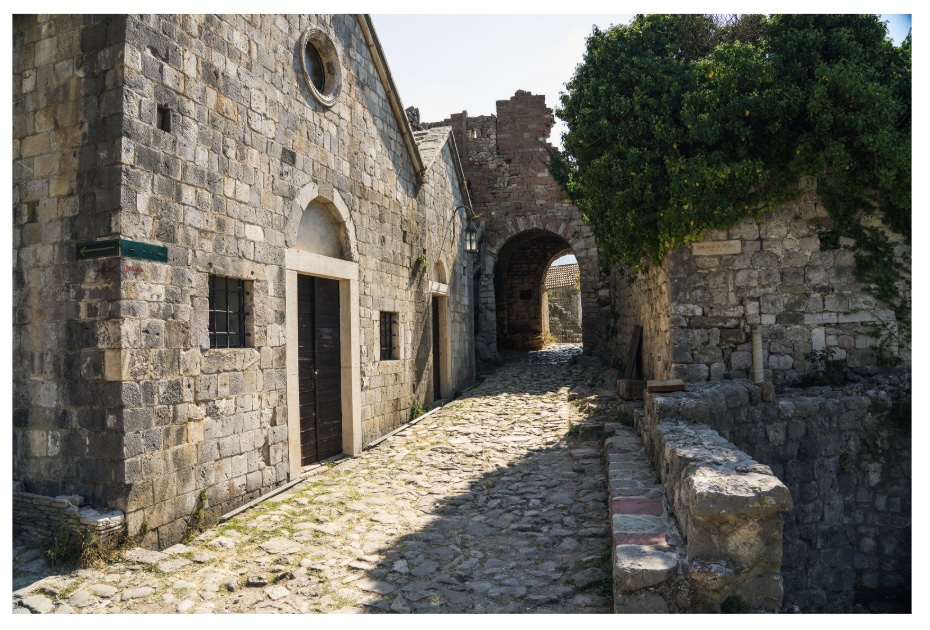
The third instruction is the one we shall reflect upon today: “Enter through the narrow gate.”
Jesus places before us two gates and two roads. One gate is wide and the road is broad, but it leads to destruction. The other gate is narrow and the road is difficult, but it leads to life. Jesus also says that only a few find it.
This teaching challenges our usual way of thinking. We often assume that whatever is bigger, easier, more comfortable, and more attractive must also be better. Jesus teaches the opposite. What is truly good may be found through what is small, demanding, painful, and less popular.
The narrow gate does not mean that God wants to make life unnecessarily difficult. It means that the way of life requires discipline, sacrifice, truth, and trust. The broad road allows us to follow every desire. The narrow road asks us to examine where those desires are leading us.
At every stage of life, we must make decisions. Our decisions determine our direction. A small choice repeated every day gradually becomes a habit, and a habit slowly becomes a way of life.
Therefore, before making a decision, we need to ask: “Is this the road that leads to life?” This question helps us to examine not only what is easy now, but also where our choice will finally take us.
The broad road may offer immediate comfort, approval, pleasure, or security. The narrow road may require honesty when lying would be easier, forgiveness when resentment feels natural, discipline when comfort attracts us, and faith when visible evidence is absent.
The first reading presents King Hezekiah as a man who chooses the narrow gate—the way that leads to life. Sennacherib, king of Assyria, had already conquered the northern kingdom of Israel. His powerful army now threatened Judah and Jerusalem. Through his messengers, he mocked Hezekiah’s faith and warned him not to trust in the Lord.
The Assyrian king stood before Hezekiah as a visible power. His army, victories, weapons, and threats could be seen. God, however, remained invisible. Hezekiah had to make a choice. He could surrender to the power he saw, or he could trust the God he could not see. He took the threatening letter from the messengers and went directly to the Temple. There he spread it before the Lord and prayed: “Now, therefore, O Lord our God, save us from the power of this man.”
Hezekiah did not deny the danger. He did not pretend that the Assyrian army was weak. He recognised the threat, but he placed it before God. His first response was neither panic nor political compromise. His first response was prayer.
The Lord heard his prayer and sent the prophet Isaiah with a message of hope. Jerusalem would be protected. The prophet declared: “The zeal of the Lord of hosts shall do this.” That very night, the angel of the Lord acted on behalf of the people, and Sennacherib withdrew. Hezekiah chose to surrender to the invisible God rather than to fear the visible king. This is what it means to enter through the narrow gate.
Choosing the narrow gate does not mean choosing weakness. It means recognising where true strength lies. It means trusting God when the powers before us appear greater than we are.
We too face visible pressures: money, public opinion, authority, fear of rejection, the desire for success, and the need for security. These powers can appear more real than God because we can see and feel them immediately.
The narrow gate is the choice to remain faithful when compromise appears easier. It is the choice to pray when panic seems natural. It is the choice to do what is right even when very few people support us.
The narrow gate may be difficult to enter because we cannot carry everything through it. Pride, dishonesty, resentment, selfishness, and the need to control others must be left behind. Only a heart that trusts God can pass through.
Today, let us examine the road we are travelling. Are our daily choices leading us towards life or away from it? Are we choosing what is true or merely what is easy? Are we surrendering to visible pressures, or are we placing our trust in the invisible God? The wide gate attracts many because it requires little. The narrow gate is found by few because it requires faith.
Fr. Yesu Karunanidhi
Archdiocese of Madurai
A Yesni Prays Initiative
 Yesu Karunanidhi
Leave a comment