Daily Catholic Lectio
Sat, 19 Sep 2026
XXIV Week in Ordinary Time
1 Cor 15:35-37, 42-49. Lk 8:4-15
Hundredfold
Today’s Gospel reading has three parts: the parable of the sower, the purpose of speaking in parables, and Jesus’ explanation of the parable.
We can understand the expression “Word of God” in three ways. First, the Word of God is Jesus Himself. John says, “The Word became flesh and lived among us” (Jn 1:14). Jesus is the Word of God who came among us.
Second, the Word of God refers to the words spoken by God, the words of Jesus, or the Gospel. The people of Jesus’ time heard these words directly from His mouth. After Jesus, the apostles proclaimed them. Today they come to us through the Bible, through explanations of Scripture, and through preaching.
Third, the Word of God can also refer to our faith in Jesus. This applies both to the people of Jesus’ time and to us. For example, those who are like rocky ground may respond immediately when they begin to believe in Christ. They may change their life, come to church, and participate in the Eucharist. But when their faith is tested, they may return to their old way of life.
Human words themselves can change us. When we are discouraged, a friend may suddenly call us and speak words that give us strength. A song we hear or a book we read may stir something within us. Words have power to move the human heart.
Suppose I hear the Word of God: “The Lord is my shepherd; I shall not want” (Ps 23:1). How will this Word bear fruit in my life? It bears fruit when I accept the Lord as my shepherd and begin to live as though He alone is my fullness.
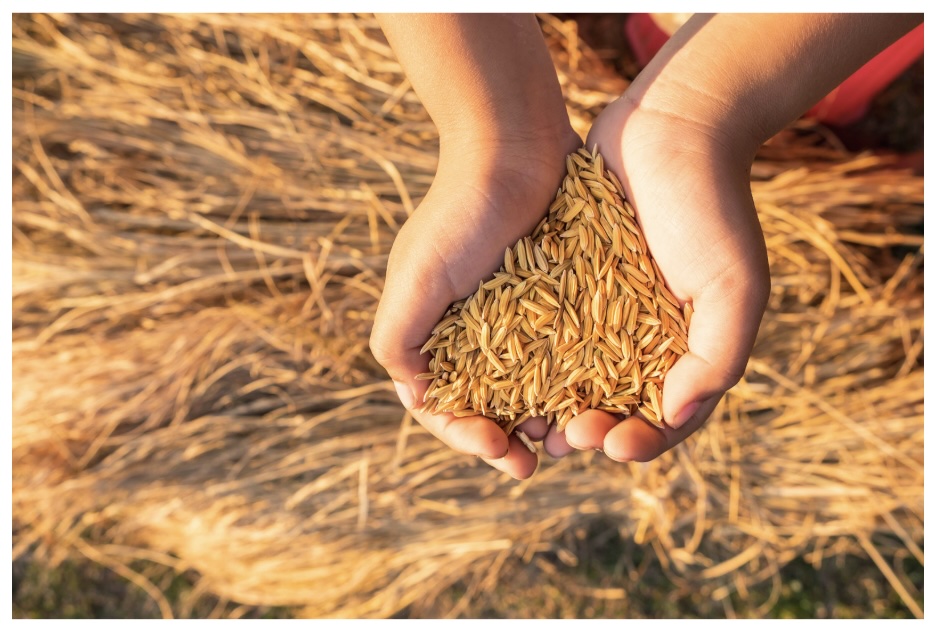
Luke says that the seed which fell on good soil produced a hundredfold. All three Synoptic Gospels record the parable of the sower. But Luke speaks simply of a hundredfold harvest, while the others speak of thirty, sixty, and a hundredfold. For Luke, fruitfulness points towards fullness.
Luke also gives three steps for bearing fruit: listening with a good and noble heart, holding fast to what is heard, and persevering. In Luke’s Gospel, persons such as Mary, Joseph, Simeon, Anna, and Zacchaeus show this kind of fruitfulness. They hear, keep, and persevere.
The message of the parable is important. The seed does not change the nature of the soil by force. The sower too does not force the soil to become different. The soil itself must receive the seed.
God respects our personal freedom and spiritual freedom. He gives the Word. He gives grace. But He does not force the response. I must allow myself to be changed. By changing myself, I become good soil capable of receiving the seed and bearing fruit.
The question therefore is not whether the seed is good. The Word of God is good. The question is: What kind of soil am I?
Am I like the path, where the Word remains only on the surface? Am I like rocky ground, where faith begins quickly but has no depth? Am I among thorns, where worries, wealth, and pleasures slowly choke the Word? Or am I good soil, listening, keeping, and persevering?
In today’s first reading, Paul speaks about the nature of the resurrection and uses the image of a seed. What is sown must die before new life appears. The seed is buried, but from that burial comes a new form of life.
The same image connects the two readings. In the Gospel, the seed must be received and must bear fruit. In the first reading, the seed must die in order to rise in a new form.
If our life becomes a hundredfold harvest, we need not be anxious about death and resurrection. A fruitful life already carries within it the sign of resurrection. What is given to God is never wasted. What dies in faith is raised in glory.
Today the Lord invites us to become good soil. Let us listen with a good heart. Let us hold fast to the Word. Let us persevere. Then the Word received in us will not remain only as hearing. It will become life, faith, action, and a hundredfold harvest.
Fr. Yesu Karunanidhi
Archdiocese of Madurai
A Yesni Prays Initiative
 Yesu Karunanidhi
Leave a comment