Daily Catholic Lectio
Tue, 8 Sep 2026
Nativity of the Blessed Virgin Mary
Mic 5:1-4 or Rom 8:28-30. Mt 1:1-16, 18-23
God with Us
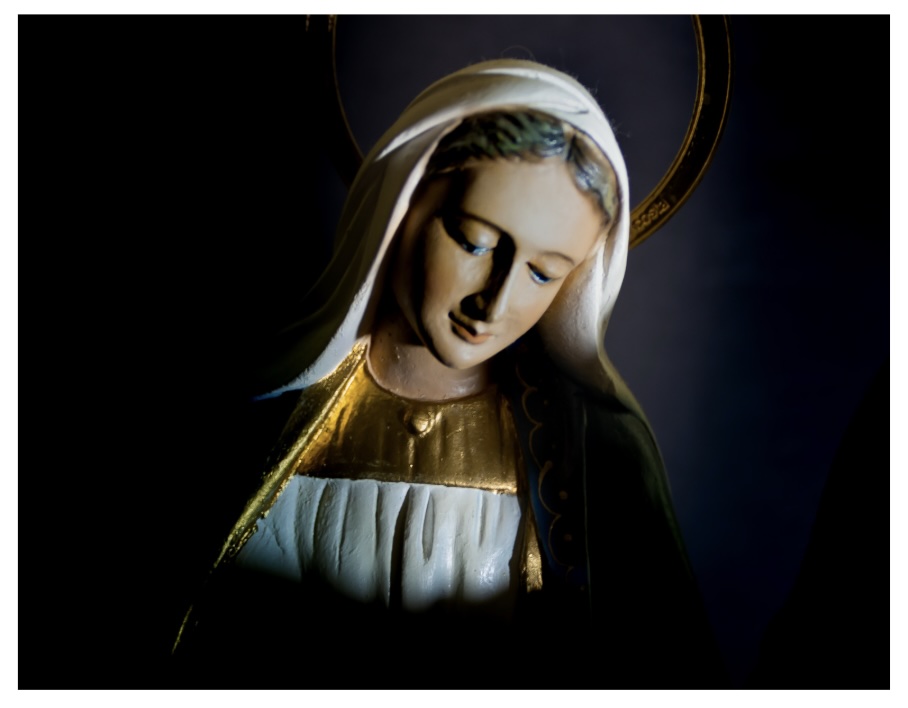
Today we celebrate with joy the Feast of the Nativity of the Blessed Virgin Mary. In the liturgical tradition of the Eastern Church, this day marks the beginning of the liturgical year. Their liturgical year begins with the birth of Mary on 8 September and comes to its fulfilment with the Assumption of Mary on 15 August. In the Western Church, Pope Sergius I accepted this feast towards the end of the seventh century.
The feast of Mary’s birth arose in the context of honouring the persons and events connected with the human birth of Christ. That is why, on the feast of Mary’s birth, we read the genealogy of Jesus as the Gospel reading. All devotion to Mary leads us to the worship of Jesus. Mary is never separated from Christ. Her birth prepares the way for His birth.
Every child is born with a purpose. Every child carries within himself or herself the possibility of changing many lives and forming many persons. Through the birth of the Blessed Virgin Mary, the birth of Christ became possible. And through the birth of Christ, the message came to us: “God is with us.”
First, God leads small things to great glory. In today’s first reading from Micah, the prophet announces the glory that will come to Bethlehem. Bethlehem is the city of King David. Because the Messiah will be born from the line of David, this little town receives great honour. God chooses what is small and gives it great glory. Mary too comes from humility and hiddenness, yet through her, God’s greatest plan becomes visible.
Second, God works with us in all things. In the alternative first reading from Romans, Paul says that God works in all things with those who love Him and are called according to His purpose. Here we see two movements together: the grace of God and the cooperation of the human person. Grace comes from God. Response comes from us. Mary was full of grace. At the same time, until the end, she surrendered herself to the plan of God.
Third, God’s love works through generations. In the Gospel, Matthew gives us the genealogy of Jesus. He calls Jesus “the son of David, the son of Abraham.” Each person in the genealogy becomes important when we look back from the event of Christ. Each one lived his or her own life. Yet, in the plan of God, each one became part of the coming of Christ.
Our life too may look small when we live it day by day. But when we look back, we see that we are like a tree with many branches. We are connected with many persons, many stories, and many generations. No life stands alone.
The genealogy also includes weak and wounded persons. It includes people with failures, struggles, and broken stories. Yet, in the eyes of God, everyone has a place in the plan of salvation. God does not build His plan only with the strong, the pure, and the perfect. He works also through the fragile, the forgotten, and the unexpected.
At the end of the Gospel, the angel appears to Joseph in a dream. Joseph stands before questions for which he has no answer. Many times, we too stand like Joseph. We do not understand the events of life. We do not know what to choose. We do not know how God is working. In such moments, God speaks in the silence of the heart.
The birth of Mary invites us to know the purpose of our life and to live our life fully. Mary’s birth tells us that even a hidden beginning can become the doorway of salvation. A child born in silence can become part of God’s great design.
Today let us pray especially for children and for girl children. Every life is born with the possibility of giving life to many others. Therefore, in every situation, let us protect, nurture, and honour human life.
Mary’s birth prepares the world for Emmanuel, God with us. Let us also become persons through whom others may experience that God is with them.
Fr. Yesu Karunanidhi
Archdiocese of Madurai
A Yesni Prays Initiative


Leave a Reply