Daily Catholic Lectio
Wed, 22 July 2026
Saint Mary Magdalene, Feast
Song 3:1-4. John 20:1, 11-18
I have Seen the Lord
In 2016, Pope Francis raised the liturgical celebration of Saint Mary Magdalene from a memorial to a feast. He also rejoiced in calling her a disciple of the Lord Jesus. In one of his homilies, he called Mary Magdalene “the apostle of the apostles” and “the apostle of hope.” In his apostolic exhortation of 2019, he used the words connected with her proclamation: “Christ is alive.”
At the time of Jesus, women were usually identified by the name of their father, husband, or son. For example, Joanna is called the wife of Chuza, and Mary is called the mother of Jesus. But Mary Magdalene is identified by the name of her town, Magdala.
The Gospels and some apocryphal writings speak about her. Yet her identity remains surrounded by mystery. Some have identified her with Mary of Bethany, the woman who anointed the feet of Jesus, the woman caught in adultery, or the woman from whom seven demons had gone out. Still, her exact identity remains hidden.
Mary Magdalene appears close to Hagar of the Old Testament in some ways.
Hagar is called an Egyptian slave woman. Mary Magdalene is also known by the name of her place.
Hagar runs away from her mistress Sarah. Mary Magdalene, early in the morning, runs to the tomb from the circle of her companions.
The angel who meets Hagar asks two questions: “Where have you come from? Where are you going?” Jesus, who meets Mary Magdalene, asks: “Woman, why are you weeping? Whom are you looking for?”
The angel tells Hagar: “Return to your mistress Sarah.” Jesus tells Mary: “Go to my brothers.”
At the end of the event, Hagar says: “Have I really seen God and remained alive after seeing Him?” At the end of the event, Mary says: “I have seen the Lord.”
Mary first says: “They have taken away my Lord.” At the end, she says: “I have seen the Lord.” Her words are close to the confession of Thomas: “My Lord and my God.”
Mary’s experience of faith moves in three stages.
First, she does not see the Lord.
Mary rises early in the morning and goes to the tomb. Darkness is the first obstacle. Standing near the tomb, she weeps. Her tears also hide her vision. Outside her, there is darkness. Inside her, there are tears of sorrow. Because of these two obstacles, she is not able to see the Lord.
Yet she sees two angels. There is a saying among the rabbis: “Through your tears you can see the angels.” Hagar and Mary Magdalene both recognise God’s messenger through their tears.
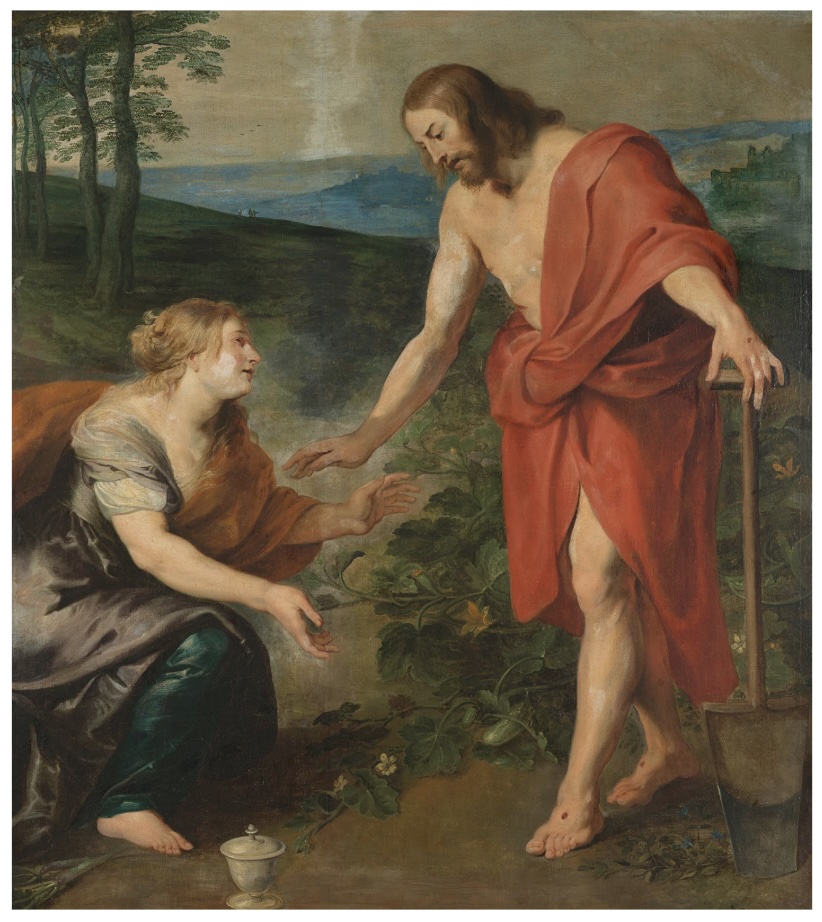
Second, the Lord appears like a gardener.
Mary stands near the tomb and weeps. After some time, she turns and sees Jesus standing there. But she does not recognise Him. To her eyes, Jesus appears like a gardener.
Third, she says: “I have seen the Lord.”
Jesus, who stands like a gardener, calls her by name: “Mary.” In that voice, she recognises Him. She turns and says: “Rabbouni.”
Had she not already turned? Why does she turn again? Saint Augustine explains this event by saying: “First her body had turned; now her heart turns.” When Mary sees Jesus, she holds on to Him.
In today’s first reading, the woman in the Song of Songs searches for her beloved. Because of her longing, she goes through the streets of the city at night. The watchmen see her. Yet she cannot find her beloved.
Mary Magdalene also comes at dawn searching for Jesus, her Lord. She finds Him.
What life lessons does this great saint give us?
First, where do we stand today in the stages of faith? Are we unable to see Jesus? Does He appear to us only like a gardener? Or do we recognise Him as the Lord? Not only our body, but also our heart must turn towards Him.
Second, today’s responsorial psalm presents the longing of a soul for God: “My soul thirsts for you, like a dry and weary land without water.” Is our soul dry today, or does it still have moisture? Do we seek God only as a pastime, or do we seek Him with deep inner longing?
Third, Mary Magdalene announces to the apostles and to others: “Christ is alive.” One who has met Jesus and held on to Him must also announce Him to others. How is our mission of proclamation? Do we keep the light we have received closed within ourselves, or do we share it with others?
Mary Magdalene moves from tears to vision, from seeking to finding, from holding to announcing.
May we too be able to say with her: “I have seen the Lord.”
Fr. Yesu Karunanidhi
Archdiocese of Madurai
A Yesni Prays Initiative


Leave a Reply