Daily Catholic Lectio
Mon, 3 February ‘25
Fourth Week in Ordinary Time – Monday
Hebrews 11:32-40. Psalm 31. Mark 5:1-20
Tombs and God
The Gospel reading of the day bears witness to Mark the Evangelist’s excellence as a storyteller and his literary style. The narrative moves in a triangular pattern—‘the demon-possessed man, the crowd, and Jesus.’ In the Gospel of Mark, the ‘crowd’ often becomes an obstacle to discipleship.
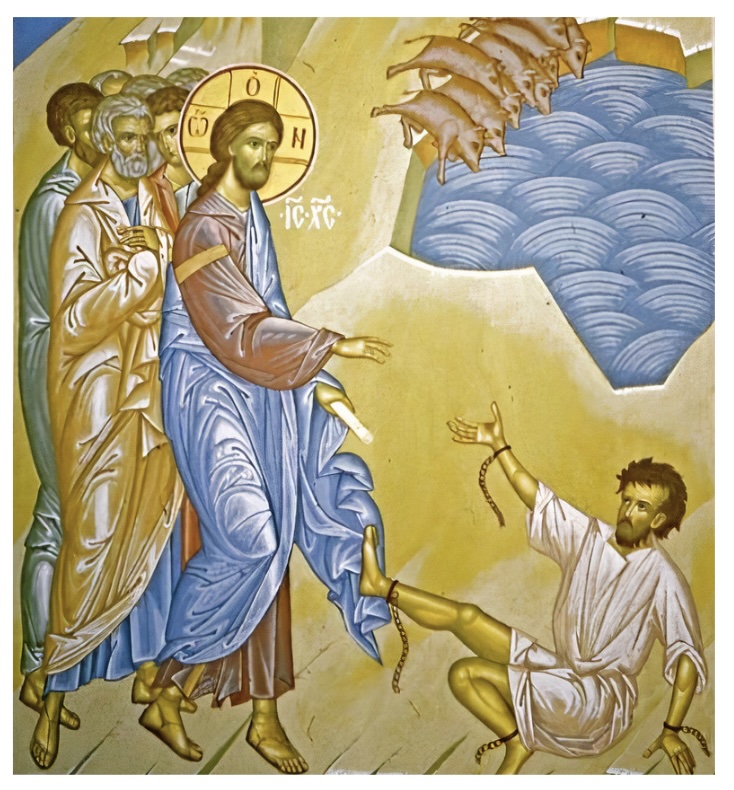
Jesus, who casts out unrestrainable evil spirits, restores the demon-possessed man to health. The townspeople, who were unafraid when the man was violent, uncontrollable, and crying out day and night among the tombs and mountains, are now afraid when they see him healed and seated near Jesus. At the end of the event, when the man who was healed desires to stay with Jesus, the Lord instead sends him back to his home.
We can learn three lessons from this passage:
(a) The Compassion of Jesus
Everyone saw the demon-possessed man, but Jesus saw him with compassion. While others saw his pitiful state, Jesus was moved by his suffering. Jesus does not stop at seeing ‘how he is’ but envisions ‘how he can change.’ His compassion brings healing. When we see others suffering, having compassion means not just feeling for them but acting to alleviate their pain. Compassion must move beyond emotion to action.
(b) Fear of Change
The crowd often holds the belief that ‘things should remain as they are.’ When unexpected changes occur in our surroundings, we become afraid. We set limits ad boundaries—thinking the possessed man must remain possessed, the poor must remain poor, and a woman must remain within predefined roles. When these boundaries are broken, we struggle to accept the change. We need the maturity to embrace the good that unfolds before us.
(c) The Tombs or God?
The man who lived among tombs desires to be with God once he is healed. Having spent his life in isolation, he now fears returning to his own people. Following God can sometimes be an escape rather than a true calling. We often see only two choices—either the tomb (representing despair and isolation) or God (representing complete withdrawal from the world). However, Jesus teaches a third way—a life of mission among people. He tells the man, “Go home to your people and tell them how much the Lord has done for you and how He has had mercy on you.” True discipleship is not just about personal salvation but about returning to the community and witnessing to God’s mercy. Jesus reintegrates the man who was once cast out, restoring him to his people.
In the first reading, the author of Hebrews honours the ancestors who were commended for their faith. He affirms, “God had planned something better for us so that only together with us would they be made perfect.” (Heb 11:40). God unites Himself with humanity and reconciles them with one another.
“Be strong, all you who hope in the Lord!” (cf. Ps 31:24)
Fr. Yesu Karunanidhi
Archdiocese of Madurai
Missionary of Mercy

 Yesu Karunanidhi
Leave a comment