Daily Catholic Lectio
Wed, 6 May 2026
Fifth Week of Easter
Ac 15:1-6. Jn 15:1-8
Unnecessary Burdens
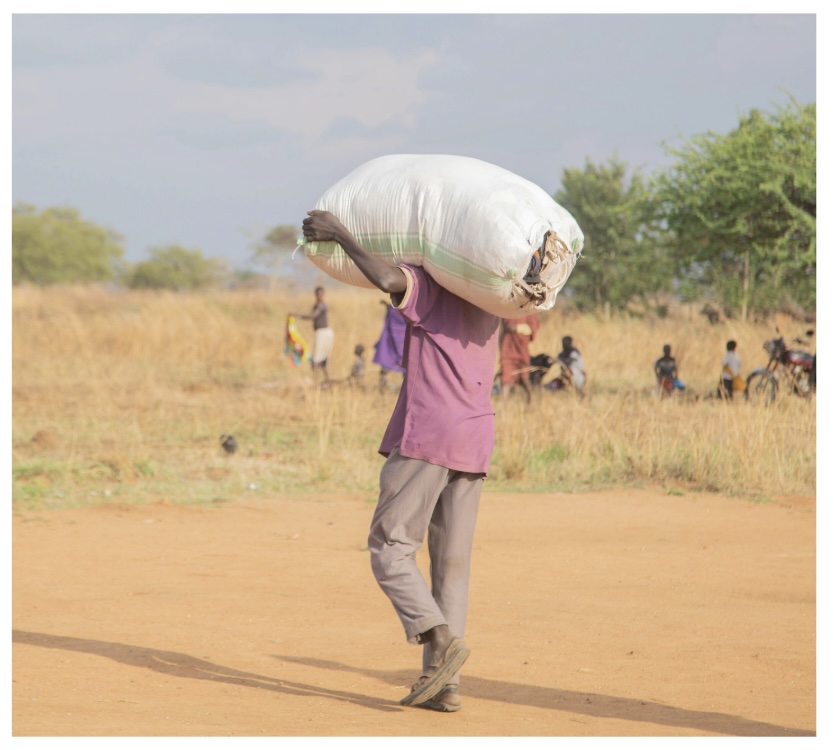
Even when our goal is clear and our path is right, we do not move freely if we carry weight within—burdens in the body, burdens in the heart. Not everything we carry is necessary. Some burdens are essential: responsibility, love, commitment. But many others we pick up along the way—fear, rigid ideas, expectations, judgments. These slow us down. The spiritual life is not only about moving forward; it is also about learning what to put down.
We handle problems in different ways. Some must be faced immediately—like milk that will turn sour if left unattended. Others need patience—like a hot vessel that must cool before we touch it. Wisdom lies in knowing the difference. Many of our burdens grow heavy simply because we either rush without discernment or delay without responsibility.
In the first reading (Acts 15:1–6), the early Church faces a new and serious question. The Gentile believers are told that they must follow Jewish customs—especially circumcision—in order to be true Christians. What begins as a religious concern slowly becomes a burden placed on others. Faith, which is meant to be a path of freedom, is turned into a condition, a weight.
Paul and Barnabas respond differently. They do not accept this burden as necessary. They see beyond the surface. They are not careless; they are free. They ask, in a sense, “What really matters here?” Their vision is wide. They understand that God’s grace cannot be reduced to human conditions. Because of such openness, the Church itself becomes wider. If they had not thought beyond limits, faith would have remained confined within boundaries.
There is another quiet lesson here. They do not turn the issue into a personal battle. They do not waste energy in endless arguments. Instead, they seek clarity. They travel to Jerusalem. They listen. They place the matter before the apostles and elders. This is not weakness; it is maturity.
Not every problem needs a quick victory. Some need a deeper resolution.
There is also humility. Paul and Barnabas do not claim ownership over the people they have evangelized. They do not say, “We built this community; we will decide.” They step back. They allow the Church to discern together. When we let go of the need to control, many unnecessary burdens fall away.
The early Church shows us something simple but powerful: do not load people with what God has not asked. Faith is not meant to become heavy. The apostles themselves take responsibility so that others may walk freely. True leadership does not increase burdens; it carries them.
In the Gospel (Jn 15:1–8), Jesus offers another image: the vine and the branches. A branch is not a burden to the vine. It is part of its life. What the vine removes is not the branch, but what is dead, what does not bear fruit. Pruning is not punishment; it is purification. God does not take away what gives life. He removes what blocks it.
So the question returns to us, quietly and personally: what am I carrying that I do not need to carry? Is it an old wound? A rigid idea? A fear of others? A need to control? A burden placed on me by others that God never asked of me?
If we remain in Christ, we begin to see clearly. We learn to let go. And as we let go, we become lighter. When we become lighter, we begin to bear fruit.
Fr. Yesu Karunanidhi
Archdiocese of Madurai
A ‘Yesni Prays’ Initiative
 Yesu Karunanidhi
Leave a comment