Daily Catholic Lectio
Mon, 14 Sep 2026
Exaltation of the Cross – Feast
Num 21:4-9 (or) Phil 2:6-11. Jn 3:13-17
Being Lifted
Today we celebrate the Feast of the Exaltation of the Holy Cross. This liturgical feast reminds us of three historical events. First, the true Cross on which Jesus was crucified was found in the year 326. Second, the Holy Cross was brought before the people for public veneration in 335. Third, in 628, the Holy Cross was recovered from the Persians and brought back to Jerusalem.
Yet today’s feast is not only about remembering a wooden cross. It is about celebrating the self-giving, sacrifice, and love that Jesus revealed through the Cross.
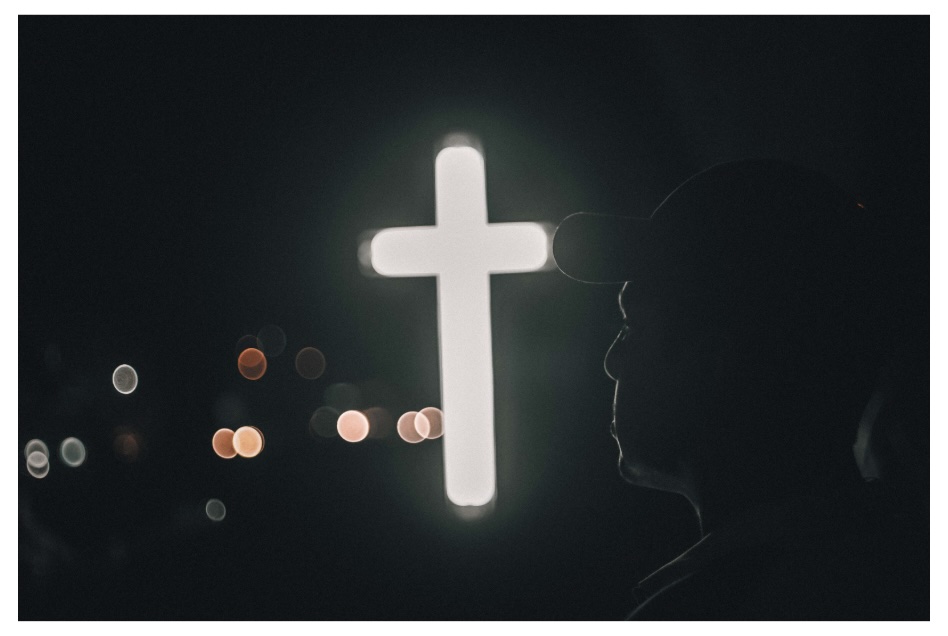
For us, the Cross is not merely a symbol. We begin and end our prayer with the sign of the Cross. We bless with the same sign. The Cross is found in our churches, homes, ornaments, and devotional objects. It stands at the centre of Christian faith because through it Christ shows us the depth of divine love.
In today’s Gospel, Jesus speaks to Nicodemus and says, “Just as Moses lifted up the serpent in the wilderness, so must the Son of Man be lifted up.” In the Gospel of John, the word “lifted up” has two meanings. It refers first to Jesus being lifted up on the Cross. It also points to His being raised and exalted after death. In this passage, the first meaning is very strong: Jesus will be lifted up on the Cross.
Nicodemus, being a Jew, would have known the event from the wilderness. In the first reading from the Book of Numbers, the people murmur against God. As a punishment, fiery serpents come among them. When the people cry to the Lord, God asks Moses to make a bronze serpent and lift it up on a pole. Everyone who looks at the bronze serpent is healed.
The lifted serpent brought healing to the people. In the same way, Jesus lifted up on the Cross brings salvation to all. The people in the wilderness lifted their eyes to the bronze serpent as a sign of their woundedness. When we lift our eyes to the Cross, we recognise that Jesus was wounded and broken for us.
In the alternative first reading, Paul writes to the Philippians and quotes a Christological hymn of his time. He presents the self-emptying of Jesus as theology. Though Jesus was in the form of God, He did not cling to equality with God. He emptied Himself, took the form of a servant, and became obedient unto death, even death on a Cross. Therefore, God highly exalted Him.
The Cross becomes the sign of Jesus’ brokenness, humility, and disfigured state. It is the place where He gives Himself completely. It is the lowest point of His human life. Yet it becomes the place of His exaltation.
Whenever Jesus foretells His passion, the Cross appears as a sign of suffering. Even Peter understood it in that way. That is why he tried to stop Jesus and said, “Lord, this must never happen to you.” But Jesus shows that the Cross is not only suffering. It is the path through which love becomes complete.
What does this feast teach us?
The Cross stands as a sign of the vulnerability, uncertainty, and ambiguity of life. But the suffering that comes from brokenness, uncertainty, and confusion can also deepen and raise our life. The very sign of suffering becomes the sign of salvation. This is the paradox of Christian life.
The Cross holds together two directions. It lifts our eyes toward heaven. At the same time, it fixes our feet firmly on the earth. The vertical line calls us to God. The horizontal line joins us to the world and to one another. The Cross reminds us that life is made of glory and humility, strength and weakness, rising and falling.
The Cross teaches a great paradox: one is lifted up through being lowered. Jesus is exalted because He humbled Himself. He is glorified because He gave Himself. He saves because He was willing to be broken.
Today, let us spend some time before the Holy Cross. Let us look at it, meditate on it, and bind ourselves to it. Let us bring before the Cross our wounds, fears, failures, and confusion. Let us believe that what is broken in us can be lifted by Christ.
Fr. Yesu Karunanidhi
Archdiocese of Madurai
A Yesni Prays Initiative
 Yesu Karunanidhi
Leave a comment