Daily Catholic Lectio
XII Sunday in Ordinary Time
Sun, 21 June 2026
Jer 20:10-13. Ps 69. Rom 5:12-15. Mt 10:26-33
Choosing Fear or God
I. Reflective Context
Fear is an emotion experienced by every human being. Like every emotion, it can have both a positive and a negative role.
Fear about an examination may encourage a student to study. Fear of debt may motivate a person to work carefully. Fear of an accident makes us attentive while crossing a road. In these situations, fear becomes a protective boundary.
Fear can also become destructive. Fear of the future creates anxiety and weakens hope. Fear of rejection makes us depend excessively on the approval of others. Fear of loneliness, illness, failure, and death can prevent us from living fully.
A particular fear arises when we choose God. When we remain faithful to truth, justice, personal discipline, and the values of the Kingdom, others may reject us, isolate us, accuse us, or even seek to destroy us. Choosing God can therefore appear to create fear.
Here lies the paradox: the fear that arises because we choose the Lord can be overcome only by clinging more firmly to the Lord.
Today’s readings place before us a choice. Will we allow fear to govern us, or will we allow God to sustain us?
II. The Readings
Jeremiah: “The Lord is with me”
The first reading comes from the section often called the confessions or laments of Jeremiah. In these passages, the prophet reveals his inner struggles, his pain, his fear, and his continuing trust in God.
Jeremiah proclaimed God’s word among his own people in Jerusalem and Judah. Yet the priests, rulers, and people did not recognise his message as coming from God. They wanted a message that pleased them, not the truth that challenged them. Jeremiah was mocked, threatened, isolated, beaten, and imprisoned.
He hears people whispering: “Terror on every side! Denounce! Let us denounce him!” Even those who had been his friends watch for his downfall. Jeremiah experiences the pain of betrayal and the fear of destruction.
Yet something changes within him. In the middle of his suffering, he encounters God anew: “The Lord is with me, like a mighty warrior.” His lament becomes praise: “Sing to the Lord, praise the Lord, for he has rescued the life of the poor.”
Jeremiah does not stand before us as a man who never felt afraid. He stands before us as a prophet who continued to trust God while surrounded by fear. Courage is not the absence of fear. Courage is choosing God in the midst of fear.
The Psalm: “Lord, in your great love, answer me”
Psalm 69 is the prayer of a faithful person who suffers because of devotion to God. The psalmist says: “For your sake I bear insult,” and, “I have become an outcast to my brothers.” His zeal for God’s house has brought him rejection rather than honour.
The psalm begins with suffering, complaint, and isolation. Yet it gradually moves towards confidence, praise, and hope. The turning point comes when the psalmist remembers God’s faithful love: “Lord, in your great love, answer me.”
The suffering person does not deny his pain. He places it before God. By surrendering his suffering, he begins to recover courage. He then encourages others: “You lowly ones, see this and be glad; you who seek God, may your hearts revive!”
This psalm is also reflected in the life of Jesus. The disciples remember the words, “Zeal for your house will consume me,” when Jesus cleanses the Temple. His rejection, His undeserved hatred, and the vinegar offered to Him during His Passion also recall this psalm.
Surrender transforms fear into encouragement. The person who turns towards God in suffering discovers that suffering does not have the final word.
Paul: Grace is greater than sin
In the second reading, Saint Paul moves from his teaching on justification by faith to the new life and redemption given in Christ. He compares Adam with Christ.
Through Adam, sin entered the world. Through Christ, grace entered the world. Adam’s disobedience opened the way to sin and death. Christ’s obedience opened the way to grace and life.
After eating the forbidden fruit, Adam and Eve became afraid and hid from God. Fear entered the human experience together with sin, shame, and alienation.
Christ enters that fearful world and brings grace. Paul therefore declares that “the gift is not like the transgression.” Sin is powerful, but grace is greater. Death appears strong, but the life given in Christ is stronger.
Fear tells us that sin, failure, suffering, and death will have the final word. Faith tells us that the grace of Christ is more powerful than all of them.
Jesus: “Do not be afraid”
Today’s Gospel comes from the missionary discourse of Matthew. Jesus has looked upon the crowds with compassion because they are like sheep without a shepherd. He sends His apostles among them, but He also prepares them for the opposition they will face.
The disciples may be rejected, persecuted, and even killed. Matthew’s Christian community also knew the temptation to weaken in faith, abandon discipleship, or deny Christ under pressure.
For this reason, Jesus repeats three times: “Do not be afraid.” “Do not be afraid of them.” “Do not be afraid of those who kill the body but cannot kill the soul.” “So do not be afraid; you are worth more than many sparrows.”
Human power has limits. Others may attack our reputation, possessions, position, or body, but they cannot destroy the life that belongs to God. Jesus therefore redirects our fear: “Rather, be afraid of the one who can destroy both soul and body in Gehenna.”
This fear of God is not terror before a cruel master. It is reverence before the One whose judgement truly matters. The fear of human beings loses its power when reverence for God becomes stronger.
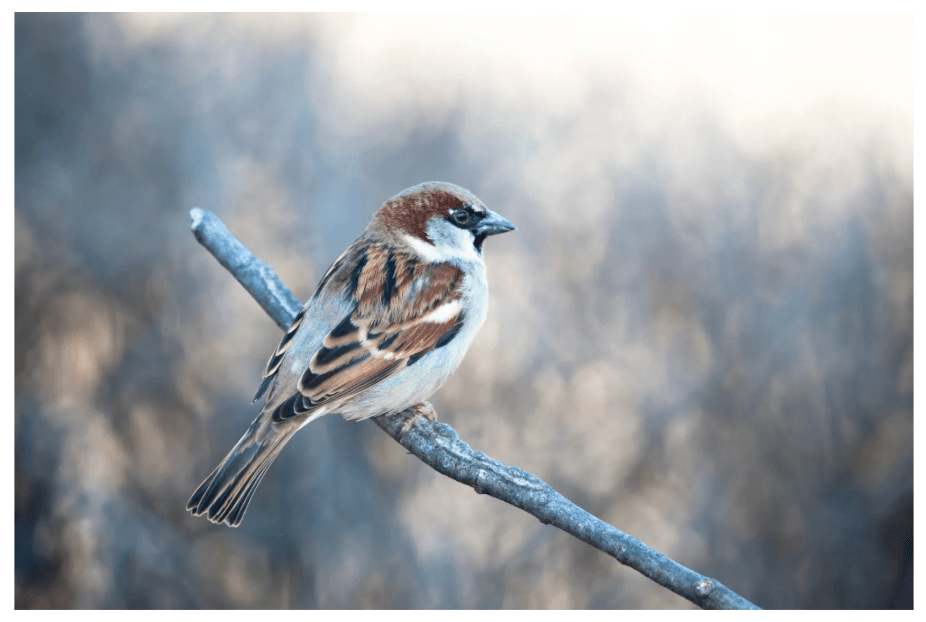
Jesus then gives two tender images of divine care: sparrows and the hairs of our head.
Sparrows were among the cheapest things sold in the market. Yet not one of them falls to the ground without the Father’s knowledge. If God cares for a small bird, how much more will He care for His children?
Jesus also says: “Even all the hairs of your head are counted.” This image tells us that God knows us completely. Nothing about us is too small for His attention. We are neither forgotten nor abandoned.
The cost of discipleship may include rejection, suffering, and fear. But the disciple is held within the knowledge and care of God.
III. Life Challenges
(a) The cost of choosing God
Knowing and following Jesus has a cost. Living according to the values of the Kingdom has consequences. An honest employee who refuses bribery in a corrupt office may be isolated. A person who questions an unjust decision within a group may be rejected or accused. Someone who refuses to participate in dishonesty may lose opportunities. Every choice carries a consequence. Choosing God does not guarantee an easy life. It guarantees that we will not face life alone. The question is not whether our choices will cost us something. The question is whether what we gain by remaining faithful to God is greater than what we lose.
(b) Removing fear
Fear often makes a small stone appear like a mountain. Many things that terrify us never actually happen. Even when difficulties arise, they are often different from what we imagined. Today we can name our fears honestly. What am I afraid of losing? Whose rejection do I fear? What future possibility is controlling my present life? Which fear prevents me from doing what is right? Faith does not pretend that danger is absent. Faith refuses to give danger the authority that belongs to God. We can begin to remove fear when we realise that another person’s threats, opinions, or accusations do not define us. We belong to God. Our life rests in His hands. Faith drives out fear because faith changes the place where we stand.
(c) Experiencing the Lord
Jeremiah discovers the Lord in the middle of betrayal and persecution. The psalmist discovers God’s faithful love in rejection. Paul recognises the grace of Christ in a world marked by sin and death. The apostles discover the Father’s care while facing those who can kill the body. The Lord is not found only after the storm has passed. He can be encountered within the storm.
Today, let us keep four sentences in our hearts:
“The Lord is with me.” — Jeremiah
“The Lord answers me in his great love.” — The Psalmist
“The grace of God is greater.” — Paul
“God cares for you.” — Jesus
Fear asks us to look at the danger. Faith asks us to look at the Lord. When we must choose between fear and God, let us choose God. Let us cling to Him until fear loses its hold upon us.
Let us conclude with the Collect of today’s Mass:
Grant, O Lord,
that we may always revere and love your holy name,
for you never deprive of your guidance
those you set firm on the foundation of your love.
Through our Lord Jesus Christ, your Son,
who lives and reigns with you in the unity of the Holy Spirit,
God, for ever and ever. Amen.
Fr. Yesu Karunanidhi
Archdiocese of Madurai
A Yesni Prays Initiative
 Yesu Karunanidhi
Leave a comment