Daily Catholic Lectio
Sat, 13 June 2026
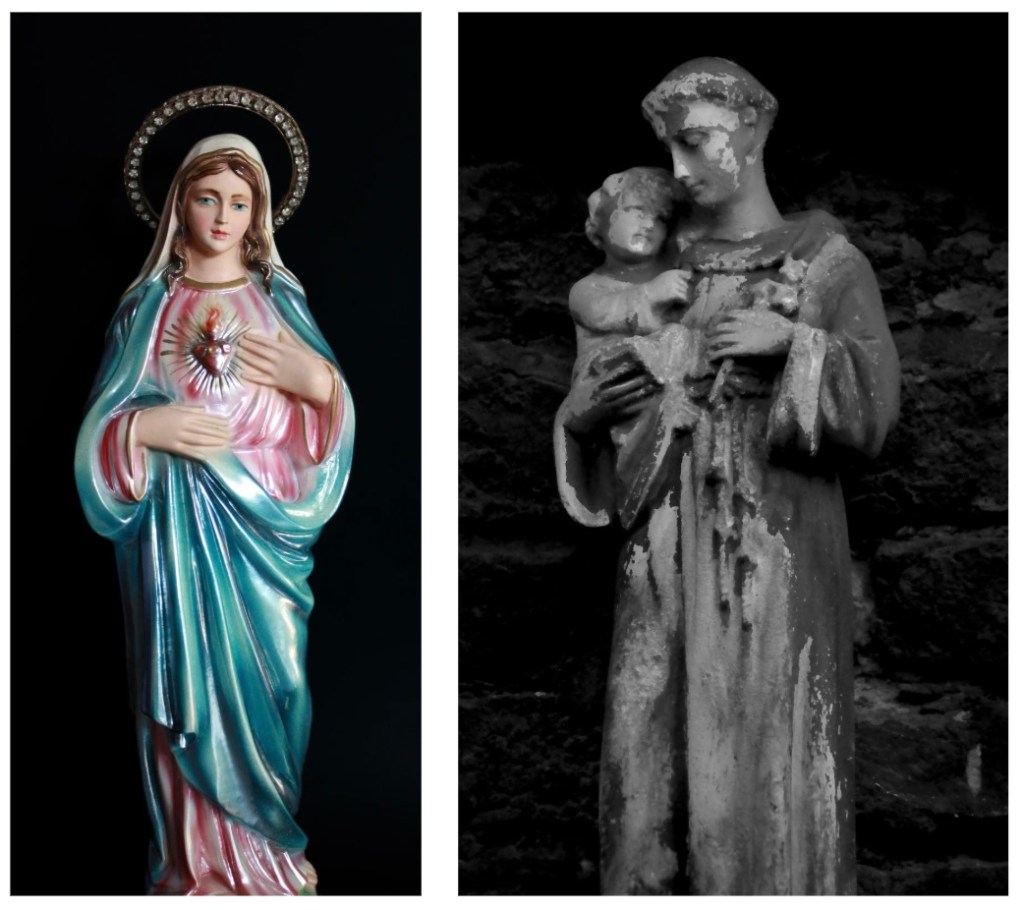
Immaculate Heart of Mary, Memorial
Saint Anthony of Padua, Op. Memorial
Isaiah 61:9-11. Luke 2:41-51
Garden of Grace, School of Silence
The day after celebrating the Sacred Heart of Jesus, the Church invites us to contemplate the Immaculate Heart of Mary. If the Heart of Jesus reveals the love of God, the Heart of Mary reveals the perfect human response to that love. Her heart loved, listened, suffered, rejoiced, and trusted. It was a heart entirely open to God.
The readings of today present Mary to us as a Garden of Grace and a School of Silence. The memorial of Saint Anthony of Padua then shows us how a disciple formed by grace and silence becomes a fruitful servant of the Gospel.
I. The Immaculate Heart of Mary: Garden of Grace and School of Silence
(A) Garden of Grace
In the first reading, Isaiah speaks of a garden bursting into life: “As the earth brings forth its shoots, and as a garden causes what is sown in it to spring up, so the Lord God will cause righteousness and praise to spring up.”
Mary’s heart was such a garden. She surrendered herself completely to the will of God. When the Holy Spirit came upon her, she responded like fertile soil receiving the rain: “Behold, I am the handmaid of the Lord.” God’s grace found in her a heart that was humble, receptive, and obedient.
Everything beautiful that blossomed in Mary’s life sprang from her openness to God. The Word became flesh in her because grace had already prepared the soil of her heart.
Our world today is often marked by pride, anger, self-assertion, and noise. Mary offers us another model. The heart filled with grace is not proud but humble. It does not seek its own glory but God’s will. It does not resist grace but welcomes it.
Mary teaches us that holiness begins when we allow God to cultivate the garden of our hearts.
(B) School of Silence
The Gospel presents the finding of Jesus in the Temple. Mary and Joseph search anxiously for their lost son. When they find Him, Jesus gives an answer that they do not fully understand. Luke tells us that Mary kept all these things in her heart.
This is one of Mary’s most beautiful qualities. She does not react immediately. She does not demand explanations. She reflects. She ponders. She gathers together the scattered pieces of experience and patiently seeks their meaning.
Earlier, after the visit of the shepherds at Bethlehem, Mary had done the same thing. She treasured all these events and pondered them in her heart. Mary’s heart therefore becomes a school of silence.
Silence is not emptiness. It is the space where God speaks. Many of life’s deepest realities can only be understood in silence. In a world filled with constant noise, endless messages, and continuous distractions, Mary teaches us the value of interior stillness. A heart filled with grace naturally becomes a heart capable of silence. And a heart that learns silence becomes ready to receive God’s plans.
The Immaculate Heart of Mary teaches us that holiness grows where grace and silence meet.
II. Saint Anthony of Padua: A Disciple Formed by Grace
Today the Church also remembers Saint Anthony of Padua, often called the Wonder Worker and the Friend of the Poor.
Born in Lisbon in 1195, he first entered the Augustinian Order before joining the Franciscans, inspired by their missionary zeal. His desire was to preach Christ in Morocco. Yet illness forced him to return home. Instead, providence brought him unexpectedly to Italy, where he would fulfill the mission God had prepared for him.
Though he lived only thirty-six years, his life remains a remarkable example of discipleship.
(A) Surrender to God’s Will
Anthony believed that Morocco was the goal of his life. God had another plan. What appeared to be failure became a new beginning. His illness, his interrupted journey, and his unexpected arrival in Italy were not obstacles but instruments of divine providence. Anthony teaches us that God’s plans are often different from our own. True discipleship means allowing God’s will to replace our own expectations.
(B) Firm Trust in God
Throughout his life, Anthony repeatedly stepped beyond his comfort zone. He pursued learning, embraced poverty, preached tirelessly, and served the poor. His confidence rested not in his talents but in God. Tradition tells us that he was privileged to hold the Child Jesus in his arms. Yet despite his learning and preaching ability, he experienced misunderstanding and opposition. He accepted these trials with patience and trust. Anthony reminds us that the disciple’s strength comes not from personal success but from unwavering reliance on God.
(C) Today Is the Day of Salvation
One of the striking features of Anthony’s life was his sense of urgency. He understood that every moment is an opportunity for grace. The angels announced to the shepherds, “Today a Saviour has been born for you.” Jesus said in the house of Zacchaeus, “Today salvation has come to this house.” Anthony lived every day with this awareness. Through preaching, writing, prayer, and service, he used every moment for the Kingdom of God. He did not postpone holiness. He embraced the present as the place where God was acting. He teaches us that salvation is not merely a future hope. It is a present reality.
Conclusion
The Immaculate Heart of Mary and Saint Anthony of Padua present two beautiful paths of discipleship. Mary teaches us to become a garden where God’s grace can flourish and a school where silence allows God’s word to take root. Anthony teaches us to surrender to God’s will, to trust Him completely, and to recognize that today is the moment of grace.
God has sent each of us into the world as His disciples. The more we allow grace to transform our hearts and silence to deepen our listening, the more fruitful our lives, our work, and our relationships will become.
Fr. Yesu Karunanidhi
Archdiocese of Madurai
A Yesni Prays Initiative
 Yesu Karunanidhi
Leave a comment