Daily Catholic Lectio
Sun, 26 July 2026
XVII Sun in Ordinary Time
Saints Joachim and Anne, Memorial
VI World Day of Grandparents & the Elderly
1 Kgs 3:5, 7-12. Rom 8:28-30. Mt 13:44-52
Choosing the Higher
Today is the Seventeenth Sunday in Ordinary Time. On 26 July, we remember and celebrate Saints Joachim and Anne, the grandparents of Jesus through His mother Mary. Today is also observed as the Sixth World Day for Grandparents and the Elderly. Pope Leo XIV has given the message for this day with the theme, “I never forget you.”
What distinguishes us human beings from animals is choice. Animals choose places and food according to the programme within them. But we human beings have the freedom to choose at every moment. This freedom becomes a blessing for us. At times, it also becomes a burden, because wrong choices bring us suffering and loss.
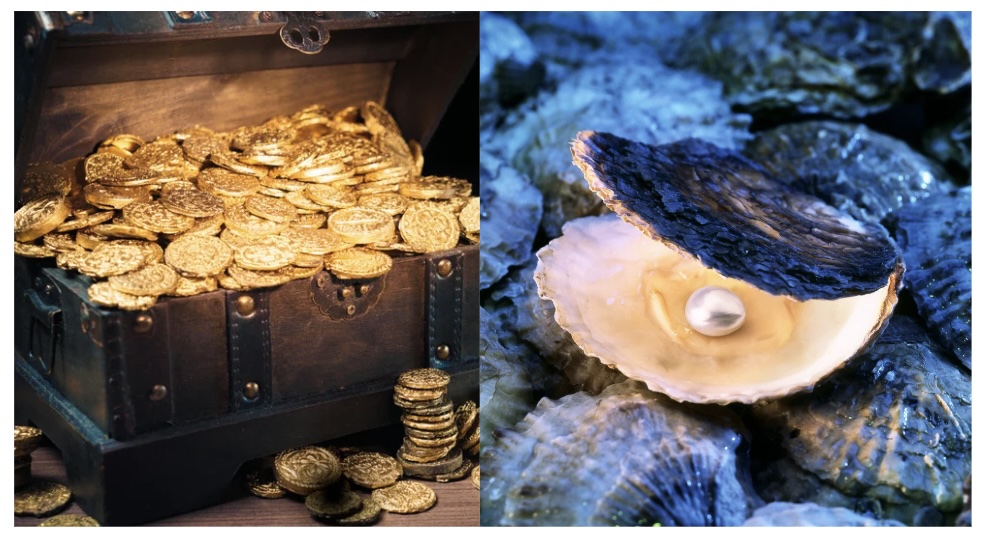
In today’s Gospel, we read three examples about the Kingdom of heaven: treasure, pearl, and net. The parables of the treasure and the pearl reveal the mystery of the Kingdom of heaven. The parable of the net speaks about the Kingdom and the end of the world.
At first sight, these three parables may seem unrelated to one another. They belong to three different fields of meaning. Treasure is found in the land. A pearl is found in the sea. A net moves between the sea and the shore, and from the shore back to the sea.
I think these three parables can be gathered into three words: totality, priority, and order. First, we must obtain it totally. Second, we must choose it as the first priority. Third, we must gather it in an orderly way.
First, we must obtain it totally — the parable of the treasure.
In Palestine at the time of Jesus, rich people who feared thieves and people who went on long journeys often buried their wealth in the ground. When the people of Israel were taken into exile in Babylon, many buried their wealth in their own fields and left. After many years, lands changed hands. Sometimes a person ploughing the land or planting a tree would discover such treasure.
This is the situation we read in the first parable. A man discovers treasure by chance. It appears before his eyes as a surprise. If he takes only the treasure, it will be like theft. Therefore, he buys the whole field. The Kingdom of heaven may appear before our eyes as a visible treasure. But if we want to make it our own, we must be ready to lose all that we have.
Second, we must choose it as the first priority — the parable of the pearl.
A merchant searches for a fine pearl. His search has a purpose. He searches with effort. He finds the fine pearl. To gain the fine pearl, one must be ready to lose every other pearl. It is not wise to find the fine pearl and still hold on to the other pearls.
Only the one who searches for the fine pearl can find it. It is not enough to sit at home and think that everything will come by itself. We must search for the Kingdom. We must search for life. Once we search and find it, we must be ready to lose what we already possess.
A divided mind that says, “I want this also, and I want that also,” has no place in God’s dictionary. Only those who have the courage to let go of the old pearls can possess the fine pearl.
Third, we must gather it in an orderly way — the parable of the net.
A net thrown into the sea brings in all kinds of things: fish, seaweed, shells, plants, and waste. The sea is large, but the vessel in hand is small. Therefore, we must choose carefully, discern clearly, and gather in an orderly way. Otherwise, the burden becomes heavy and the vessel may break.
One who belongs to the Kingdom of heaven must continue to discern and choose. We must take only what is proper and good. In our mind too, thousands of thoughts move every moment. If we do not discern what is good and what is evil, and if we do not gather what is proper, then over time the rotten fish will destroy even the good fish.
What is common to these three parables? To receive what is higher, we must let go of what is lower. When we compare the Kingdom of God with everything else, everything else is lower.
In today’s first reading, King Solomon comes before us as a model. The Lord God appears to him in a dream and asks, “What gift do you want?” Solomon asks for wisdom to discern good and evil and to judge the people. He does not ask for long life, wealth, or the destruction of his enemies. He chooses God, God’s wisdom, and God’s people. Therefore, the Lord God praises him.
In the second reading, Paul writes to the Romans: “The Holy Spirit works together in all things with those who love God and who are called according to His purpose.” Paul uses the word “synergy,” meaning cooperation or working together. When God’s power — the Spirit — joins with human effort, our life receives a strength many times greater.
The lesson that today gives us is one: to leave what is lower and hold on to what is higher.
How can we attain this?
First, by having knowledge and awareness about life. We must have awareness and constant attentiveness about the treasure, the pearl, the good fish, and the wisdom that appear before our eyes.
Second, by having the courage to lose what is lower. In economics, there is a concept called “loss aversion.” According to this, people hesitate to lose what they already have, even when what they may receive is better. This happens because the future is uncertain.
Even when the treasure comes into our hands, we fear that it may turn out to be worthless coins. Even when we find the precious pearl, we fear that it may be false. Even when we receive a good fish, we fear whether it alone will be enough. Such fears weaken our courage.
How much waste we keep in our homes, computers, and minds, thinking that it may be needed later!
Third, by receiving the cooperation of the Spirit of God. We must ask for and receive the wisdom that God gives and the cooperation of the Holy Spirit. Only with God’s wisdom can we find answers to the questions of our life. When we are loved by God, the Holy Spirit works together with us.
Today we celebrate Saints Joachim and Anne. According to the Protoevangelium of James and the Gospel of the Childhood of Mary, they chose the Lord God at every moment.
Today let us also celebrate the grandparents in our families and the elders in our society. They are people who have experienced life fully. They have shaped their life through their priorities. In their sickness, hesitation, tiredness, and weakness, let us stand with them.
Let us choose the higher. Let us choose the Kingdom. Let us choose God’s wisdom.
Fr. Yesu Karunanidhi
Archdiocese of Madurai
A Yesni Prays Initiative


Leave a Reply