Daily Catholic Lectio
Mon, 27 April 2026
Fourth Week of Easter
Ac 11:1–18. Jn 10:11–18
Peter’s Conversion
When Pope Francis invited the whole Church to undertake the synodal journey in October 2021, he offered us two living images: Jesus walking with his apostles and the people, and Peter’s conversion in the house of Cornelius. These are not just events of the past. They are mirrors held before our life today.
We often speak about the conversion of Paul (Acts 9). It is dramatic, sudden, and visible. But Luke also narrates another conversion—quiet, interior, and just as profound: the conversion of Peter (Acts 10–11). Today’s first reading places us inside that moment. Peter, the leader, the one chosen, is himself called to change.
Peter had inherited a worldview: “The Jews are pure; the others are not.” It was not simply his personal opinion; it was the thinking of his time. Without realizing it, he carried within him a boundary—between clean and unclean, insider and outsider. God breaks this boundary, not by argument, but through a vision. What God has created, no one should call unclean. Conversion begins when God gently questions what we take for granted.
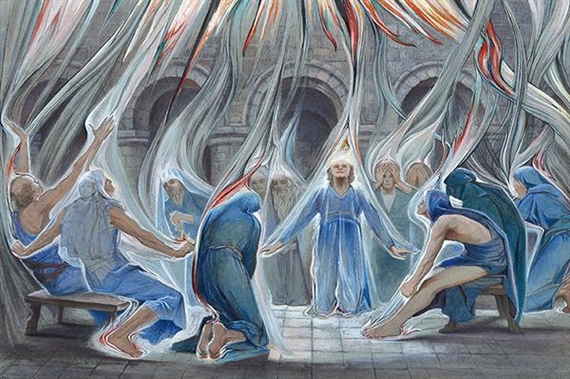
Then comes the decisive moment. Peter enters the house of Cornelius. As he speaks and prays, the Holy Spirit descends—not only on him, not only through him—but on everyone present. Peter is surprised.
Imagine a farmer carefully directing water into different sections of his field. He works with effort, planning, and control. Suddenly, heavy rain falls. The whole field is filled with water—without his effort, beyond his control. The farmer realizes: the field does not depend on him alone.
This is Peter’s moment. He had perhaps thought that grace must pass through him, that he is the necessary channel. But now, in Cornelius’ house, the Spirit moves freely. Peter discovers his own limits. He moves from control to wonder, from ownership to humility. This is conversion.
Peter does not keep this experience to himself. He returns and shares it with the community. But the community questions him: “Why did you go to the uncircumcised and eat with them?” Their question is not hostile; it is honest. It reflects their own struggle.
Peter answers with simplicity and depth: “If God gave them the same gift that he gave us when we believed in the Lord Jesus Christ, who was I to hinder God?” This is the heart of his conversion. He no longer places himself at the center. God is at the center.
This Word challenges us today.
In the spiritual life, what matters most is not who we are, but the faith we have received. Today, even within Christianity, there are many divisions. We often define ourselves by differences—tradition, culture, structure. But if we look at the core—faith in Christ—we find unity.
God’s grace is one. It is given freely, generously, universally. When we begin to divide what God has given, we lose the spirit of the Gospel. Peter teaches us not to resist God’s generosity.
There is another challenge. Each of us carries hidden assumptions—about people, cultures, backgrounds, identities. These may come from society, family, or history. Often, we are not even aware of them. Conversion means becoming aware. It means allowing God to question our judgments and open our hearts.
Cornelius becomes, in a sense, our ancestor in faith. For in the eyes of that time, we too are “outsiders.” His baptism opens the door for all nations. His story is our story. What happened in his house continues in the Church today.
God is not the God of a few. He is the God of all. His grace falls like rain—on everyone.
In the Gospel, Jesus presents himself as the Good Shepherd. He knows his sheep. He protects them. He nourishes them. He lays down his life for them. When we accept him as our Shepherd, something changes within us. We too begin to care, to include, to give life.
Peter’s conversion leads him to become a true shepherd—not one who separates, but one who gathers.
The life that the Lord gives is full, lasting, and for all. Let this be our prayer today: “Lord, convert our hearts—so that we may not hinder your grace, but rejoice in its abundance.”
Image courtesy: Gregsloop.com
Fr. Yesu Karunanidhi
Archdiocese of Madurai
A ‘Yesni Prays’ Initiative
 Yesu Karunanidhi
Leave a comment