Daily Catholic Lectio
Sun, 26 April 2026
Fourth Sunday of Easter
Good Shepherd Sunday
Ac 2:14, 36-41. 1 Pet 2:20-25. Jn 10:1-10
Like a Shepherd Like a Thief
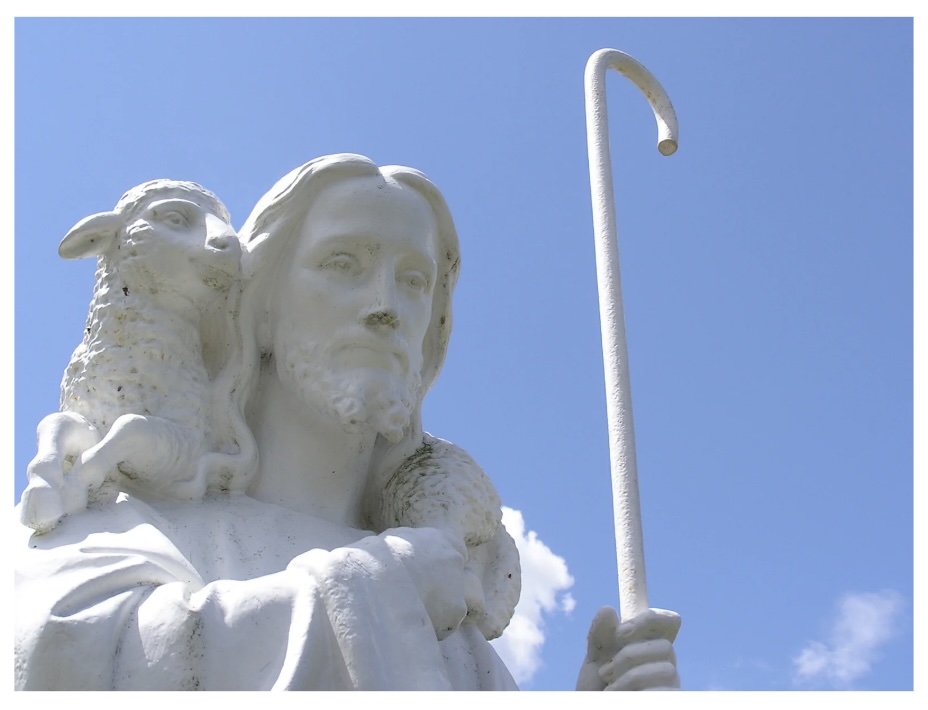
On this Fourth Sunday of Easter—Good Shepherd Sunday—the Word of God places before us a striking contrast: like a shepherd, like a thief. It is not merely a comparison; it is a question addressed to our life. In the Gospel (John 10:1–10), Jesus speaks in images that are simple yet piercing. The shepherd enters through the door; the thief climbs in another way. The shepherd calls his sheep by name; the thief remains hidden. The shepherd gives life; the thief steals, kills, and destroys. Between these two figures unfolds the drama of human existence, of leadership, of discipleship, and of our daily choices.
At the beginning of the Bible, in the Garden of Eden, we hear another voice. God comes in search of Adam and asks, “Where are you?” Adam hears the sound of God—but instead of drawing near, he hides in fear. The voice that should have given life now produces anxiety. This moment reveals a deep truth: not every voice leads to life, and even the voice of God can be misheard when the heart is not rightly disposed. Today, we live surrounded by countless voices—notifications, conversations, media, noise of every kind. In this sea of sounds, the Gospel asks a simple but demanding question: do we still recognize the voice of the Good Shepherd?
The shepherd is not simply a poetic image. It is a way of being. In the biblical world, the shepherd knows, calls, leads, protects, and even lays down his life. Jesus identifies himself with this figure. He is not distant. He calls each by name. He walks ahead. He becomes the door itself—meaning that in him we find both entry and freedom: “they will come in and go out and find pasture.” His mission is clear: “I came that they may have life, and have it abundantly.” Life—this is the center.
Wherever life grows, wherever dignity is protected, wherever freedom is nurtured, there the shepherd is present.
The thief, by contrast, is also a way of being. The thief takes what does not belong to him. He uses shortcuts. He hides his identity. And when threatened, he destroys. The Gospel summarizes his mission in three verbs: to steal, to kill, and to destroy. These are not only external actions; they can become interior attitudes. Whenever we take what is not ours—time, trust, dignity—we act like the thief. Whenever we silence others, dominate, manipulate, or reduce life, we move into that space. The difference between shepherd and thief is not first about roles, but about the effect we have on life: do others live more fully because of us, or less?
This question touches every dimension of our existence. In our relationship with ourselves: to live like a shepherd is to know and accept oneself truthfully, with patience and compassion; to live like a thief is to ignore or deny oneself, to carry unnecessary burdens, to live in illusion. In our relationship with others: the shepherd respects boundaries, calls by name, honors the dignity of the other; the thief invades, takes, uses, and reduces the other to an object. In our relationship with God: we may not be shepherds, but we can at least avoid being thieves—using God for our needs without seeking Him. In our relationship with creation: the shepherd cares and protects; the thief exploits and consumes without responsibility.
The Acts of the Apostles tells us that when Peter preached, the people were “cut to the heart” and asked, “What must we do?” This is the right question. It is not enough to admire the shepherd; we must choose to become like him. The answer begins simply: listen to his voice. Recognition of the voice leads to conversion of life. Saint Peter, in his letter, reminds us: “You were like sheep going astray, but now you have returned to the shepherd and guardian of your souls.” The Christian journey is precisely this return—from confusion to clarity, from noise to voice, from fear to trust.
Today, then, the Gospel leaves us with two questions. First: in the relationships and responsibilities entrusted to me, am I living like a shepherd or like a thief? Second: among the many voices that surround me, do I truly listen to the voice of Christ? The answer is not theoretical. It is seen in life. Wherever we bring life, freedom, and fullness, we walk with the Shepherd. And wherever we diminish life, we move away from him.
May we learn again to recognize his voice. And hearing it, may we follow—so that through us, others too may find life, and find it in abundance.
Fr. Yesu Karunanidhi
Archdiocese of Madurai
A ‘Yesni Prays’ Initiative


Leave a Reply