Daily Catholic Lectio
Sun, 22 Nov 2026
Solemnity of Our Lord Jesus Christ, King of the Universe
Eze 34:11–12, 15–17. 1 Cor 15:20–26, 28. Mt 25:31–46
God may be all in all
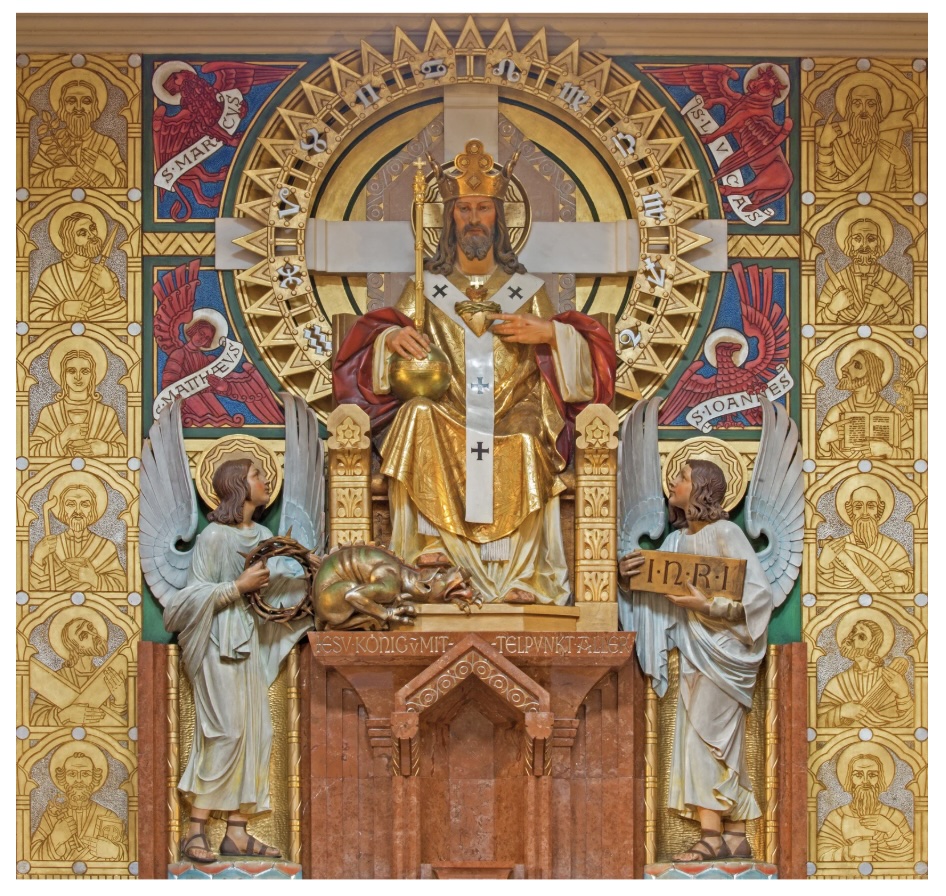
Today, on the final Sunday of the liturgical year, we celebrate Jesus Christ as King of the Universe. Today’s readings present a beautiful progression. In Ezekiel, God comes as a shepherd. In the responsorial psalm, the Lord guides and nourishes his flock. In Paul’s letter, Christ conquers every power and finally hands everything over to the Father. In the Gospel, the King sits upon his glorious throne but identifies himself with those in need. These readings invite us to ask what kind of King Christ is and how we should live in his Kingdom.
1. The History of the Solemnity
Pope Pius XI instituted the Solemnity of Christ the King in 1925 through his encyclical Quas Primas. Following the First World War, nationalism, political rivalries, and competing ideologies were dividing humanity. The feast affirmed that human authority is never absolute and that ultimate sovereignty belongs to God. Originally celebrated on the last Sunday of October, it was moved by Pope Paul VI to the final Sunday of the liturgical year. This change emphasised the fulfilment of history in Christ. Today’s Gospel of the Last Judgment reveals the King before whom humanity ultimately stands.
2. Is Jesus a King?
Jesus belongs to the royal line of David. The Magi offer him gold, Nathanael calls him the King of Israel, Pilate questions him about his kingship, and the inscription on the cross identifies him as King of the Jews. Yet his kingship differs from worldly power.
Today’s Gospel speaks of a throne, a king, and a kingdom. Christ possesses authority, but true authority is not merely a position bestowed from outside. It also requires inner freedom. Whoever can govern personal desires, overcome selfishness, control anger, and face fear possesses genuine dignity. Paul takes this understanding further. Christ conquers every hostile power, including death, and hands everything over to the Father, so that God may be all in all. His kingship leads creation toward complete communion with God.
3. The King in Today’s Readings
In Ezekiel, God searches for the lost, gathers the scattered, binds up the injured, strengthens the weak, and establishes justice. His kingship is expressed through compassionate care. Psalm 23 makes this relationship personal. The Lord provides nourishment, offers guidance, restores strength, and accompanies his people through darkness.
In the second reading, Christ is the risen King through whom humanity receives the promise of resurrection. His victory embraces the whole of creation. Even death, the final enemy, will be destroyed. His reign reaches its fulfilment when everything is entrusted to the Father.
The Gospel presents the most surprising image. Christ identifies himself with six groups: the hungry, the thirsty, strangers, the naked, the sick, and prisoners. Those who feed, welcome, clothe, care for, and visit them serve Christ himself. The final judgment reveals that our relationship with Christ is inseparable from our treatment of vulnerable people. Recognising his kingship means recognising his presence in the least of his brothers and sisters.
4. Three Lessons for Our Lives
First, we share in Christ’s royal dignity because we are God’s sons and daughters. This dignity calls us to govern ourselves rather than dominate others. We honour our own dignity by respecting that of others.
Second, caring for those in need is our royal responsibility. Someone in our family may feel neglected; an elderly neighbour may be lonely; a stranger may need welcome. Even small acts of compassion become expressions of God’s Kingdom.
Third, we must rise above comparisons, possessions, positions, and the desire for recognition. Paul’s words invite us to see God in every person and situation, allowing his presence to shape our priorities.
On this solemnity, we need not look only upward to find our King. We must also look around us, especially toward those who suffer. When we recognise and serve Christ in them, we participate in his Kingdom. Its ultimate fulfilment is Paul’s magnificent vision: God may be all in all.
Rev. Fr. Yesu Karunanidhi
Archdiocese of Madurai
A Yesni Prays Initiative


Leave a Reply