Daily Catholic Lectio
Sat, 21 Nov 2026
Memorial of the Presentation of the Blessed Virgin Mary
Zech 2:10-13; Mt 12:46-50
In the Embrace of the Lord
Today we commemorate the presentation of the Blessed Virgin Mary in the Temple of Jerusalem. This event is not recorded in the canonical Gospels. However, we find a tradition about it in the apocryphal work known as the Protoevangelium of James.
Joachim and Anne had remained childless for many years. They prayed to the Lord, the God of Israel, and made a promise: if a child was born to them, they would dedicate that child to the Lord. When a daughter was born, they named her Miriam, or Mary.
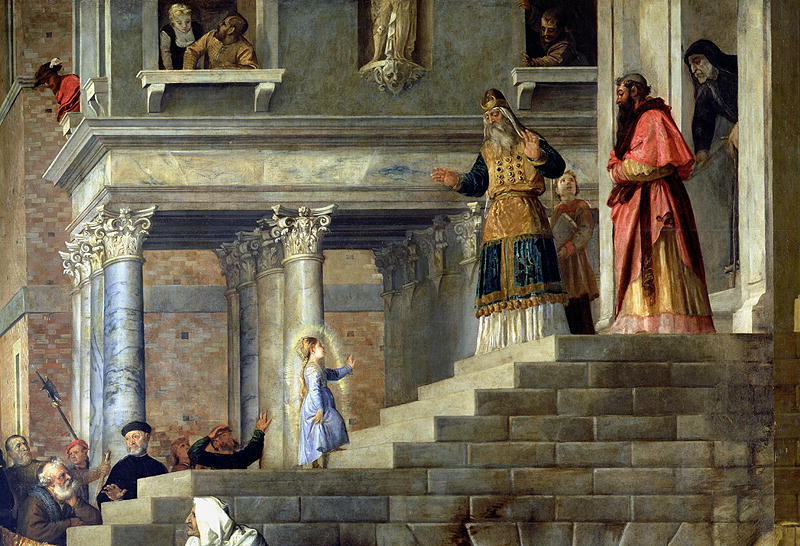
When the child was three years old, her parents took her to Jerusalem to present her to the Lord. According to the tradition, the three-year-old Mary climbed the fifteen steps of the Temple by herself. The high priest received her and welcomed her into the Temple. From that time until she was betrothed to Joseph, Mary remained there.
What can this celebration teach us?
(a) Equality of Boys and Girls
Just as the child Jesus was presented to the Lord, the child Mary too was presented to Him. This reminds us that every child has a place in the presence of God. Before God, boys and girls share the same dignity. Every child is a gift. Every child is called. Every child belongs to God.
(b) The Autonomy of the Child
The tradition presents the child Miriam as climbing the steps of the Temple by herself. This detail is striking. Although children depend on adults for their growth, protection, and well-being, they also possess their own personality, freedom, and growing sense of independence. Children are not merely extensions of their parents. They are persons in their own right. Their voice, choices, development, and dignity must be respected.
The role of adults is not to control children completely, but to accompany them, guide them, protect them, and help them grow into the persons God calls them to become.
(c) A New Kind of Relationship
In today’s Gospel, Jesus speaks about a relationship that goes beyond blood ties. When He is told that His mother and brothers are waiting outside, He says, “Who is my mother, and who are my brothers?” Then He points to His disciples and says that whoever does the will of His heavenly Father is His brother, sister, and mother.
Jesus does not reject His family. Rather, He widens the meaning of family.
A new relationship is created through obedience to the will of God. We become members of the family of Jesus not simply through blood, culture, language, or background, but by listening to God and doing His will.
Mary herself becomes the finest example of this new relationship. She is the mother of Jesus not only because she gave birth to Him, but also because she listened to the Word of God and surrendered herself to His will.
Today’s memorial therefore invites us to place ourselves once again in the embrace of the Lord. Like Mary, we are invited to offer ourselves to God. We are called to respect the dignity and freedom of every child. And we are invited to become part of a wider family, united not merely by blood, but by doing the will of God.
Image courtesy: The-Presentation-of-the-Virgin-Mary-by-Titian-1534-38-Gallerie-dellAccademia-Venice.jpg
Fr. Yesu Karunanidhi
Archdiocese of Madurai
A Yesni Prays Initiative


Leave a Reply