Daily Catholic Lectio
Fri, 20 Nov 2026
XXXIII Week in Ordinary Time
Rev 10:8-11; Lk 19:45-48
The Temple Being Cleansed
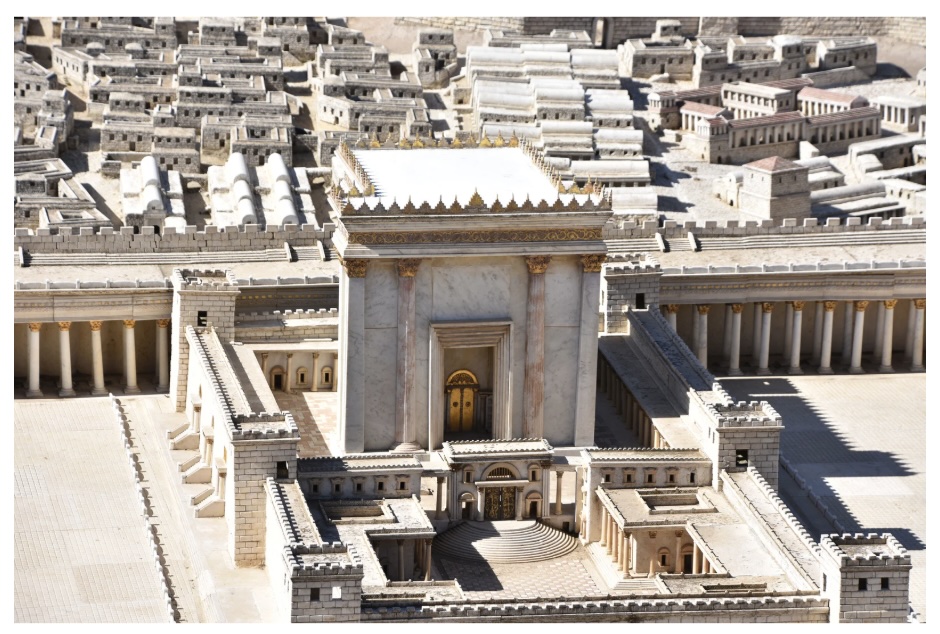
In yesterday’s Gospel, Jesus approached Jerusalem and wept over the city. Today He enters the Temple, which stood at the centre, the heart, and the highest point of Jerusalem, and He cleanses it.
The cleansing of the Temple is recorded by all four Gospels. The Synoptic Gospels place it close to the passion and death of Jesus, while John places it at the beginning of His public ministry. Some scholars point out that the Temple was a well-guarded place under the authority of the high priest, and therefore such an action by Jesus would not have been simple. For this reason, the Gospel writers also present the event with a strong theological meaning.
According to Jewish expectation, the coming of the Messiah would bring the purification and renewal of the Temple. Therefore, by presenting Jesus cleansing the Temple, the Gospel writers are also making a statement about His identity: Jesus is the Messiah who comes to purify the house of God.
At the same time, the Temple in the time of Jesus had become connected with power, wealth, administration, and political influence. Taxes were collected in the name of the Temple, and the high priest exercised considerable religious and social authority. Yet the people also loved the Temple deeply because they believed that the name and presence of God dwelt there.
This explains why touching the Temple was so serious. When Jesus challenged what was happening there, His opponents began to look for a way to destroy Him. Later, even His words about the Temple would be used as an accusation against Him.
Today’s Gospel has two parts. In the first, Jesus enters the Temple and drives out those who are selling there. In the second, His opponents want to destroy Him but do not know what to do, because the people are hanging on His words.
What does this event teach us?
(a) A Distorted Purpose
The Temple was meant to be a house of prayer. Jesus says, “My house shall be a house of prayer,” but it had become “a den of thieves.” The problem was not simply that people were buying and selling. The deeper problem was that the purpose of the Temple had been distorted. A place intended for encounter with God had become a place marked by greed, injustice, and self-interest.
Saint Paul reminds us that we ourselves are temples of God. If the purpose of the Temple is that God should dwell there, then we must ask whether the purpose of our own life remains clear.
What fills the temple of my heart? Is it a place where God can dwell, or has it slowly become filled with ambition, jealousy, resentment, greed, anxiety, or unhealthy attachments?
Spiritual cleansing begins by asking whether our life is still serving the purpose for which it was given to us.
(b) The Teaching and the Teacher
Luke tells us that Jesus taught in the Temple every day. The people “hung upon His words.” They remained close to Him because there was no contradiction between what Jesus taught and the way He lived.
His words had authority because His life supported them.
This challenges us both as those who proclaim the Word of God and as those who listen to it. We may speak beautifully about forgiveness while holding resentment. We may speak about simplicity while being controlled by possessions. We may speak about prayer while giving little time to God. We may speak about love while remaining indifferent to another person.
The credibility of a teacher does not come only from the truth of the words spoken. It also comes from the harmony between the words and the life of the person who speaks them.
The people held on to Jesus because what He said and what He was belonged together.
(c) Righteous Anger
Jesus teaches mercy, forgiveness, compassion, and patience. He receives sinners and shows understanding towards human weakness. But today we also see His righteous anger.
Jesus is patient with people who make mistakes, but He does not make peace with what is wrong.
There is a difference between accepting a person and accepting the wrong that the person does. Jesus loves the person, but He confronts what destroys the person. His anger in the Temple is not uncontrolled rage. It is the anger of someone who loves deeply and therefore refuses to remain silent when something sacred is being corrupted.
This gives us another question for our life. When I recognise something wrong within myself, do I simply learn to live with it? Do I excuse it by saying, “This is how I am”? Or do I have the courage to cleanse, correct, and change it?
Christian mercy should never become an excuse for avoiding conversion. Sometimes love comforts us. At other times, love overturns the tables within us.
The first reading gives us another powerful image. John is told to take the scroll and eat it. In his mouth it tastes sweet like honey, but in his stomach it becomes bitter. This points to his prophetic mission. The Word of God is sweet because it comes from God, but living and proclaiming that Word can also become difficult and painful.
The same is true for us. It is pleasant to hear the Word of God when it consoles us. It becomes bitter when it challenges us, exposes our contradictions, or asks us to change.
Yet both sweetness and bitterness belong to the Word.
The Gospel today therefore invites us to allow Jesus to enter the temple of our life. He comes not to destroy us but to cleanse us. He removes what prevents prayer, restores the purpose of our life, brings our words and actions together, and gives us the courage to confront what is wrong.
A temple is truly holy not because nothing has ever gone wrong inside it, but because it continually allows itself to be cleansed and restored to God.
Fr. Yesu Karunanidhi
Archdiocese of Madurai
A Yesni Prays Initiative


Leave a Reply