Daily Catholic Lectio
Fri, 13 Nov 2026
XXXII Week in Ordinary Time
2 Jn 4-9. Lk 17:26-37
Lot’s Wife
In today’s Gospel, Jesus speaks to His disciples about the last days. The centre of His teaching is this: that day will come suddenly. It will come without warning, it will leave no time for preparation, and therefore readiness is necessary.
Jesus speaks about what will happen in the days of the Son of Man, at His second coming, at the end of the world, or at the final judgment.
In this passage, Jesus uses five images.
First, He speaks about the days of Noah. Life was going on as usual, but suddenly everything changed and came to an end.
Second, He speaks about the day Lot left Sodom. Destruction came upon the city. Lot and his family escaped, but Lot’s wife looked back and became a pillar of salt.
Third, Jesus says that two people will be in one bed; one will be taken and the other left.
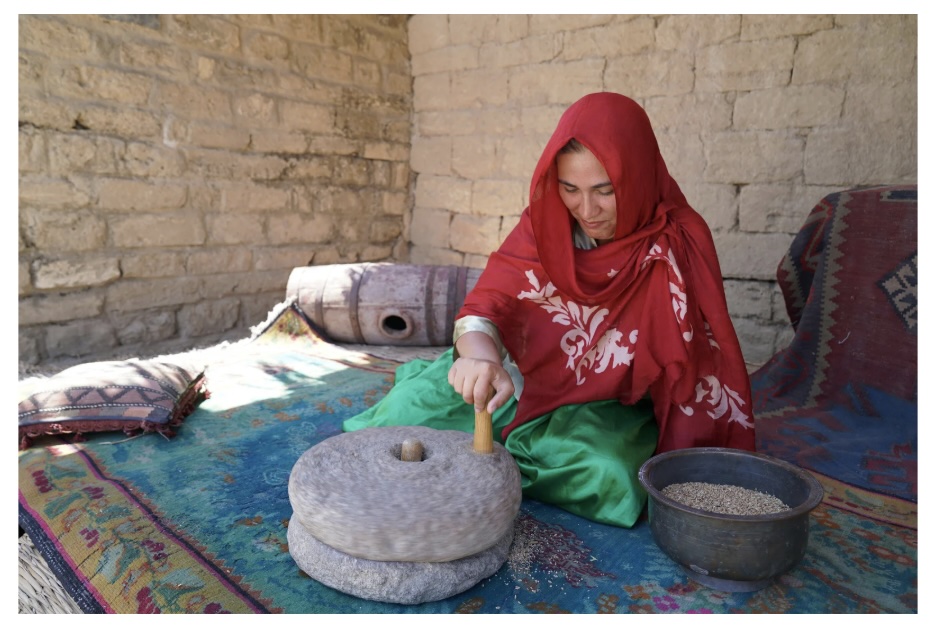
Fourth, two women will be grinding together; one will be taken and the other left.
Fifth, when the disciples ask, “Where, Lord?”, Jesus answers: “Where the body is, there the vultures will gather.” In other words, what has to happen will happen where it is meant to happen.
These images teach us three things: we do not know when that day will come; we cannot control what will happen on that day; and life may still appear completely normal when it comes.
Jesus then says: “Remember Lot’s wife.”
What did Lot’s wife do? Why should we remember her?
Genesis tells us: “The Lord destroyed those cities and all the plain, together with all the inhabitants of the cities and what grew on the ground. But Lot’s wife looked back, and she became a pillar of salt” (cf. Gen 19:25-26).
She looked back at Sodom and became a pillar of salt.
Even today, around the Dead Sea there are many formations of salt. One of them has traditionally been associated with a woman looking back. The biblical story may reflect what is called an etiological story — a story told to explain how a name, place, or feature came to be understood.
But the spiritual question is more important: Why did Lot’s wife look back?
Perhaps she wondered what happened to the animals she had raised. Perhaps she thought about the house she had left behind, the garden, her neighbours, her belongings, her unfinished work. Perhaps she simply wanted to know what was happening.
Whatever the reason, one thing is clear: looking back became dangerous.
A few days ago, in the Gospel of the ten lepers, we reflected that turning back can be good. The Samaritan returned to Jesus in gratitude. So looking back is not always wrong. But looking back and remaining there can become dangerous.
A driver needs a rear-view mirror. But if he looks only at the rear-view mirror, he will crash into what is in front of him.
Life is the same. We need memory. We need to look back, learn, give thanks, and sometimes repent. But life does not allow us to remain facing backwards forever. We must keep moving forward.
The road we have already travelled is past. We cannot go back and rewrite it. What we can do is live with greater awareness now, make wiser choices now, and walk forward with clarity.
Lot’s wife teaches us this: if you are moving forward, continue moving forward. Do not let the past become a place where you stop. Do not let regret freeze you. Do not let curiosity, attachment, or nostalgia prevent you from continuing the journey.
The wisdom tradition reminds us that true understanding comes from knowing God. A person who knows God learns to recognise His presence and also to live in readiness for His coming.
So today’s Gospel leaves us with a simple invitation: remember the past, but do not live there. Learn from it, but keep walking. Be ready, because the Lord comes when we least expect Him.
Fr. Yesu Karunanidhi
Archdiocese of Madurai
A Yesni Prays Initiative


Leave a Reply