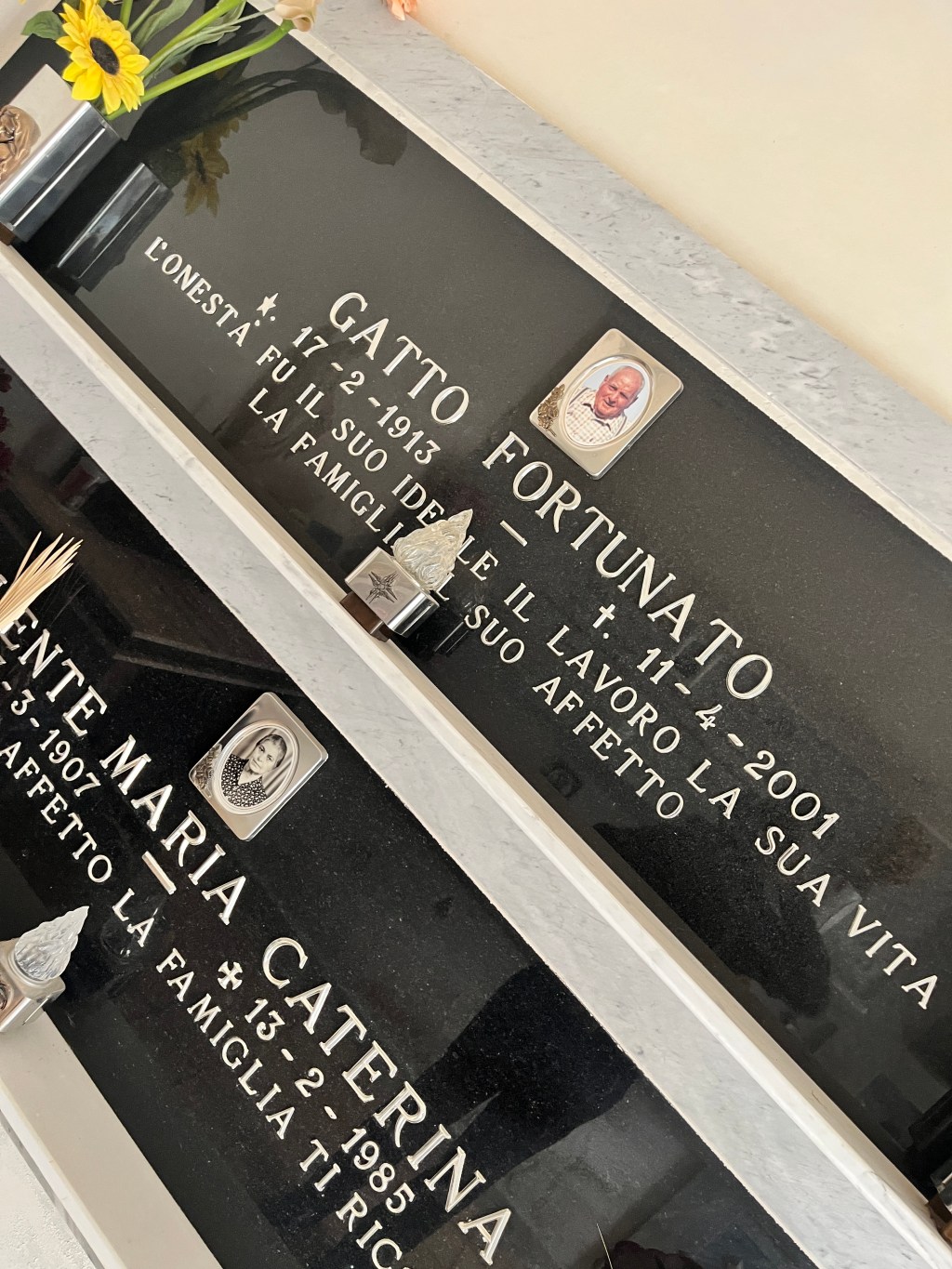
Yesterday, I visited an Italian cemetery for the first time. In the chapel, where I was permitted to wear liturgical vestments and pray for the deceased, one tombstone caught my attention. Beneath the name of the departed were three simple lines:
“Honesty was his ideal (l’onestà fu il suo ideale),
work was his life (il lavoro la sua vita),
and family was his love (la famiglia il suo affetto).”
The epigraph impressed me because it summed up an entire life without mentioning wealth, success, position, or achievement. The person was remembered for three fundamental values: honesty, work, and family.
“Honesty was his ideal” speaks of the principle that guided his choices. Honesty is more than telling the truth; it is the unity between what one believes, says, and does. It gives credibility to a person’s life.
“Work was his life” honours the dignity of labour. Work was evidently not merely a means of earning, but a form of responsibility, commitment, and service. Through his work, he must have supported his family, contributed to society, and expressed his character.
“Family was his love” is perhaps the most touching line. After all his labour, the heart of his life remained his family. He may have been known by many, but he was loved most deeply within his home.
I was moved by the devotion with which the dead are remembered in southern Italy. Tombs are carefully preserved with photographs, flowers, lamps, sacred images, and affectionate words. They do not record only when a person was born and died; they also preserve what that person valued.
This tombstone made me reflect on my own life. What values will remain when titles and accomplishments are forgotten? Perhaps a meaningful life can still be expressed in these three words: integrity in character, dignity in work, and fidelity in love.


Leave a Reply