Daily Catholic Lectio
Sun, 14 June 2026
XI Sunday in Ordinary Time
Exod 19:2-6. Ps 100. Rom 5:6-11. Mt 9:36–10:8
Like Sheep Without a Shepherd!
There is an incident in the novel Alice in Wonderland. Young Alice stands at a crossroads. A cat who sees her there asks, “Alice, where do you want to go?” Alice replies, “I do not know.” The cat answers, “If you do not know where you want to go, you may take any road,” and then walks away.
This incident expresses the condition of human life. Many times, we too stand at the crossroads of life without knowing the direction. We know that we must move, but we are confused about where we should go. We continue to move without a clear destination. We also feel sad that there is no one to show us the way.
There is a similar incident in the Bible. Hagar, the slave woman who runs away from the household of Abraham and Sarah, is met by the angel of the Lord. The angel asks her, “Where have you come from, and where are you going?” Hagar replies, “I am running away from my mistress Sarai.” Hagar knows the answer to the first question, but she has no answer to the second. We know our past, but we do not know our future. We run away from difficult situations in life. But where are we running?
We stand with our wounds, without knowing the direction. We remain awake under our burdens, without knowing the destination.
(1) Sheep Without a Shepherd: An Image of the Human Condition
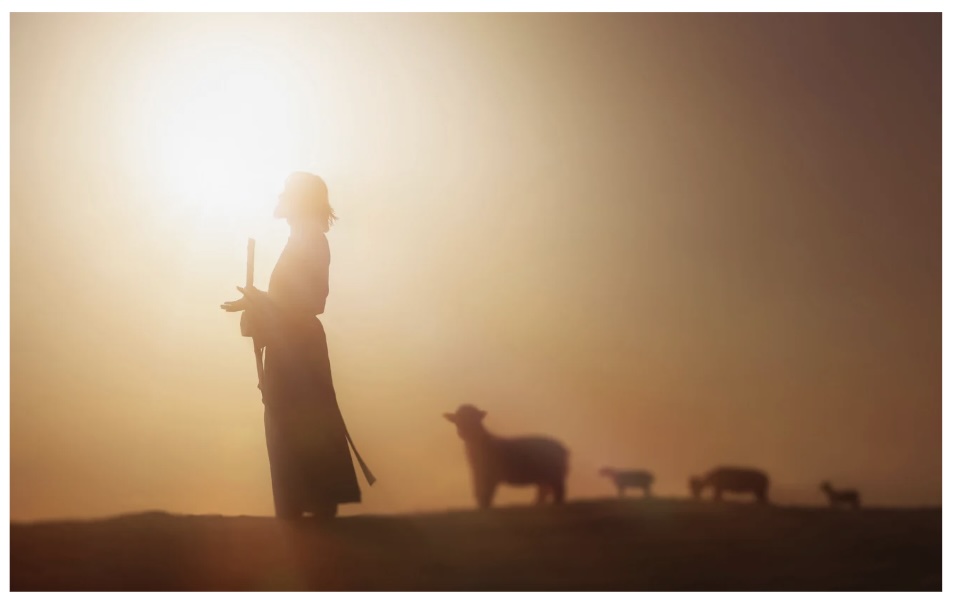
In today’s Gospel, Jesus meets such a crowd of people. “When Jesus saw the crowds, he had compassion for them, because they were harassed and helpless, like sheep without a shepherd.”
Sheep without a shepherd are confused, frightened, hungry, and directionless. They are vulnerable and easily caught by enemies.
In our family life, we feel like sheep without a shepherd when there is misunderstanding, loss, death, separation, addiction, violence, or distance between family members.
When we become sick, experience pain, or face the weakness of old age, we feel like sheep without a shepherd.
In society, we feel like sheep without a shepherd because of political instability, economic difficulties, war, unemployment, injustice, migration, and natural disasters.
Matthew records that the people were “harassed and helpless.” Being harassed and exhausted has become part of our human experience.
(2) The First Reading: God’s Compassion and Covenant
In today’s first reading, the people of Israel camp near Mount Sinai. Sinai stands as the connecting point between Egypt and the Promised Land. Moses had once departed from this place. Now he returns to it. For Moses and for the people, this becomes an experience of returning home.
Here, God reminds them that He carried them “on eagles’ wings.” He gave them freedom and protected them. He now establishes a covenant with them. A relationship deeper than blood relationship or marital relationship is formed between God and His people.
The people who once considered themselves slaves now receive a new identity. They are God’s treasured possession, a priestly kingdom, and a holy nation.
(3) The Gospel: The Compassion of Jesus
The condition of the people causes a movement within Jesus. He has compassion for them. His compassion immediately becomes action. He appoints shepherds for them and sends His disciples among the people.
The response of Jesus is immediate. Knowing that He cannot personally go to every place, He calls His disciples and sends them out.
Compassion becomes mission. Jesus sends them with the words, “You received without payment; give without payment.” The disciples are called to adopt a simple way of life. They are sent without depending on possessions, power, or security.
The mission of the disciples is not based primarily on what they carry in their hands. It is based on their presence and on the presence of God working through them. The suffering world does not always need our solutions. Often, it first needs our presence. When we remain beside the wounded, listen to them, pray with them, and accompany them, our presence becomes a sign of God’s presence.
(4) The Second Reading: God Acting in Our Weakness
Saint Paul writes, “While we were still sinners, Christ died for us.” Here, the compassionate heart of God becomes clear. God loved us, reconciled us to Himself, and gave us joy. God did not wait until we became strong. Christ came to us while we were still weak. God did not wait until we became righteous. Christ died for us while we were still sinners. This is unconditional compassion. Jesus does not first ask whether the people deserve His love. He sees their suffering and draws near to them. His love comes before their worthiness. His compassion comes before their response.
In the light of these three readings, what must we do when we feel like sheep without a shepherd?
(a) Participation
We must broaden our vision. The Israelites had thought of themselves only as slaves. When they reached Mount Sinai, they received a new understanding of themselves as the people of God.
Their participation in God’s chosen people gave them courage and hope. In the same way, we must not look only at the size of our problems. We must also look at the greater meaning of our lives.
We are not merely isolated individuals struggling alone. We belong to God. We belong to a covenant community. We participate in the life, mission, and hope of God’s people.
When we remember who we are and to whom we belong, we begin to find direction.
(b) Compassion
Jesus has compassion for the people and sends His disciples on mission. We can overcome many difficulties through compassion and mercy. But before showing compassion to others, we must first experience the mercy that God shows us. God teaches and supports His people as an eagle teaches its young ones to fly. The eagle carries its young on its wings, but it also enables them to use their own wings. In the same way, God carries us, strengthens us, and teaches us to move forward. Having experienced such compassion, we are called to support one another. Compassion is not merely feeling sorry for another person. It is allowing another person’s suffering to enter our heart and move us to action.
(c) Mission
The disciples who come toward Jesus are sent toward the people. This twofold movement is necessary in discipleship.
We must move toward God and, at the same time, move toward one another. We come to Jesus in prayer, and Jesus sends us back to the world in mission. We receive His compassion and become instruments of compassion.
When we move toward others, we become shepherds who guide them. We may not have wealth, influence, or immediate answers. But we can offer our presence. And through our presence, we can make God’s presence visible.
When the feeling of being like sheep without a shepherd rises within us, let our hearts turn toward the Lord, because “He made us; we belong to him. We are his people, the sheep of his flock.”
Fr. Yesu Karunanidhi
Archdiocese of Madurai
A Yesni Prays Initiative
 Yesu Karunanidhi
Leave a comment