Daily Catholic Lectio
Sun, 19 April 2026
Third Sunday of Easter
Ac 2:14, 22–33. Ps 16. 1 Pet 1:17–21. Lk 24:13–35
Fulfilled Expectation
Can we live without expectation? At one level, we cannot. Expectation gives direction, energy, and meaning to life. At another level, our heart whispers that if there is no expectation, there will be no disappointment. Between these two movements, our life unfolds.
A husband and wife, after many years of marriage, once had a simple conversation. The wife said, “Perhaps I should reduce my expectations.” The husband replied gently that many problems in life come from expectations—unreasonable expectations, unclear expectations, and even expectations that remain unfulfilled. Sometimes we expect too much; sometimes we do not know clearly what we expect; and sometimes, even when our expectations are good, life does not allow them to be fulfilled. We could also add exaggerated expectations, low expectations, and even wrong expectations—expecting something from a place where it cannot come. All this raises a deeper question: what happens to us when our expectations collapse?
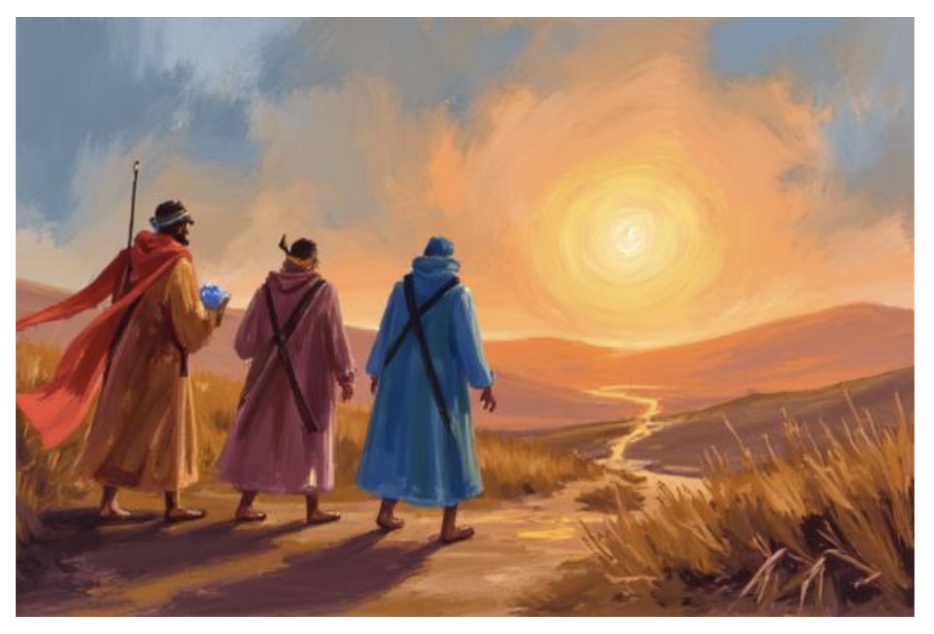
Today’s Gospel gives us the answer. “We were hoping…” This is the confession of the disciples on the road to Emmaus. It is a sentence filled with pain, carrying the weight of broken expectation. “We were hoping that he would be the one to redeem Israel.” Their expectation was not entirely wrong—but it was incomplete, confused, and misdirected. They expected a visible, political victory. Now everything seems finished. So they walk away from Jerusalem.
When expectation is not fulfilled, something happens within us. The Gospel quietly shows us this. They walk in the opposite direction. Jerusalem, the place of promise, is now behind them. Disappointment often pushes us away from where grace is still at work. They keep walking, almost without pause. Human discouragement has its own strange energy. They talk continuously. A troubled heart cannot remain silent. They try to make sense of their loss through words. Their faces reveal everything; even a stranger can see their sadness. There is also a trace of anger: “Are you the only one who does not know?” When hope is broken, irritation easily rises. And yet, there is also openness. “Stay with us.” A wounded heart, when listened to, becomes capable of hospitality.
Into this journey of broken expectation, Jesus enters—unrecognized. He does not correct them immediately. He walks with them. He listens. Then he begins to reinterpret their story in the light of Scripture. What they saw as failure, he reveals as fulfillment. What they experienced as loss, he unveils as promise. What they thought was the end, he shows as the beginning. Their expectations are not simply denied—they are purified.
At the table, in the breaking of the bread, their eyes are opened. In that moment everything changes. “Were not our hearts burning within us?” The same disciples who were walking away now return immediately to Jerusalem. Night is no longer a barrier. Distance is no longer a burden. Fulfilled expectation does not lead to rest; it leads to mission. They do not simply feel better—they move differently. Direction changes. Energy returns. Hope is reborn.
The first reading shows Peter standing in Jerusalem. He proclaims that what seemed like defeat—the death of Jesus—has been transformed by God into victory. People thought they could silence Jesus; God raises him. People looked at the tomb; God opens the heavens. The resurrection becomes the answer to every limited expectation. Peter invites them to lift their gaze—from what is low to what is above.
The second reading continues this movement. Peter reminds the community that their hope is not built on perishable things like silver or gold, but on the precious blood of Christ. When expectations are rooted only in earthly outcomes, they easily collapse. But when they are rooted in God, they are transformed—even through suffering.
A simple proverb says: do not focus only on where you fell, but on where you slipped. The Emmaus disciples slipped in their expectations. They expected God to act in a certain way, at a certain time, according to their understanding. Jesus does not reject them for this. He walks with them, corrects them, and redirects them.
This is the grace of today. Fulfilled expectation is not getting what we imagined. Fulfilled expectation is discovering what God has prepared. It is not the confirmation of our plans, but the revelation of God’s plan.
Where are we today? Perhaps walking away. Perhaps disappointed. Perhaps holding expectations that are unclear, exaggerated, or unfulfilled. The Lord comes quietly, walks beside us, listens to us, and gently turns our direction—through the Word, through the Eucharist, through the breaking of the bread.
And when we recognize him, even if it is evening, even if it is late, even if we are tired—we rise and return. Because fulfilled expectation is not the end of the journey. It is the beginning of a new one.
Fr. Yesu Karunanidhi
Archdiocese of Madurai
A ‘Yesni Prays’ Initiative


Leave a Reply