Daily Catholic Lectio
Thu, 19 Nov 2026
XXXIII Week in Ordinary Time
Rev 5:1-10; Lk 19:41-44
The God Who Weeps
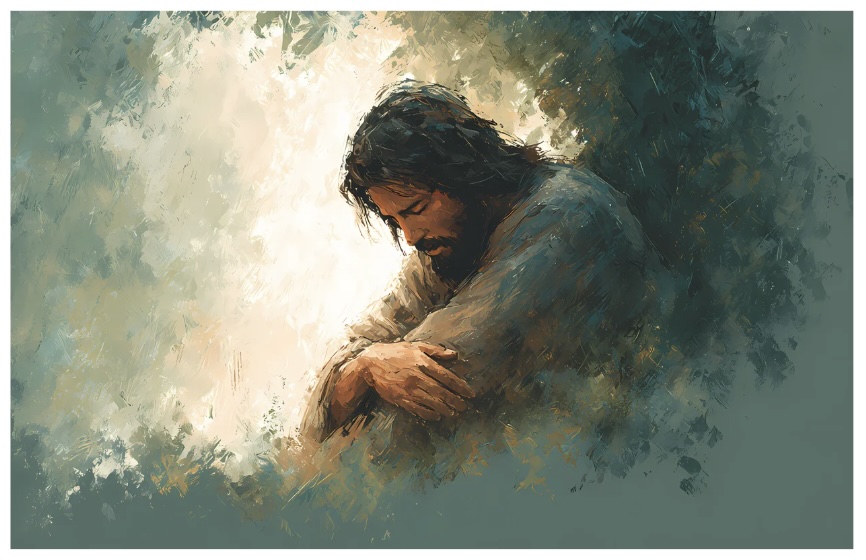
As Jesus approaches Jerusalem, He looks at the city and weeps over it. Jerusalem and its Temple stood at the heart of Israel’s identity. The people believed that the name of the Lord dwelt there. They also believed that the Messiah of God would come and enter Jerusalem. Yet when Jesus came, they failed to recognise Him as the Messiah.
How are we to understand the tears of Jesus?
First, His tears express helplessness. We know such tears from our own experience. When someone lies seriously ill in a hospital, surrounded by machines and tubes, sometimes there is nothing left to say or do. Tears become the only language possible. We feel the same helplessness in moments of death, loss, or deep suffering. Jesus too experiences something similar. He has taught, healed, called, warned, and loved, yet many still refuse to respond. His tears reveal the pain of love that cannot force itself upon another.
Second, the tears of Jesus are a call to conversion. He says to Jerusalem, “You did not recognise the time of your visitation.” God had come near, but the city failed to recognise the moment. Jesus’ tears are therefore not only sorrow; they are also an appeal. He longs for the people to change while there is still time.
Third, His tears are a warning about what is to come. Jesus speaks of the city being surrounded, attacked, and destroyed. His listeners may not want to hear such words, but He remains faithful to His prophetic mission. Love does not hide the truth simply because the truth is painful.
At the centre of His lament is one question: “If only you had known the things that make for peace.”
This word “peace” is important. In the biblical tradition, shalom does not mean only the absence of conflict. It means fullness, wholeness, well-being, right relationship, and harmony with God and with others.
Zechariah, the father of John the Baptist, had already spoken of the Messiah as the One who would “guide our feet into the way of peace.” In that light, Jesus’ lament becomes even clearer. He Himself is the way of peace, but Jerusalem fails to recognise Him.
This remains a question for us. What are the things that disturb the peace of our soul? What distractions, anxieties, false priorities, resentments, or attachments prevent us from recognising the presence of God? Only God can finally satisfy the restlessness of the human heart. We therefore need to examine what is taking away our peace and allow the Lord to lead us again into His way.
The first reading gives us another image of tears. John sees a scroll sealed with seven seals, but no one is found worthy to open it. He begins to weep. Then one of the elders comforts him and tells him not to weep, because the Lion of Judah has conquered.
This gives us a final consolation. When we weep because we feel powerless, God does not remain distant. He comes near. He consoles us. He reveals that what seems closed to us is not closed to Him.
Jesus weeps over Jerusalem, and John weeps before the sealed scroll. Their tears remind us that faith does not remove sorrow from life. But faith tells us that sorrow is never the last word.
When we weep in helplessness, God comes to us. He holds us, consoles us, and wipes away our tears.
Fr. Yesu Karunanidhi
Archdiocese of Madurai
A Yesni Prays Initiative


Leave a Reply