Daily Catholic Lectio
Sun, 25 October 2026
XXX Sunday in Ordinary Time
Ex 22:21-27; 1 Thess 1:5-10; Mt 22:34-40
I Love You, Lord!
Through the prophet Jeremiah, the Lord God says to the people of Israel: “I have loved you with an everlasting love; therefore I have continued my faithfulness to you” (Jer 31:3). If we take this as a passage where God looks at human beings and says, “I love you!”, then today’s Responsorial Psalm is a passage where human beings look at God and say, “I love you!”
This Psalm (18), sung by David, the servant of the Lord, on the day when God delivered him from the hands of all his enemies and from the hand of Saul, begins: “I love you, Lord, my strength!” (18:1), and concludes by proclaiming the steadfast love of the Lord: “He shows steadfast love forever!” (18:50).
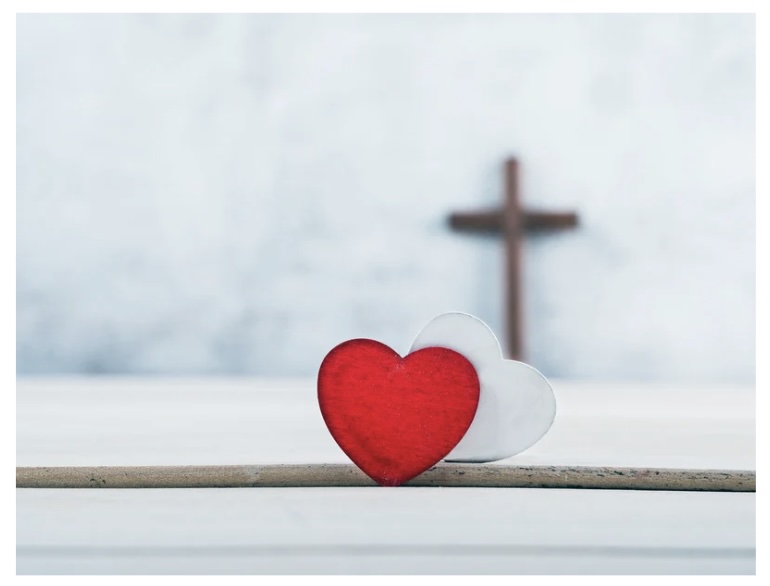
When we look at the words “I love you” in the light of today’s readings, each of us is invited to say to God, “I love you,” and love Him; to say to ourselves, “I love you,” and love ourselves; and to say to one another, “I love you,” and show love for others.
Today’s Gospel continues from last week’s passage. Jesus enters Jerusalem amid shouts of triumph and cleanses the Temple. After this event, His opponents try to trap Him in His words. The Pharisees join with the Herodians and ask Him, “Is it lawful to pay taxes to Caesar?” In today’s passage, a scholar of the Law among the Pharisees tests Him by asking, “Which commandment in the Law is the greatest?”
The conversation begins with the address, “Teacher!” Even this form of address seems almost sarcastic. In their minds there may have been the question: does this son of a carpenter from the villages of Galilee really know the Law? They may also have been mocking the fact that the people considered Jesus a teacher.
Every Israelite knew the answer to the question, “Which is the greatest commandment in the Law?” The scholars of the Law, who had studied the commandments thoroughly, certainly knew it. Therefore, the question was asked primarily to test Jesus’ knowledge. At another level, there were 613 regulations in use at the time of Jesus. All of them had developed from the Ten Commandments. The Ten Commandments were the words of the Lord God, but the tradition that began by interpreting those words gradually expanded them into many regulations. Therefore, the question may also have been asking Jesus to identify the most important commandment among the 613.
Without being disturbed by their intentions, Jesus gives them a direct answer.
“You shall love the Lord your God with all your heart, with all your soul, and with all your mind,” says Jesus. He defines this as the first and greatest commandment. Although Jesus seems to be quoting the passage from the Law of Moses, “Hear, O Israel!” (Deut 6:4-6), the “Great Shema,” one important expression is omitted in Jesus’ wording. Instead of saying “with all your strength,” He uses the expressions “with all your soul” and “with all your mind.” If we understand “heart” as feeling, “soul” as life, “mind” as thought, and “strength” as body, then our life, feelings, thoughts, and body must all be directed towards God.
Jesus leaves out the expression “with all your strength” (“body”) and seems to transform it into another commandment: “You shall love your neighbour as yourself” (cf. Lev 19:18). We may understand this to mean that our love for God must be expressed through our body in loving service to others. In Matthew’s Gospel, love of neighbour is expressed precisely through bodily acts: feeding the hungry, giving drink to the thirsty, welcoming the stranger, clothing the naked, caring for the sick, and visiting those in prison (cf. Mt 25:35-36).
By placing the two commandments of love of God and love of neighbour side by side, Jesus confirms that He has come to fulfil the Law (cf. Mt 5:21-22). At the same time, He challenges the attitude of the Pharisees who separated themselves from others, thinking that love of God alone was sufficient.
In today’s first reading (cf. Ex 22:21-27), from the section known as the “Covenant Code,” the Lord God points out three groups of vulnerable people living in society at that time: (a) foreigners, (b) widows and orphans, and (c) the poor. All three are people whose roots have been torn away in different ways. Foreigners are those whose root of land has been removed. Whatever possessions they may have, the land on which they stand is not their own. Widows and orphans are those whose root of relationship has been removed. The Bible often mentions these two groups together. In a patriarchal society, wives were regarded as belonging to their husbands, and women had little or no property of their own. Moreover, war, long journeys, and dangers left many children without protection. The poor are those whose economic roots have been torn away. They often had to borrow money with interest in order to meet their needs. The Lord commands Israel to embrace and protect all these vulnerable people.
In Lev 19:18, the word “neighbour” originally referred to a fellow Israelite living nearby. In that sense, love of neighbour was understood within the boundaries of one’s own people. Today’s first reading broadens that vision by including foreigners, widows, orphans, and the poor among those who must be treated as neighbours.
In the second reading (cf. 1 Thess 1:5-10), Paul rejoices and gives thanks for the people of Thessalonica, and then says, “You became imitators of us and of the Lord.” First of all, Paul’s humility and goodness are striking. He says that they have become “like the Lord.” When someone comes to help us in a moment of need, we sometimes say, “You came like God and saved me.” To be “like the Lord” means to seek completely the good of another person without expecting anything in return. The faith of the Thessalonians became an expression of their love of God, while their exemplary life became an expression of love of neighbour. In this way, they became a model for other Christian communities.
Before the two commandments of love of God and love of neighbour, the expression “as yourself” contains the idea of self-love. A person who does not love himself or herself will find it difficult to love either God, who is greater than oneself, or the neighbour, who is equal to oneself.
Here Jesus says, “Love your neighbour as yourself.” At the Last Supper He gives a new commandment: “Just as I have loved you, you also should love one another” (Jn 13:34).
We may compare the three forms of love—love of God, self-love, and love of neighbour—to the root, trunk, and branches of a tree. Love of God is our root. Through self-love we grow like the trunk. The branches represent the stage in which we bear fruit in the world.
The spiritual guide Gaur Gopal Das speaks about three “Cs.” He says that we should always keep these three in mind: (a) connection, (b) cultivation, and (c) contribution. If we relate these three to the three forms of love mentioned above, our life becomes beautiful when, through love of God, we establish a connection with God; through self-love, we cultivate and form ourselves; and through love of neighbour, we make our contribution to others.
Today, let us look at God, at ourselves, and at one another and say: “I love you!”
If these words are to become actions, the following obstacles must be removed:
(a) Obstacles to love of God: doubt, thoughts of unbelief, pride, sin, lack of understanding about God, and distorted ideas about God.
(b) Obstacles to self-love: inferiority complex, the pressure to be perfect, comparison, negative self-talk, unrealistic expectations, and social pressure.
(c) Obstacles to love of neighbour: fear, prejudice, indifference, hatred, hostility, anger, selfishness, jealousy, insecurity, and lack of time.
Let us remember that love does not belong only to the heart, soul, and mind; it must also involve our strength and our actions. How beautiful our life would become if love itself became action!
Fr. Yesu Karunanidhi
Archdiocese of Madurai
A Yesni Prays Initiative


Leave a Reply