Daily Catholic Lectio
Fri, 16 October 2026
XXVIII Week in Ordinary Time
Eph 1:11-14. Lk 12:1-7
Do Not Be Afraid
Today’s Gospel begins by saying that “the crowd gathered in thousands, so that they were trampling on one another.” This shows how popular Jesus had become and how strongly He attracted people to Himself.
At the time of Jesus, His teachings, mighty works, and journeys created many movements and reactions in society. Some openly opposed Him or plotted against Him. Some continued on their way murmuring. Their opposition did not affect Jesus Himself, but it did affect His disciples. Some became afraid of the opponents and left Jesus. Some openly accepted Him and embraced martyrdom. A large number, however, did not follow Him publicly or openly confess Him as the Son of God, but kept their faith hidden within themselves. It is against this background that we can understand today’s Gospel.
Jesus says: “Beware of the leaven of the Pharisees, which is hypocrisy.” Elsewhere Jesus uses leaven positively when He compares the Kingdom of God to leaven (cf. Lk 13:20-21). But here the image is negative. Paul also uses it negatively: “Do you not know that a little leaven leavens the whole batch of dough? Clean out the old leaven … Let us celebrate the feast, not with the old leaven, the leaven of malice and evil, but with the unleavened bread of sincerity and truth” (cf. 1 Cor 5:6-8).
Jesus speaks specifically about the leaven of hypocrisy. Leaven changes even good dough. Once the dough has been leavened, it cannot be returned to its earlier state. The action of leaven is also invisible to the eye. Jesus therefore warns His disciples that the hypocrisy of the Pharisees must not infect them, and that they must be alert to hypocrisy that spreads quietly and invisibly.
Jesus then strengthens them with the words “Fear!” and “Do not be afraid!” The word “fear” appears five times in this passage: “Do not fear those who kill the body and after that can do nothing more”; “I will show you whom to fear”; “Fear the One who has authority to cast into Gehenna”; “Yes, I tell you, fear Him”; and finally, “Do not be afraid; you are worth more than many sparrows.”
Fear is a neutral emotion. Positive fear can make us careful and responsible. For example, fear of approaching vehicles makes us cautious on the road. Fear of an examination can encourage us to study well. Fear of poverty can motivate us to work hard.
Negative fear, however, can paralyse us. A child who is afraid to speak in public may continue to fear public speaking for a long time. Fear of strangers can also create prejudice against them.
Jesus speaks about both kinds of fear. He also teaches us whom we should fear and whom we need not fear.
(a) Human power is limited. Human beings can kill only the body. Therefore, we do not need to live in fear of them.
(b) God has the authority to judge us. Therefore, we should fear Him.
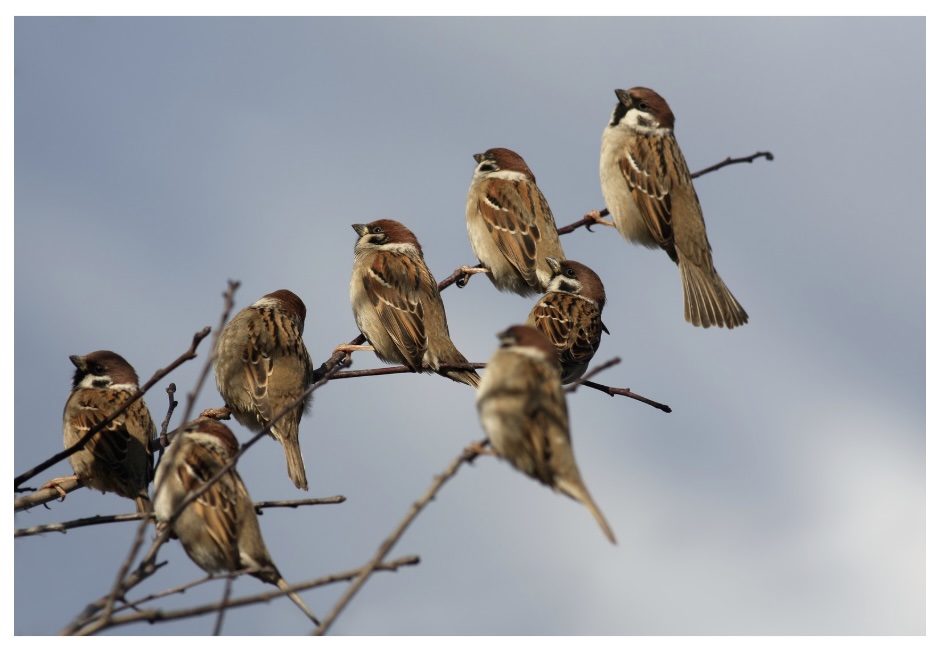
(c) God cares for us. How does He care for us? Jesus asks: “Are not five sparrows sold for two small coins?” The common saying in His time was “two sparrows for one coin” (cf. Mt 10:29-31). Two coins should therefore buy four sparrows. Where does the fifth sparrow come from? The fifth sparrow is like an extra sparrow, given without price. Yet even that sparrow is not forgotten by God. If God cares even for such a sparrow, how much more does He care for us! We only need to realise that we are worth more than many sparrows.
Three lessons for today:
First, we must be careful that the leaven of hypocrisy does not enter our life of faith.
Second, we must fear God. Not with the fear of slaves, but with the reverent fear of children. “The fear of the Lord is the beginning of wisdom” (Prov 9:10). Joseph in the Old Testament lived with this reverence for God in every situation.
Third, we must remember God’s providential care for us. Even the hairs of our head are counted. He stands close to us and watches over us. He cares for us more than He cares for the sparrows.
Let us therefore not allow our hearts to become small and fearful like frightened sparrows.
Fr. Yesu Karunanidhi
Archdiocese of Madurai
A Yesni Prays Initiative


Leave a Reply