Daily Catholic Lectio
Tue, 21 April 2026
Third Week of Easter
Ac 7:51-8:1. Jn 6:30-35
Food that God Gives
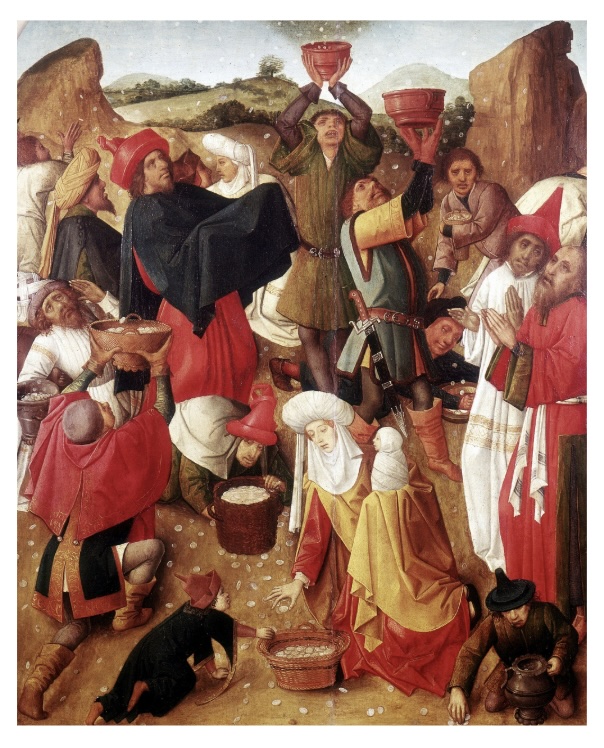
There is something deeply human about hunger. We hunger not only for food, but for meaning, for peace, for joy, for fulfillment. In today’s Gospel, the crowd comes to Jesus with a question: “What sign will you give us, so that we may see and believe?” They remember the manna in the desert. They recall how their ancestors were fed. And in a subtle way, they are asking Jesus to do the same—give them bread again.
Jesus gently redirects their search. He tells them: “It was not Moses who gave you the bread from heaven, but my Father gives you the true bread from heaven.” The focus shifts—from what was given to who gives. From the past to the present. From the sign to its source. The people remember the food; Jesus reveals the Giver.
This is often true in our own lives. We remember the blessings, but we forget the One who blesses. We seek what God can give, but not always God himself. We look for signs from heaven, while heaven is already standing before us.
Jesus goes further and says: “The bread of God is that which comes down from heaven and gives life to the world.” Here, “world” is not just a place—it is the space where God’s grace is received. And “life” is not mere existence. It is peace, joy, and fullness. It is a life that is deeply rooted, deeply nourished.
Then comes the most striking revelation: “I am the bread of life.” The people were looking up to heaven for a sign. Jesus invites them to look at him. The true food is not something; it is someone. God does not just give bread; God gives himself.
And yet, they struggle to understand. They see Jesus as the carpenter’s son. They cannot move beyond what is familiar. They cannot recognize the divine hidden in the ordinary. This is the quiet tragedy of faith—we can stand so close to grace and yet fail to see it.
But this is how God chooses to come. He “reduces” himself, humbles himself, and dwells among us. In the Eucharist, this mystery continues. The bread we receive is not just a symbol; it is the living presence of Christ. God becomes our food so that we may live in him.
The first reading presents a striking contrast. While the crowd questions and hesitates, Stephen stands firm and gives witness. Even in the face of rejection and death, he proclaims the truth. He has received the true food. He is nourished not by bread alone, but by the living presence of God. And that nourishment gives him courage, clarity, and peace.
This brings us to a simple but profound question: What are we really seeking? Are we looking for signs, or are we ready to recognize the One who stands before us? Are we satisfied with what God gives, or do we desire God himself?
To receive the food that God gives, we need a shift in our vision. Not to look only upward, waiting for something extraordinary—but to look inward and around, to recognize Christ who comes quietly, humbly, faithfully.
Today, Jesus invites us: “Come to me.” The one who comes will never hunger; the one who believes will never thirst. This is not a promise of a life without struggle, but a promise of a life that
is nourished from within.
Let us ask for the grace to recognize this food. To receive it with faith. And to be nourished by it—so that our lives, like Stephen’s, may become a living witness.
For in the end, the food that God gives is not something we consume. It is a life we receive.
Fr. Yesu Karunanidhi
Archdiocese of Madurai
A ‘Yesni Prays’ Initiative


Leave a Reply