Daily Catholic Lectio
Mon, 30 Nov 2026
Feast of Saint Andrew, Apostle
Rom 10:9-18. Ps 19. Mt 4:18-22
The First Disciple
Today, the Church celebrates the feast of Saint Andrew, Apostle. The name Andrew is related to the Greek words anēr and andros, which convey the meaning of manliness, courage, and strength.
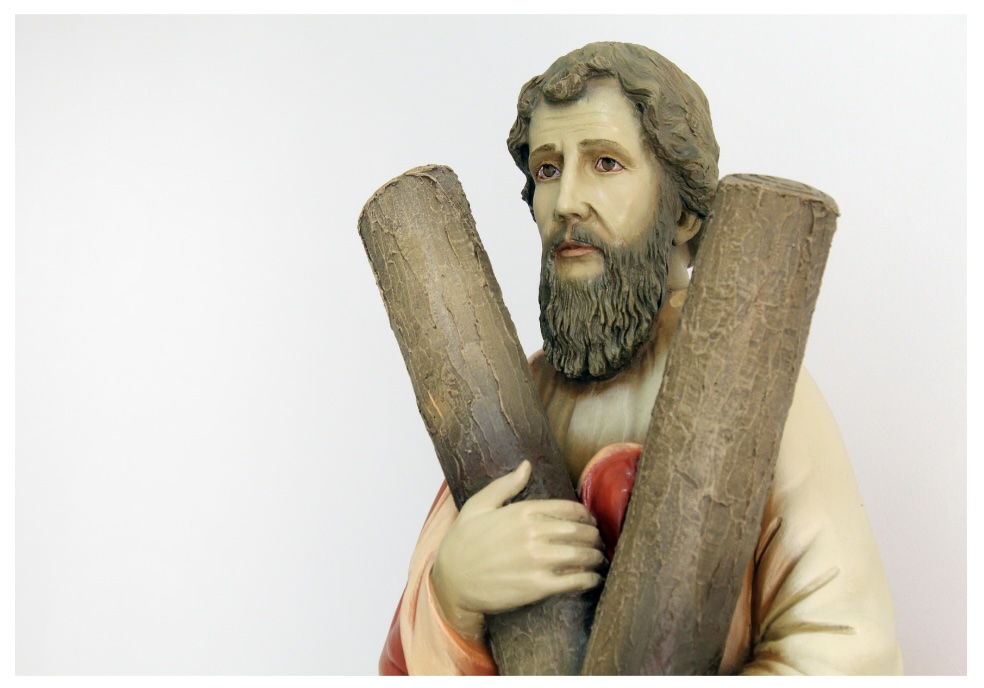
In the Eastern Churches, Andrew is known as Protoklētos, meaning ‘the first-called’. According to John’s Gospel, Andrew, originally a disciple of John the Baptist, was one of the first two disciples to follow Jesus. In the Synoptic Gospels, Jesus calls him along with his brother Peter on the shores of the Sea of Galilee. Andrew is honoured as the founder of the Church of Constantinople. According to tradition, he was martyred on an X-shaped cross at Patras in Greece. He is the patron saint of Scotland and several other countries.
In today’s first reading, Saint Paul presents a beautiful series of questions. How can people call upon someone in whom they do not believe? How can they believe without hearing? How can they hear without someone preaching? How can anyone preach without being sent?
Five actions are interconnected: praying, believing, hearing, proclaiming, and being sent. Reading them in reverse order, someone is sent, the person proclaims, others hear, those who hear believe, and those who believe pray. Behind every pair of hands raised to God in prayer are the footsteps of someone sent by God.
In today’s Gospel, Jesus calls Peter and Andrew, who are casting their nets into the sea: “Come after me, and I will make you fishers of men.” Immediately, they leave their nets and follow Him.
Jesus does not discard their professional experience. Instead, He gives it a new purpose. Their patience, perseverance, courage, and cooperation will now help them bring people to God. God’s call does not mean losing our abilities, but using them for a new purpose.
Andrew appears in three significant episodes in John’s Gospel.
First, having encountered Jesus, Andrew tells his brother Simon, “We have found the Messiah,” and brings him to Jesus (cf. Jn 1:40-42). He introduces someone who will eventually assume a greater responsibility than himself.
Second, at the feeding of the five thousand, Andrew draws Jesus’ attention to a boy with five barley loaves and two fish (cf. Jn 6:8-9). What appears insignificant becomes abundant in the hands of Jesus.
Third, when some Greeks express their desire to see Jesus, Philip approaches Andrew, and together they go to Jesus (cf. Jn 12:20-22). Andrew helps people encounter Jesus beyond the boundaries of language, nationality, and culture.
In all three episodes, Andrew makes room for others in his relationship with Jesus. He wants others to experience the joy he has discovered.
In Andrew, we recognize two directions of discipleship: bringing others to Jesus and bringing Jesus to others. These two movements form the foundation of evangelization.
To bring others to Jesus, we must care about their lives. To bring Jesus to others, we must cultivate a close relationship with Him. Prayer and concern for others thus come together.
Today’s feast reminds us that each of us can become a channel of God’s presence in the lives of others. Comforting someone who has lost hope, visiting someone who is lonely, recognizing another person’s hidden abilities, and helping someone grow are all forms of evangelization.
Like Andrew, let us bring people closer to Jesus and bring Jesus closer to people.
Fr. Yesu Karunanidhi
Archdiocese of Madurai
A Yesni Prays Initiative


Leave a Reply