Daily Catholic Lectio
Fri, 2 October 2026
Guardian Angels, Memoria
Exod 23:20-23. Mt 18:1-5, 10
Guarded on the Way
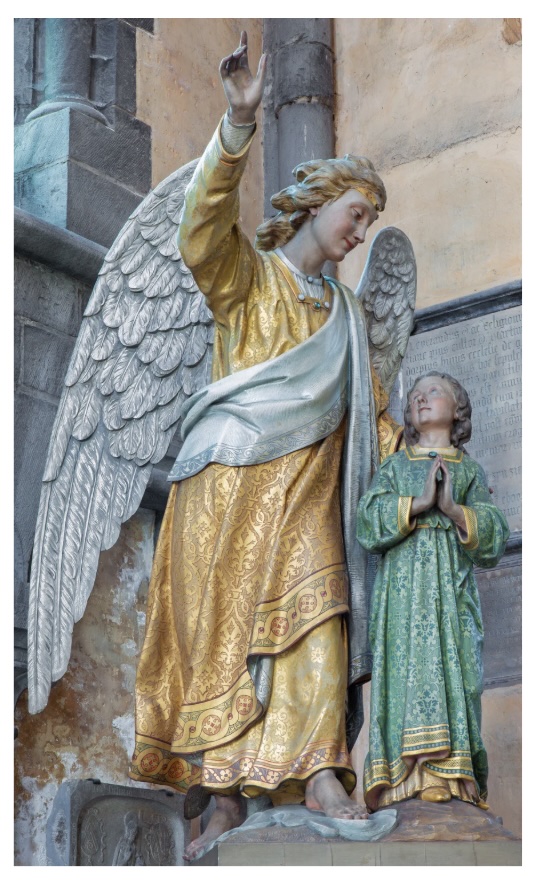
The Feast of the Holy Guardian Angels invites us to reflect not simply on angels as invisible companions, but on the deeper truth they reveal: God accompanies us. He protects, guides, warns, strengthens, and leads us towards the destination He has prepared for us.
The guardian angel is therefore a sign of God’s providence. The central message of this feast is simple: we are not abandoned on the journey.
(a) Biblically: God sends an angel before us
One of the clearest biblical texts comes from Exodus: “I am sending an angel before you, to guard you on the way and to bring you to the place I have prepared” (Ex 23:20).
Three ideas are contained in this promise: presence, protection, and destination.
The angel goes before the people. The angel guards them on the way. The angel helps them reach the place God has prepared.
Psalm 91 says the same thing: “He will command his angels concerning you, to guard you in all your ways.” The emphasis is important. The angels do not act independently. God commands them. Their care is an expression of God’s care.
Jesus also says in Matthew: “Do not despise one of these little ones, for their angels in heaven always behold the face of my Father” (Mt 18:10).
This means that those who may appear little, weak, unnoticed, or insignificant on earth are not insignificant before God.
The biblical message is therefore clear: our journey is lived under the watchful providence of God.
(b) Theologically: every person is precious before God
Guardian angels reveal something important about human dignity.
Angels are not divine beings. They are creatures, servants, and messengers of God. Their role points beyond themselves towards God.
The theology of guardian angels tells us that human life matters deeply to God. Each person is worthy of care, accompaniment, and protection. This is especially important when we remember Jesus’ words about the “little ones.” Human dignity does not depend on power, success, intelligence, wealth, age, health, or social position. Someone ignored by society is not ignored by heaven.
At the same time, angelic protection does not mean that nothing painful will ever happen to us. Saints suffered. Martyrs died. Jesus Himself was crucified. God’s protection is deeper than physical safety. Sometimes He protects us from suffering. Sometimes He guides us through suffering. Sometimes He gives us strength to endure what cannot be avoided. The guardian angel is therefore not merely a symbol of security. The guardian angel is a sign of faithful accompaniment. God does not promise us a road without difficulties. He promises that we will not walk that road alone.
(c) Liturgically: heaven accompanies earth
The liturgy helps us understand this feast correctly.
We do not celebrate angels apart from God. We celebrate what God does through them.
The liturgical texts bring together beautiful images. God says, “I send an angel before you.” The Psalm says, “He commands His angels to guard you.” Jesus says, “Their angels behold the face of my Father.”
The angels therefore live in two directions: they look towards God and they serve human beings.
Their service flows from their contemplation of God.
This is also a lesson for us. True ministry begins by remaining before God. If we lose our relationship with God, our service can become empty, tired, or self-centred.
At every Eucharist, we also pray “with Angels and Archangels.” The liturgy reminds us that earthly worship is united with heavenly worship. Heaven is not far away. Our prayer, our journey, and our daily life already touch the mystery of heaven.
(d) Existentially: guarded, therefore called to guard
What does this feast mean for our daily life?
First, it tells us: you are not alone. We may experience loneliness, uncertainty, illness, fear, difficult decisions, or moments when nobody seems to understand us. But being alone is not the same as being abandoned. Faith tells us that our life remains within God’s care.
Second, the feast invites us to listen. Guidance requires attentiveness. We need silence, prayer, conscience, Scripture, and discernment in order to recognise what leads us towards God and what leads us away from Him.
Third, the feast asks us to respect others. Jesus says, “Do not despise one of these little ones.”
Before humiliating, ignoring, exploiting, or dismissing another person, we should remember: this person is precious before God.
Finally, because we are guarded, we are also called to guard others. A parent protecting a child, a friend preventing another from making a harmful decision, a teacher encouraging a struggling student, a priest listening patiently, a person standing beside someone who is lonely—all these become signs of God’s protecting presence.
We do not become angels. But we can become instruments of the same divine care. The feast of the Guardian Angels therefore gives us a beautiful movement: God guards us on the way. God gives dignity to every person. Heaven accompanies earth. And those who are guarded are called to become guardians of one another.
Today, let us walk with confidence. We are guarded on the way.
Fr. Yesu Karunanidhi
Archdiocese of Madurai
A Yesni Prays Initiative


Leave a comment