Daily Catholic Lectio
Mon, 23 February ‘26
First Week of Lent, Monday
Lev 19:1-2, 11-18. Mt 25:31-46
Keys to the Kingdom
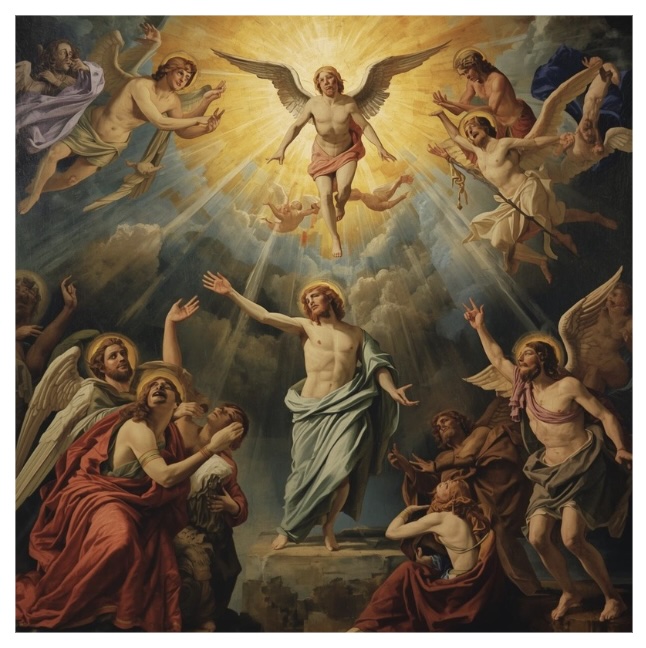
Today’s Gospel brings forth both wonder and fear. Wonder — because we ask ourselves how this will happen. How will the Son of Man gather all nations, from the beginning of the world until now, and place them before Him? How will every life be remembered? How will justice be done? Fear — because we too will stand there. We will not remain observers. We will be judged, placed either at the right or at the left.
In today’s gospel reading, Jesus presents the great scene of the final judgment. The Son of Man comes in glory. All are gathered. He separates them as a shepherd separates sheep from goats. What is striking is this: Jesus does not set extraordinary qualifications for standing at His right. No theological degree is required. No memorisation of Scripture is demanded. No wealth, no status, no academic achievement is mentioned. The criteria are simple, concrete, and accessible to all.
The ways into the Kingdom are little ways. Jesus names six actions: giving food to the hungry, water to the thirsty, welcoming the stranger, clothing the naked, caring for the sick, and visiting the prisoner. Six small gestures. They do not require extraordinary ability. A little bread, a glass of water, a little time, a little space in our homes, a little attention — these are enough. These are the keys to the Kingdom.
Why then are these simple acts so difficult? Because we resist becoming little ourselves. We are often attracted to the great, the powerful, the influential. The small and unnoticed do not easily draw our attention. Yet in this Gospel, the King identifies Himself with the little ones. “I was hungry… I was thirsty… I was a stranger.” He does not speak about them; He speaks as them. To ignore the little one is to ignore Him. To meet the little one is to meet Christ Himself.
There is also a subtle danger. We must not perform these actions in order to earn heaven, as if we were collecting merits. If we act with calculation, we begin to use the poor for our own spiritual benefit. That is dangerous. A human being must never be used as a means to an end, even a religious end. The righteous in the Gospel are surprised: “Lord, when did we see you?” They were not counting. They were simply loving.
The first reading from the Book of Leviticus (19:1–2, 11–18) summarizes everything in one line: “You shall love your neighbour as yourself.” In Israel’s faith, love of God and love of neighbour stand together. They are like two wheels of a cart. If one wheel breaks, the journey cannot continue. Love of neighbour is measured by love of self. By nature, we care for ourselves, protect ourselves, and seek what is good for us. The command invites us to extend that same measure to the one next to us.
The six situations in the Gospel all reveal human fragility — hunger, thirst, loneliness, exposure, sickness, isolation. These are not distant realities. They are part of every human life. When we respond to these needs in others, we acknowledge our own vulnerability. Compassion begins when we accept that we too are fragile.
As we walk through Lent, the Gospel does not give us complicated spiritual programs. It gives us simple keys. The Kingdom is opened not by greatness but by smallness. Not by power but by presence. Not by status but by service.
The Son of Man will gather all — that fills us with wonder. He will judge — that awakens holy fear. But He has already placed the keys in our hands. Food. Water. Welcome. Clothing. Presence. Visit. Small gestures, simple actions — these are the keys to the Kingdom. Let us use them well this Lent.
Fr Yesu Karunanidhi
Archdiocese of Madurai
Missionary of Mercy

 Yesu Karunanidhi
Leave a reply to candelinejoseph9 Cancel reply