Daily Catholic Lectio
Sat, 14 February ‘26
Fifth Week in Ordinary Time, Saturday
1 Kings 12:26–32; 13:33–34. Mark 8:1–10
Compassion Again
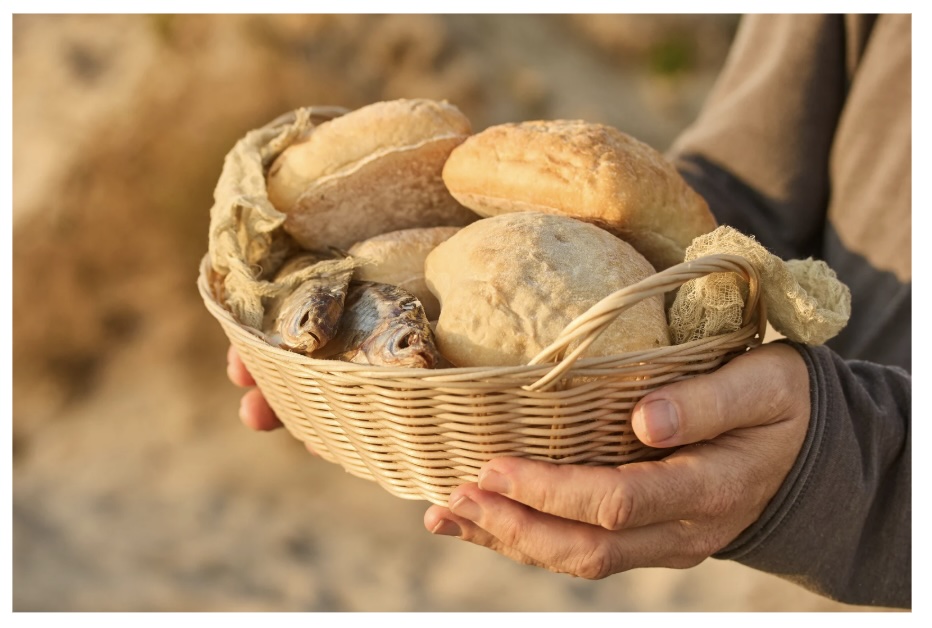
Today the Gospel presents to us a familiar scene: the multiplication of the loaves. But it is not the first time. It happens again.
In the Gospel of Gospel of Mark, as well as in Gospel of Matthew, we find two accounts of the multiplication. First, five loaves for five thousand. Now, seven loaves for four thousand.
Both narratives follow the same pattern: People are hungry. Jesus feels compassion. He involves the disciples. The people are satisfied. The fragments are gathered.
Why this repetition?
In literature, repetition serves three purposes. First, it confirms the authenticity of the event. This is not imagination. This is remembered reality. Second, it builds the character of the protagonist. Jesus is revealed again and again as one who feels compassion. Third, repetition suggests continuity. What happened then is meant to continue.
The event is not important for Jesus. It is important for us.
The Gospel says: “I have compassion on the crowd.” This is the heart of God. We do not have a distant God. We have a God who notices hunger, who feels pain, who feeds his people.
The miracle begins not with power, but with compassion.
Jesus does not ignore the hunger. He does not spiritualize it. He does not say, “Pray and forget your stomach.” He feeds them. And he involves the disciples. He asks them questions. He makes them part of the solution. Compassion becomes mission.
And at the end, the fragments are collected. Nothing is wasted. When God feeds, there is abundance.
The first reading from the Book of Kings shows us the opposite: false compassion. King Jeroboam tells the people, “It is too much for you to go up to Jerusalem.” It sounds caring. It sounds thoughtful. But it is not. He is afraid that if they go to Jerusalem, they will return to the king of the south. So, he builds a shrine at Bethel.
His concern is not for the people. It is for himself. That is false compassion. Words of care hiding selfish motives.
From that day until today, many leaders speak in the language of compassion. But often it is mixed with self-interest. The people are not at the centre. Power is. Jesus’ compassion is different. It is people-centred. It seeks the good of others. It gives, even at cost.
Today, “compassion again” is addressed to us.
If our God is compassionate and feeds us, then we who are fed must become bread for others.
We cannot receive and remain indifferent. We cannot be satisfied while others hunger — hunger for food, for love, for attention, for dignity.
Compassion is not a feeling. It is a movement. It sees, it is moved, it acts, it shares.
Every Eucharist repeats the same pattern: We come hungry. He has compassion. He feeds us. And he sends us. The repetition continues — not on the hills of Galilee, but in our homes, our parishes, our society.
May we learn the difference between true compassion and selfish concern. May we receive the compassion of Christ. And may we become, again and again, bread broken for the world.
Fr. Yesu Karunanidhi
Archdiocese of Madurai
Missionary of Mercy


Leave a comment