Daily Catholic Lectio
Fri, 23 January ‘26
Second Week in Ordinary Time, Friday
1 Sam 24:2-10. Mk 3:13-19
Being with Him
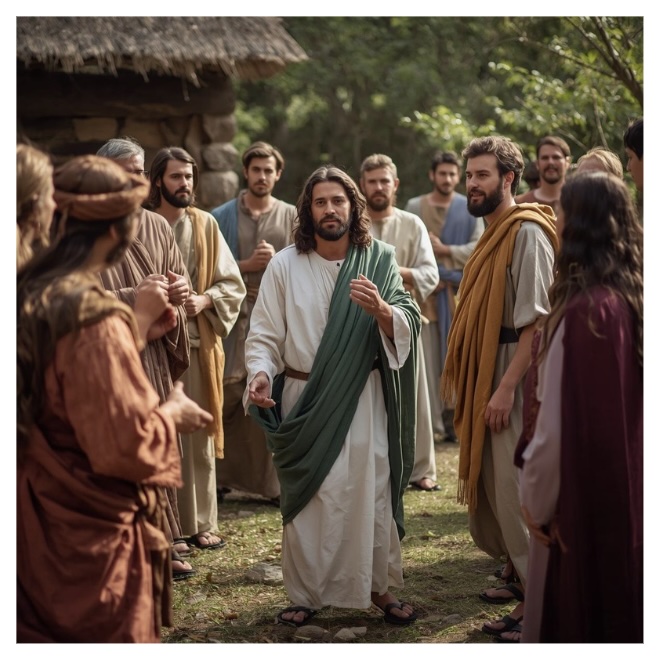
No one succeeds alone. Jesus knows this deeply. From the very beginning of his mission, he does not work in isolation. He chooses a team. In today’s Gospel, Mark describes this decisive moment with three simple but powerful verbs: ‘he went up the mountain,’ ‘he called,’ and ‘he named them.’
Jesus goes up the mountain. This is more than a physical movement. In the biblical tradition, the mountain is the place of prayer, encounter with God, and clarity of vision. To go up is to gain perspective—to see life not from the ground of fear and confusion, but from the height of God’s purpose. Every true call begins here, in prayer and in a widened vision.
Then, he called those whom he wished. The initiative is entirely Jesus’. The call does not begin with human merit, readiness, or personal plans. It begins in God’s desire. One is called not because one chooses, but because one is chosen. This frees the disciple from pride and from fear. Discipleship is first a gift before it becomes a task.
Finally, he named them apostles. To name is to give identity and mission. They are not simply followers; they are “sent ones.” Yet Mark is very clear about their first task: to be with him. Before preaching, before casting out demons, before being sent, they are called to remain with Jesus. Being with him and being sent by him are not two separate stages; they are two sides of the same coin. Mission without communion becomes activism. Communion without mission becomes comfort. True discipleship holds both together.
The first reading offers a beautiful and demanding example of what “being with the Lord” looks like in real life. David has the chance to kill Saul, who has been hunting him relentlessly. Human logic would justify revenge. Self-defence would seem reasonable. But David refuses. Why? Because he sees in Saul not just an enemy, but the anointed of the Lord. David recognises that the anointing he himself carries is the same anointing present in Saul. Being rooted in the Lord gives David a different vision. Instead of hatred, he chooses reverence. Instead of violence, he chooses reconciliation.
Here lies a profound lesson for us. When we see ourselves only in terms of “I” and “you,” we easily fall into comparison, rivalry, and division. But when we see ourselves in the Lord, we discover a deeper truth: we all carry God’s image, and we all share God’s anointing. Through baptism, each of us is marked by the Lord. To be with him is to learn to see others as he sees them—not as threats, but as brothers and sisters.
Reconciliation, then, is not weakness; it is the fruit of being with the Lord. David’s strength lies not in the sword he refuses to use, but in the faith that anchors him. He entrusts justice to God. He believes that staying with the Lord matters more than winning a momentary victory. In choosing mercy, David reveals what it means to live under God’s anointing.
Today’s readings invite us to examine our own discipleship. Are we content with doing things for Jesus without truly being with him? Do we rush into activity without first going up the mountain in prayer? Do we allow his presence to shape how we see those who hurt us or oppose us?
To be with him is to be formed by him. It is to let his way of seeing become our own. It is to choose reconciliation over resentment, communion over competition, trust over control. Only when we remain with him can we be sent by him as instruments of peace.
Fr. Yesu Karunanidhi
Archdiocese of Madurai
Missionary of Mercy

 Yesu Karunanidhi
Leave a reply to candelinejoseph9 Cancel reply