Daily Catholic Lectio
Sun, 12 April 2026
Second Sunday of Easter
Divine Mercy Sunday
Acts 2:42–47. Psalm 118. 1 Peter 1:3–9. John 20:19–31
Human Finger in God’s Heart
Today the Church celebrates Divine Mercy Sunday. With this day, the Easter Octave comes to its completion. From Easter Sunday until today, the liturgy has led us through one continuous day of resurrection—one unbroken experience of the Risen Lord.
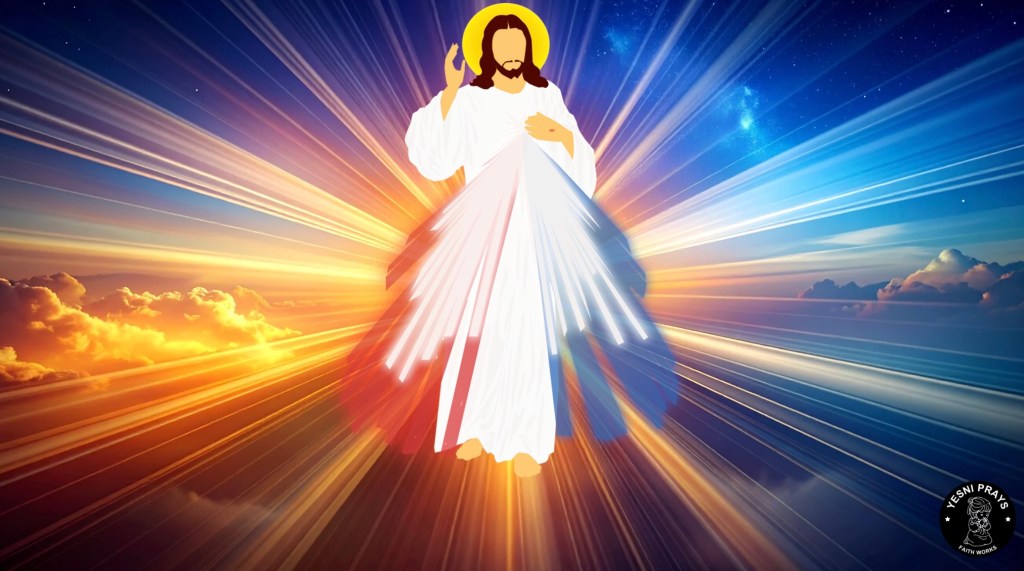
Saint John Paul II established this feast in the Jubilee Year 2000, during the canonization of Saint Faustina Kowalska, through whom the message of Divine Mercy was made known to the world. The invitation is simple yet profound: to receive God’s mercy through reconciliation and the Eucharist. Pope Francis reminds us that the face of God is mercy. Today, we are invited to a daring image—our human finger touching the very heart of God.
Hope Rooted in God, Journeying Towards Humanity
The first reading presents the life of the early Christian community. Their faith rested on four pillars: the teaching of the apostles, fellowship, the breaking of bread, and prayer. They shared their lives and possessions. Faith was not an idea they discussed; it was a life they lived.
Because they lived their faith, the Lord continued to work among them. “Day by day the Lord added to their number.” Their witness attracted others. Their life itself became proclamation.
Faith, then, is not merely believing something—it is living differently. The Church is not first a structure; it is an experience. When faith becomes life, it becomes visible, attractive, and fruitful.
Love and Mercy
The psalm repeats a simple but powerful truth: “His mercy endures forever.” Love and mercy cannot be separated. God reveals Himself not as distant power, but as faithful love.
Mercy is not weakness. It is strength that chooses to remain close. It is love that does not withdraw even when we fail. It is God’s way of holding us when we are fragile.
Courage in Suffering
Saint Peter speaks to a community undergoing trials. He tells them that their suffering will one day turn into joy. He compares their faith to gold tested in fire.
If gold could feel, it would want to escape the fire. But only through fire does it become pure and beautiful. In the same way, our trials are not meaningless. They refine us. They deepen our faith.
If we focus only on the pain, we resist. But if we see what God is forming in us, we endure with hope.
Two Days – Two Encounters
The Gospel presents two moments of encounter with the Risen Jesus. The first takes place on the day of the Resurrection. The disciples are locked in fear. Jesus comes and stands among them and says, “Peace be with you.”
He does not accuse them of their failure. He does not reopen their past. Instead, He gives them peace and entrusts them with a mission—the forgiveness of sins. Fear is transformed into joy. Broken men become witnesses.
Thomas, however, is not present. When he hears the others, he struggles to believe. He wants to see and to touch.
Eight days later, Jesus comes again. The doors are still closed. Fear has not completely disappeared. But Jesus comes for Thomas. He invites him personally: “Put your finger here… bring your hand into my side.”
Human Finger in God’s Heart
This moment is extraordinary. Thomas is invited to touch the wounds of Christ, even to place his hand into His side. A human being enters into the wounded heart of God.
This is not only proof of the Resurrection. It is the revelation of God’s mercy. The wounds remain—not as signs of defeat, but as signs of love. God does not hide His wounds. He opens them to us.
Faith, then, is not distant belief. It is closeness. It is daring to come near. It is allowing ourselves to enter into the heart of Christ.
And what do we find there? Not condemnation, but mercy. Not rejection, but acceptance.
Thomas responds with the most profound confession: “My Lord and my God.”
The Meaning of Divine Mercy
In this light, Divine Mercy becomes deeply personal. Jesus does not reject His disciples for their fear, their betrayal, or their doubt. He meets them where they are. Mercy is this: God allowing us to come close enough to touch His heart. In the Sacrament of Reconciliation, we live this experience. We bring our sins, our wounds, our brokenness—and we place them into the heart of Christ. And instead of judgment, we receive peace. We are not only called to receive mercy but to become bearers of mercy for others.
Challenges for Life
Today, we live in a world shaped by self-interest and strict justice: “If I do this, I must get that.” Mercy becomes rare. Yet mercy is what we need most.
God allows our human “finger” to touch His heart so that His mercy may flow into us and through us to others.
But there is also a challenge. The Church risks becoming only an institution. Teaching becomes theory. The breaking of bread becomes routine. Community becomes division. Service becomes a search for power.
We are called to return to the experience of the early Church—to live our faith, to share our lives, to embody mercy.
Final Reflection
Our lives, like gold, are shaped in the fire of trials. If we see only the heat, we want to escape. But if we see the beauty that is being formed, we endure. Today, the Risen Lord stands before us and says: “Put your finger here.” Come close. Do not be afraid of His wounds—or your own. For when the human finger touches the heart of God, it is transformed. It becomes a channel through which mercy flows into the world.
Fr. Yesu Karunanidhi
Archdiocese of Madurai
Missionary of Mercy
 Yesu Karunanidhi
Leave a comment