Daily Catholic Lectio
Fri, 10 April 2026
Easter Octave – Friday
Acts 4:1–12; John 21:1–14
I go fishing
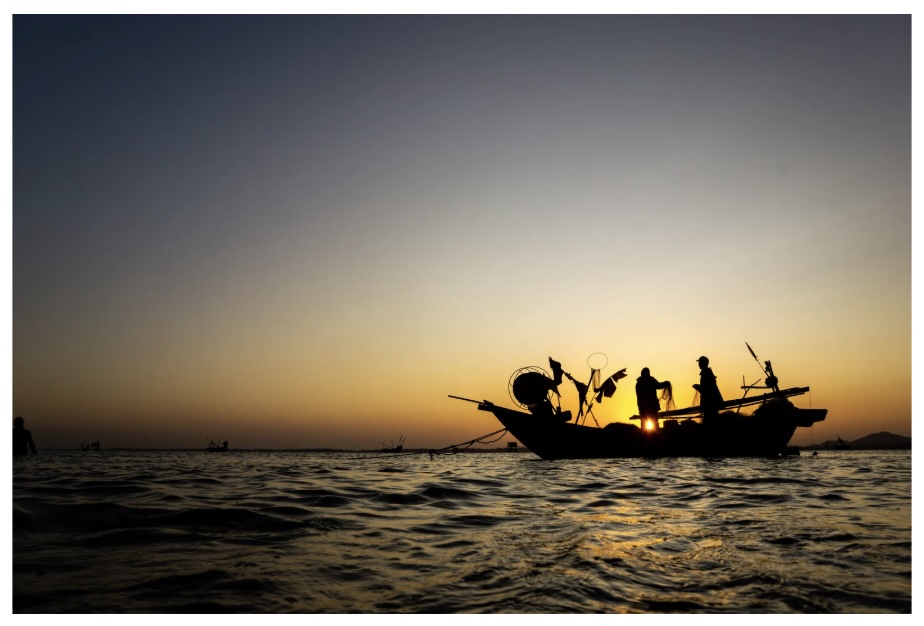
At the beginning of today’s Gospel, Simon Peter says, “I am going fishing.” The others respond, “We will go with you.” There is something deeply human in this decision. Peter, who had denied his Master, may still be carrying within him a quiet sense of guilt—a wound that has not yet healed. Perhaps he feels unworthy to be a “fisher of people.” Or perhaps he goes fishing simply to escape—his sorrow, his confusion, even his disappointment with himself.
But that night, they catch nothing.
Then a voice comes from the shore: “Cast the net on the right side of the boat.” When the net fills with fish, John recognizes first: “It is the Lord.”
Now, let us reflect on what Peter does next. Three actions reveal his inner journey.
First, Peter had taken off his outer garment. When he hears that it is the Lord, he puts it on and jumps into the sea. Perhaps he was lightly dressed, as fishermen often are. But this gesture carries a deeper meaning. When we sin, we often feel small, exposed, almost naked within ourselves. Like Adam and Eve, we become aware of our shame. The presence of Jesus restores dignity. Peter clothes himself. Grace covers what guilt had uncovered.
Second, Peter jumps into the sea and swims toward Jesus. This is his last movement toward the water as a fisherman. The one who said, “I go fishing,” is now drawn beyond fishing. From now on, he will not catch fish, but people. In a symbolic sense, this water can also represent his tears—tears of regret, of repentance, of longing. It recalls baptism, and also the cleansing that comes through sincere sorrow. In moving through the water, Peter is being purified.
Third, when Jesus says, “Bring some of the fish you have just caught,” Peter climbs into the boat, drags the net ashore, and brings the fish to Jesus. The boat can be seen as the Church, and the shore as the fulfilment of God’s kingdom. Peter’s mission is clear: to bring the community safely to the shore, and to offer the people—the “fish”—to Christ. His guilt is now transformed into responsibility.
In these three steps, Peter’s guilt slowly disappears, and a new sense of mission is born.
What does this Gospel teach us today?
We too make mistakes. We too carry within us moments of weakness and failure. But the presence of Jesus does not condemn—it restores. He makes us aware of our faults, not to shame us, but to clothe us again with dignity.
Second, the movement into the water reminds us of our baptism, and also of the tears we shed in repentance. Through the water of baptism and the tears of reconciliation, we are made clean again.
Third, the meal of bread and fish points to the Eucharist. It is here that we sit with the Lord, where relationship is restored, where communion is renewed.
Notice also how Jesus speaks: “Children, have you caught anything to eat?” and “Come and have breakfast.” He understands human disappointment and hunger. He does not rebuke the disciples. Because He has lived our human life, He knows our struggles from within.
It is better, then, not to keep Him distant as God alone, but to keep Him close as one who shares our humanity.
Finally, when we are uncertain about the purpose of our life, we must not remain stuck in confusion. We should begin with what we know, with what we can do. Peter returns to fishing—not as a final answer, but as a starting point. And it is there, in that ordinary action, that Jesus comes to meet him.
The Lord comes to meet us too—in our confusion, in our routine, in our searching. “I go fishing” may begin as an escape. But with Jesus, it becomes a calling.
Fr. Yesu Karunanidhi
Archdiocese of Madurai
Missionary of Mercy
 Yesu Karunanidhi
Leave a comment