Daily Catholic Lectio
Mon, 6 April 2026
Easter Octave – Monday
Acts 2:14, 22-33. Mt 28:8-15
Jesus Met Them
1. Two Movements: Toward Truth and Toward Falsehood
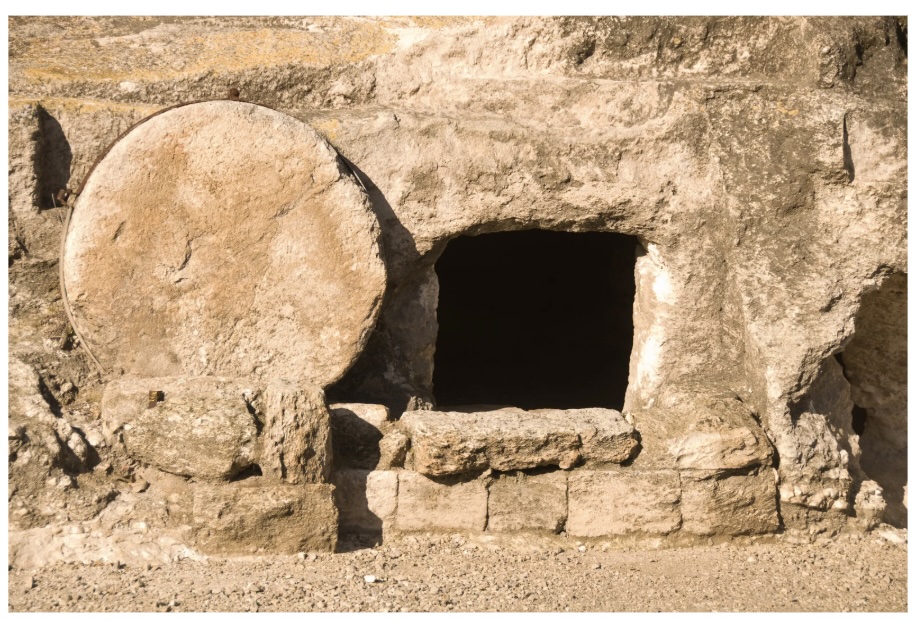
The Gospel places before us two groups leaving the empty tomb. The women run with urgency to announce what they have seen. Their hearts are filled with a mixture of fear and joy, yet they move forward with openness. The guards, on the other hand, also carry news, but they become instruments of a different movement. Instead of witnessing to truth, they allow themselves to be drawn into a narrative shaped by fear, power, and money.
Both groups have seen something extraordinary. Yet only one group is ready for an encounter with the Risen Lord. Easter is not only about seeing; it is about how we respond to what we see. The same event can lead either to faith or to falsehood, depending on the disposition of the heart.
2. “Jesus Met Them”
In the midst of their journey, something unexpected happens: Jesus meets the women. They are not searching for Him at that moment; they are simply on the way, carrying a message they do not fully understand. And it is precisely there, in their movement, that the Risen Lord comes to meet them.
This reveals the logic of grace. We often imagine that we must reach God through our own effort, clarity, or perfection. But the resurrection shows us something different: God takes the initiative. He comes toward us even when our faith is still fragile and incomplete. The women do not yet fully grasp the mystery, yet they are met by Christ. This gives us hope. We do not need to understand everything; we only need to remain on the path.
3. “They Took Hold of His Feet”
When Jesus meets them, the women respond with a profound gesture: they take hold of His feet and worship Him. This simple act carries deep meaning. It affirms that the Risen Jesus is not a mere spirit or memory, but truly alive, with a real, risen body. The resurrection is not an idea; it is a living reality.
At the same time, to hold the feet is an act of adoration. In the biblical tradition, one bows at the feet only before God. Thus, in this gesture, the women confess both the reality of the resurrection and the divinity of Christ. Their encounter leads them beyond astonishment into worship. Easter invites us to make the same movement—from seeing to believing, and from believing to adoring.
4. “Go to My Brothers”
Jesus then entrusts them with a message: “Go and tell my brothers.” These “brothers” are the very disciples who had abandoned Him in His hour of suffering. Yet the Risen Lord does not speak with reproach or distance. He does not call them failures; He calls them brothers.
Here we encounter the tenderness of Easter. The resurrection is not only victory over death; it is the restoration of relationships. Jesus does not withdraw His love because of human weakness. Instead, He deepens it. Even after failure, He continues to claim His disciples as His own. This is consoling for us. Our moments of weakness do not place us outside His love. Rather, they become the very place where His mercy meets us.
5. “Go to Galilee”
Jesus directs them further: “Tell them to go to Galilee; there they will see me.” Galilee is the place where everything began—the first call, the first encounters, the first steps of discipleship. Jerusalem has become a place marked by pain, confusion, and failure. So Jesus sends them back, not to remain in the memory of failure, but to rediscover the grace of beginnings.
This is an essential movement in the Christian life. When we feel blocked, discouraged, or lost, we are invited to return to our own “Galilee”—to the moments when faith was alive, when our relationship with God was simple and sincere. The resurrection opens the door to a new beginning. It tells us that no situation is final, and no failure is definitive.
6. Rumour or Encounter
Alongside this path of encounter, the Gospel also shows us another possibility. The authorities, together with the guards, construct a false narrative. They choose to control the truth rather than receive it. In doing so, they reduce the resurrection to a rumour, something to be explained away and kept at a distance.
This remains a temptation even today—to keep the resurrection as an idea, a story, or a distant belief. But the women show us another way. They allow the event to touch them, to transform them, and to send them forth. They move from message to encounter, and from encounter to mission.
“Jesus met them.” This is not only a moment in the Gospel; it is the heart of our faith. The Risen Lord continues to meet us in our journey—in our uncertainties, in our fragile faith, in the ordinary paths of our lives. He allows us to draw near to Him. He calls us His brothers. He invites us to begin again.
Today, we are invited to remain on the path, to recognize His presence when He comes to meet us, and to have the courage to return to our Galilee. For Easter proclaims this simple and profound truth: not that we have found Him, but that He has come to meet us.
Fr. Yesu Karunanidhi
Archdiocese of Madurai
Missionary of Mercy
 Yesu Karunanidhi
Leave a comment