Daily Catholic Lectio
Sat, 4 April 2026
Easter Vigil (Midnight Mass)
Gospel Reading Mt 28:1-10
Invitation – Experience – Mission
1. The Foundation of Our Faith
“If Christ has not been raised, then our preaching is in vain and your faith is in vain” (1 Cor 15:14). Tonight, we stand at the heart of our faith. The Resurrection is not one event among many; it is the foundation. Without it, everything collapses. With it, everything is renewed.
Creation emerges from chaos. People of Israel passes from slavery to freedom through the sea. And now, from death comes life. The tomb is empty. Something radically new has happened.
Yet, the question is not simply how the Resurrection happened. The deeper question is: why does it matter for us? The Gospel answers this through three movements: invitation, experience, and mission.
2. Invitation – “Come and See”
The angel speaks to the women: “Come and see the place where he lay.” This is the first word of Easter: an invitation. Throughout the Gospel of John, this phrase marks the beginning of faith. Jesus tells the first disciples, “Come and see.” Philip tells Nathanael, “Come and see.” The Samaritan woman invites her village, “Come and see.” Faith begins not with explanations, but with an invitation.
Tonight, the same invitation is given to us. “Come and see.” Come out of fear. Come out of routine. Come out of the closed spaces of your life. Often we are too busy, too occupied, too secure in our own circles. Easter interrupts us. It calls us to pause, to turn, to move.
To “come and see” means to open our eyes—to recognize Christ in the Word, in the sacraments, in our neighbour, in those in need. The Resurrection begins with a step: the courage to come.
3. Experience – “He is Not Here”
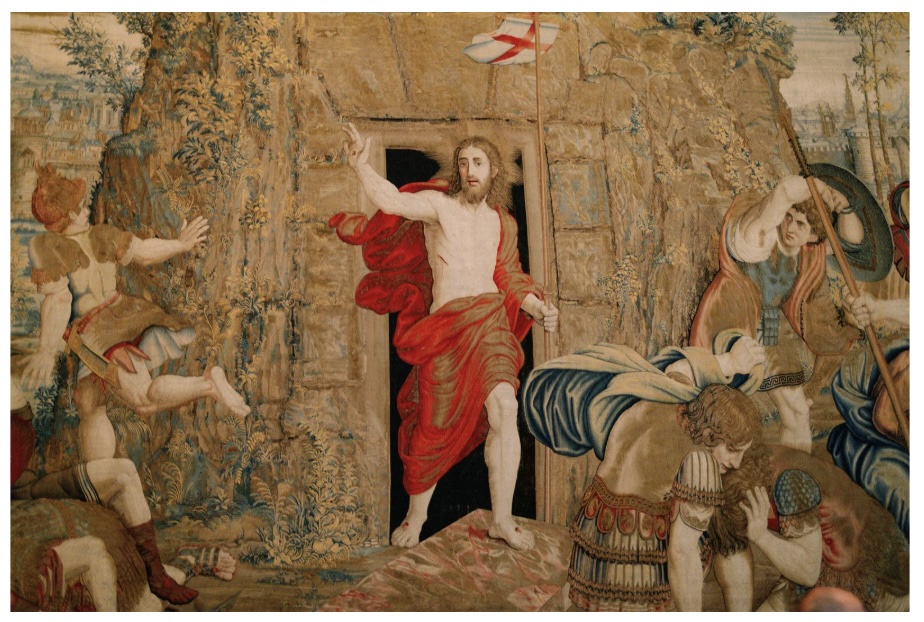
The women enter the tomb. They see. And they hear: “He is not here; he has been raised.” This is not just information. It is an experience. Saint Augustine says beautifully: the stone was rolled away not to let Christ out, but to let the disciples in. The empty tomb is not a problem to solve; it is an experience to receive.
And what is this experience?
It is the discovery that death does not have the last word. It is the realization that what seemed final is not final. It is the recognition that God is already at work beyond our expectations.
Very often, we look for the living among the dead. We search for Christ in empty places—empty habits, empty pursuits, empty attachments.
But the angel says: “He is not here.” He is not in what traps us. He is not in what enslaves us. He is not in what diminishes life.
The Resurrection experience begins when we recognize our own “empty tombs”—those places where we expected life but found emptiness.
And then something more happens. The women meet Jesus. They hold His feet. This is not a ghost. This is the living Lord. And they worship Him. The Resurrection is not an idea. It is an encounter.
4. Mission – “Go and Tell”
Immediately, the invitation becomes a mission. “Go quickly and tell his disciples… He is going ahead of you to Galilee.” The women who came in fear now run with joy. The disciples who were hiding will soon step out. This is the power of the Resurrection: it sends. Galilee is important. It is the place of beginnings. The place of ordinary life. The place where Jesus first called them.
The message is clear: Do not remain at the tomb. Return to life. Return to your world.
There you will meet Him again. Mission is not about going far; it is about going back—with new eyes, a new heart, a new courage. Like Mary Magdalene, we are called to proclaim not just with words, but with our lives: “Christ is alive.” When we love, when we forgive, when we show compassion, when we lift others up—we become witnesses of the Resurrection.
5. From Fear to Peace
There is one more gift: peace. The risen Lord greets His disciples with peace—eirēnē, shalom—a wholeness, a harmony, a life without fragmentation. Today, more than ever, the world needs this peace. We often say, “Rest in peace” for the dead. But Easter tells us: the living need peace even more. Christ says to us tonight: “Live in peace.”
6. Conclusion – From the Tomb to Galilee
Easter is not a story to remember. It is a journey to live.
From invitation – “Come and see.”
To experience – “He is not here.”
To mission – “Go and tell.”
And beyond all this, a call to peace.
Let us not remain at the tomb—neither in fear, nor in doubt, nor in old patterns of life.
Our journey is not toward the grave, but toward Galilee—toward life, toward beginnings, toward mission. He goes before us. Let us follow Him. Christ is risen. And because He lives, we too shall live.
Fr. Yesu Karunanidhi
Archdiocese of Madurai
Missionary of Mercy
 Yesu Karunanidhi
Leave a comment