Daily Catholic Lectio
Fri, 3 April 2026
Good Friday of the Lord’s Passion
Isa 52:13-53:12. Heb 4:14-16, 5:7-9. Jn 18:1-19:42
Will You Not Speak to Me?
1. The Silence that Disturbs
“Do you not speak to me?”—this is the question Pilate asks Jesus. It is also the question that rises from our own hearts today. There are moments in life when we feel that God is silent, distant, and unresponsive. We pray, we wait, and yet there seems to be no answer. Good Friday intensifies this experience. The liturgy itself becomes silent—no Eucharistic prayer, no bells, no songs of joy. It is as if heaven itself is still. But the deeper question remains: is God truly silent, or is it that we have not yet learned how to hear Him?
2. Many Voices, One Silence
In the Passion according to John, we hear many voices. There is the voice of betrayal in Judas, the voice of denial in Peter, the voice of the crowd shouting “Crucify him,” and the voice of authority in Pilate. Amid all these voices, there is also the voice of Jesus—but what stands out most is His silence. This silence is not weakness, nor is it defeat. It is the silence of fulfilment. Like the suffering servant described in Book of Isaiah, who “opened not his mouth,” Jesus stands in a silence that is full, deliberate, and redemptive. It is not emptiness; it is meaning waiting to be received.
3. The Seven Words that Question Us
Today, we reflect on seven words from the Passion—not the traditional seven last words from the Cross, but seven statements and questions that reveal our own lives before God.
“Whom are you looking for?” Jesus asks this even to those who come to arrest Him. This question echoes through our own lives. What are we truly seeking? Often our search is scattered—success, security, recognition. But if our search lacks clarity, our life loses direction. Jesus calls us to purify our search and to seek Him above all.
“If I have spoken wrongly, testify to the wrong.” When struck, Jesus does not retaliate but responds with truth. He protects His dignity without violence. This challenges us today: how do we treat those who are weaker than us? Do we use our power—through words or silence—to wound, or do we stand for justice with clarity and respect?
“Do you say this on your own?” Jesus asks Pilate whether his question comes from within or from others. This confronts us with a deeper question: who is Jesus for me? Is He merely someone I have heard about, or someone I have encountered personally? Faith cannot be borrowed; it must be lived.
“For this I was born… to testify to the truth.” Jesus speaks of truth before a man who represents power. Pilate’s response—“What is truth?”—reveals confusion and relativism. Today, we must ask ourselves: do we live by truth, or do we compromise it for convenience? In John’s Gospel, truth is not an abstract idea; it is a person—Jesus Himself.
“You would have no power unless it were given from above.” Jesus reminds Pilate that all authority is received, not absolute. This challenges our understanding of power. Do we exercise authority with humility and responsibility? Or do we misuse it, forgetting its source and limits?
“Jesus of Nazareth, King of the Jews.” The inscription on the Cross reveals identity: His origin, His name, His people, His mission. It invites us to reflect on our own lives. What defines us? Where are our roots? What is our mission? What is written about us?
“What I have written, I have written.” Pilate speaks these words with finality, yet they point beyond him. There is a deeper writing taking place—the unfolding of God’s will. The Passion is not a random event; it is fulfilment. God’s plan is quietly, decisively being accomplished.
4. The Silence that Speaks
At the end of the Passion, Jesus says, “It is finished,” and then He enters into silence. This silence is not the silence of defeat but of completion. Like the high priest who offers sacrifice and withdraws in reverence, Jesus has fulfilled His mission. His silence now speaks louder than words. It is the silence of love accomplished, of obedience fulfilled, of redemption offered.
5. Our Question Today
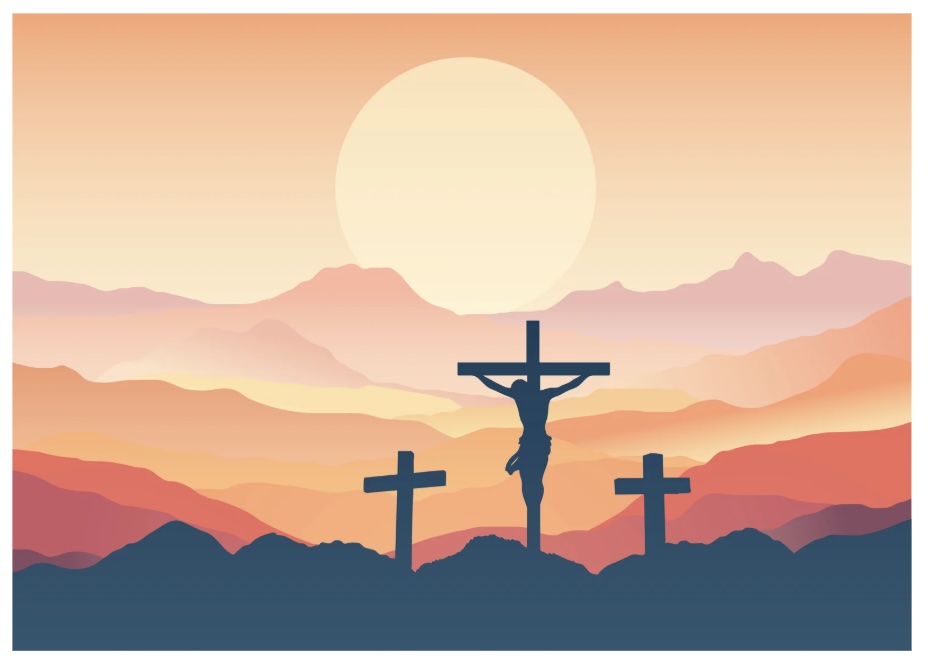
Standing before the Cross, we repeat Pilate’s question in a new way: “Lord, do you not speak to me?” And yet, if we listen deeply, we begin to realize that He is speaking—through His wounds, through His surrender, through His silence. His voice is not absent; it is transformed.
6. Final Invitation
Today, we are invited not to escape silence but to enter it. To remain before the Cross, to listen without distraction, to allow His silence to question us and transform us. In this silence, Christ corrects our search, purifies our understanding of truth, restores our dignity, and reveals our identity.
The Cross is not the silence of God. It is the loudest word of His love.
Fr. Yesu Karunanidhi
Archdiocese of Madurai
Missionary of Mercy
 Yesu Karunanidhi
Leave a comment