Daily Catholic Lectio
Wed, 1 April 2026
Wednesday of Holy Week
Isa 50:4-9. Mt 26:14-25
Rabbi, is it I?
1. The Question that Reveals the Heart
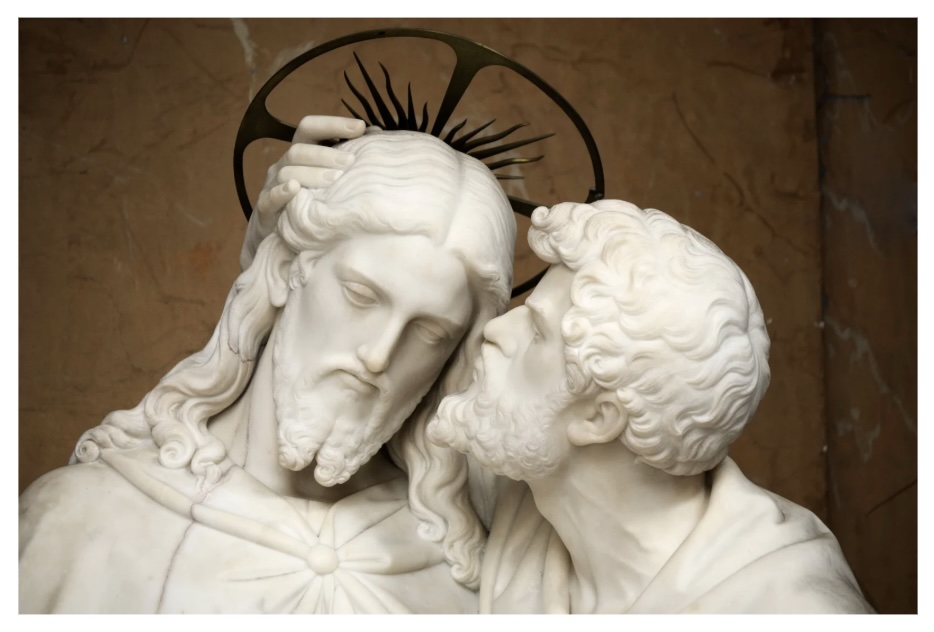
The question that quietly echoes in today’s Gospel is deeply unsettling: “Rabbi, is it I?” At the Last Supper, when Jesus reveals that one among them will betray Him, a shadow falls upon the table. The disciples are troubled, and each one begins to ask, “Lord, is it I?” There is humility in that question, a recognition of their own weakness, a sincere openness to the possibility that even they could fail. But Judas asks differently. He says, “Rabbi, is it I?” It sounds similar, but it reveals a deeper difference. The others call Jesus Lord; Judas calls Him only Rabbi—teacher, guide, master, but not Lord of his life.
2. The Mystery of Judas
Why did Judas betray Jesus? Many explanations have been offered. Some say it was for money, the thirty pieces of silver. Yet Judas was already entrusted with the common purse, and later he throws the money away in anguish. Others suggest disappointment—that he expected a political Messiah and turned against Jesus when those hopes were not fulfilled. But the Gospel does not show him as angry, only confused. Perhaps the most meaningful explanation is this: Judas tried to force events. He saw Jesus’ power, the crowds that followed Him, the cries of “Hosanna,” and he calculated. He believed that by handing Jesus over, he could push Him into revealing His glory, into acting decisively. But reality did not follow his expectations. The same crowd that praised Jesus soon demanded His crucifixion. Judas realizes too late that his calculation has failed. What began perhaps as a misguided attempt ends in tragedy.
3. When Good Intentions Go Wrong
This is where the story of Judas touches our own lives. How often do we act with good intentions, only to see things turn out differently? We say a word thinking it will help, but it wounds. We make a decision believing it is right, but it brings harm. We expect certain outcomes, but life unfolds in ways we did not foresee. Like Judas, we too can try to control situations, even to control God, expecting Him to act according to our plans. And when He does not, we are left confused, disappointed, sometimes even broken.
4. “Rabbi” or “Lord”?
At the heart of today’s Gospel is a question of identity: Who is Jesus for me? Is He only a teacher whom I consult when convenient, a guide whose words I accept selectively? Or is He truly my Lord, the one to whom I surrender even when I do not understand, even when His path leads through suffering and the Cross? Judas’ tragedy was not simply that he betrayed Jesus, but that he never fully recognized Him as Lord. He remained close to Jesus, yet distant in faith.
5. The Servant Who Trusts
In contrast, the Suffering Servant in the first reading speaks with deep trust: “The Lord God is my help.” Even in humiliation and suffering, he stands firm because his relationship with God is not partial but total. He does not calculate; he trusts. He does not control; he surrenders. That is the difference between calling God Rabbi and calling Him Lord.
6. The Question for Us
Today, the Gospel invites each of us to ask the same question: “Is it I?” Not as a question of fear, but as a moment of truth. Where in my life do I keep a distance from Jesus? Where do I reduce Him to a teacher rather than acknowledge Him as Lord? Where do my expectations prevent me from trusting His way? Each of us, in some way, carries the possibility of Judas within. But unlike him, we are still at the table. We still have time. We can still return.
Fr. Yesu Karunanidhi
Archdiocese of Madurai
Missionary of Mercy
 Yesu Karunanidhi
Leave a comment