Daily Catholic Lectio
Sun, 29 March 2026
Palm Sunday of the Lord’s Passion
Mt 21:1-11. Isa 50:4-7. Phil 2:6-11. Mt 26:14-27:66
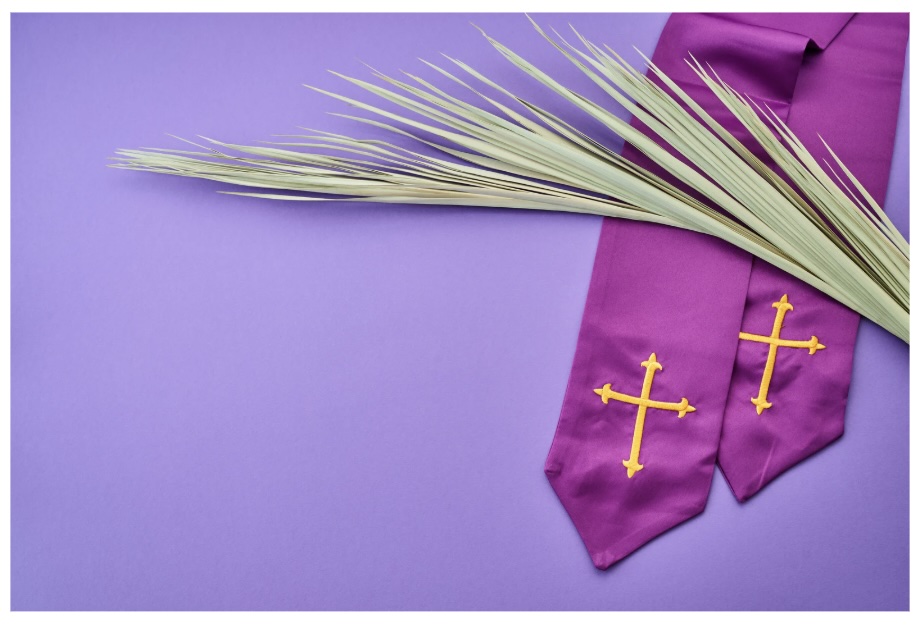
The Palm and the Cross
Today we enter Holy Week with a powerful image in our hands: the palm and the cross. The liturgy places before us two movements that seem to contradict each other. We begin with joy—Jesus entering Jerusalem, welcomed with palms, praised with loud voices: “Hosanna to the Son of David!” And within the same liturgy, we hear the long Passion narrative that ends with the cry: “Crucify him!”
The palm and the cross stand together. They are not two separate realities, but one single mystery.
The readings today invite us to reflect on three profound movements in the life of Jesus—three paradoxes that also shape our own lives:
1. From Accompaniment to Abandonment
In the Gospel of the procession (Mt 21:1–11), Jesus is not alone. He is surrounded. The disciples are with Him. The crowd walks with Him. There is movement, enthusiasm, togetherness. Matthew even notes two animals—the donkey and its colt—as if to emphasize presence, companionship, fullness. Jesus enters Jerusalem accompanied.
But in the Passion narrative (Mt 26–27), this changes dramatically. The same disciples who walked with Him now flee. Judas betrays Him. Peter denies Him. The crowd that once followed Him disappears. Jesus stands alone—before the Sanhedrin, before Pilate, on the cross. From accompaniment to abandonment.
How does Jesus face this?
He accepts both realities as they are. Without clinging to one or resisting the other. He does not demand loyalty, nor does He collapse in loneliness. He receives companionship when it is given. He endures abandonment when it comes. There is no entitlement in Him. Only surrender.
And this becomes a lesson for us. There are moments when people walk with us, and moments when they leave us. If we cling too much to human support, abandonment will break us. But if we root ourselves in God, we remain steady.
2. From Honour to Humiliation
The second movement is even more striking. As Jesus enters Jerusalem, He is honoured like a king. Cloaks are spread on the road. Branches are waved. People shout with joy. It is a royal procession. Recognition. Celebration. But soon, this honour turns into humiliation.
The same voices that cry “Hosanna” will soon cry “Crucify him.” The one who was welcomed is rejected. The one who was praised is mocked. His clothes, once honoured by being placed on the road, are now stripped from His body. He is beaten, spat upon, crowned with thorns. From honour to humiliation.
How does Jesus respond?
He remains interiorly free. He knows that both honour and humiliation are not fully within His control. And so, He does not allow either to control Him. He is not inflated by praise. He is not crushed by rejection. Saint Paul expresses this beautifully in the second reading (Phil 2:6–11):
“He emptied himself… he humbled himself, becoming obedient unto death, even death on a cross.” Jesus holds Himself under control, even when everything around Him is out of control.
And this is a word for us. How easily we are affected by what others say—praise lifts us up, criticism brings us down. But Jesus teaches us a deeper freedom: what is outside us need not disturb what is within us.
3. From Glory to Shame
The third movement brings us to the deepest point. The entry into Jerusalem is a moment of glory. It is public, visible, celebrated. Jesus is at the centre. But the cross is a place of shame. It is the most humiliating form of death in the ancient world. Public, yes—but as a spectacle of rejection, not honour. The palm gives way to the cross. The softness of the palm is replaced by the harshness of wood. The joyful procession becomes a painful dragging through the streets. The one who rode freely is now forced to carry. From glory to shame.
And yet, Jesus carries within Him a deeper vision. He knows that this is not the end. The prophet Isaiah in the first reading (Is 50:4–7) gives us the inner attitude of the suffering servant: “I have set my face like flint… I know that I shall not be put to shame.” Why? Because beyond the cross lies the resurrection.
Jesus lives this third journey—the journey from death to life—even while walking the path of suffering. He knows that life is not an end, but a passage to a greater end. The cross is not the final word.
Conclusion: The Palm and the Cross in Our Lives
The palm and the cross are not only in the hands of Jesus—they are also in our lives. We too experience: moments of accompaniment and moments of abandonment, moments of honour and moments of humiliation, moments of glory and moments of shame.
The question is not whether these will come—they will. The question is: how do we face them? Jesus shows us the way: Accept what comes, without clinging or resisting. Remain interiorly steady, even when circumstances are unstable. Keep our eyes fixed on the resurrection, the deeper meaning beyond the present moment.
If we carry the palm without the cross, our faith becomes superficial.
If we carry the cross without hope, our faith becomes heavy.
But when we hold both together—the palm and the cross—we enter the mystery of Christ.
As we begin this Holy Week, let us walk with Jesus.
Not only in the joy of the procession, but also in the silence of the cross.
For only then will we truly share in the glory of the resurrection.
Fr. Yesu Karunanidhi
Archdiocese of Madurai
Missionary of Mercy
 Yesu Karunanidhi
Leave a comment