Daily Catholic Lectio
Sat, 28 March 2026
Fifth Week of Lent, Saturday
Eze 37:21–28. Jn 11:45–57
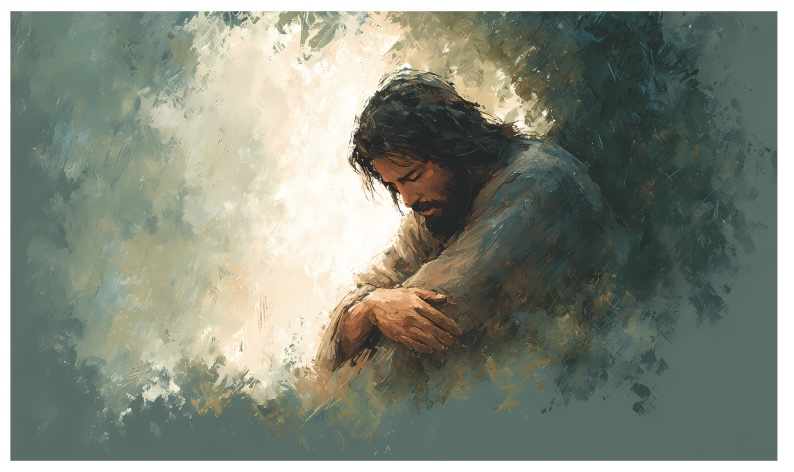
One Man Alone
1. The Dangerous Logic of Sacrifice
As we stand at the threshold of Holy Week, the tone of the Gospel changes. The debates are over, and opposition becomes a decision. The leaders no longer argue about Jesus—they decide to eliminate Him. At the centre of today’s Gospel stands a striking sentence spoken by Caiaphas: “It is better that one man should die for the people than that the whole nation should perish.”
“One man alone.” At first, it sounds practical, even reasonable. It reflects a kind of political wisdom: if the survival of the many requires the sacrifice of one, then let that one be removed. It is the logic of efficiency, of control, and often, of fear. Yet the evangelist tells us something deeper—Caiaphas speaks more than he understands. His words become a prophecy, pointing to a mystery far beyond his intention.
This idea runs quietly through human history and even through our daily lives: let something small be lost so that something greater may survive. We see it in society, when the weak are overlooked for stability; in institutions, when individuals are burdened for the system; in families, when one silently suffers to preserve harmony. There is a certain truth here. Even in medicine, sometimes a part is removed to save the whole body. But when this logic becomes absolute, it turns into injustice. When the “one” is treated as disposable, dignity is lost. When the suffering of one is justified without love, truth is distorted.
2. Jesus: Not a Victim, but a Gift
But Jesus is not simply “one man alone” chosen by others to die. He is the One who chooses. There is a profound difference here. The world says, “Sacrifice him.” Jesus says, “I offer myself.”
He is not a helpless victim of a system. He is the Good Shepherd who lays down His life for His sheep. What Caiaphas says in fear, Jesus lives in love. This changes everything. Because sacrifice imposed is violence but sacrifice freely embraced is love.
Jesus transforms the meaning of suffering. He takes the harsh logic of the world and fills it with divine freedom. He is not a scapegoat; He is a saviour. His death is not the triumph of injustice, but the revelation of love.
3. God Stands with the Scattered
In the first reading from Ezekiel, we hear another voice—the voice of God: “I will gather them… I will make them one nation… I will be their God, and they shall be my people.”
Here, God does not sacrifice the weak to preserve the strong. He gathers the scattered, heals the broken, and restores unity—not by eliminating, but by embracing. This is the heart of God. Where the world divides, God unites. Where the world excludes, God gathers. Where the world sacrifices, God saves.
4. Where Do We Stand?
Today’s Word challenges us at two levels. First, we may find ourselves as “the one”—the one misunderstood, overlooked, or silently carrying a burden for others. If so, we must remember that we are not abandoned. God sees us, gathers us, and restores us.
But there is a deeper question. Have we ever made someone else “the one”? Have we ignored someone’s dignity for the sake of convenience? Have we allowed another to suffer so that we remain comfortable? Have we justified small injustices in the name of a “greater good”? This is where true conversion begins.
5. From Scapegoat to Shepherd
There is one final movement. When we are treated as expendable, we can fall into bitterness and begin to see ourselves as victims. But the Gospel invites us to something higher. Jesus does not remain “the one sacrificed.” He becomes the Shepherd.
The Shepherd is not a victim. He gives himself consciously, freely, and lovingly. And this becomes our calling. In a world that says, “save yourself,” the Christian says, “I give myself.” Not out of compulsion, but out of love; not out of defeat, but out of dignity.
Conclusion
“One man alone.” For the world, it was a solution. For God, it became salvation. As we move toward Holy Week, let us contemplate Christ—not as one eliminated, but as one who loves to the end. Let us ask for the grace never to treat another as expendable, never to justify injustice, but to become, like Him, not victims of circumstance, but shepherds of love.
Fr. Yesu Karunanidhi
Archdiocese of Madurai
Missionary of Mercy
 Yesu Karunanidhi
Leave a comment