Daily Catholic Lectio
Sun, 8 March ‘26
Third Sunday of Lent
Exod 17:3–7. Rom 5:1–2, 5–8. Jn 4:5–42
“Give Me a Drink”
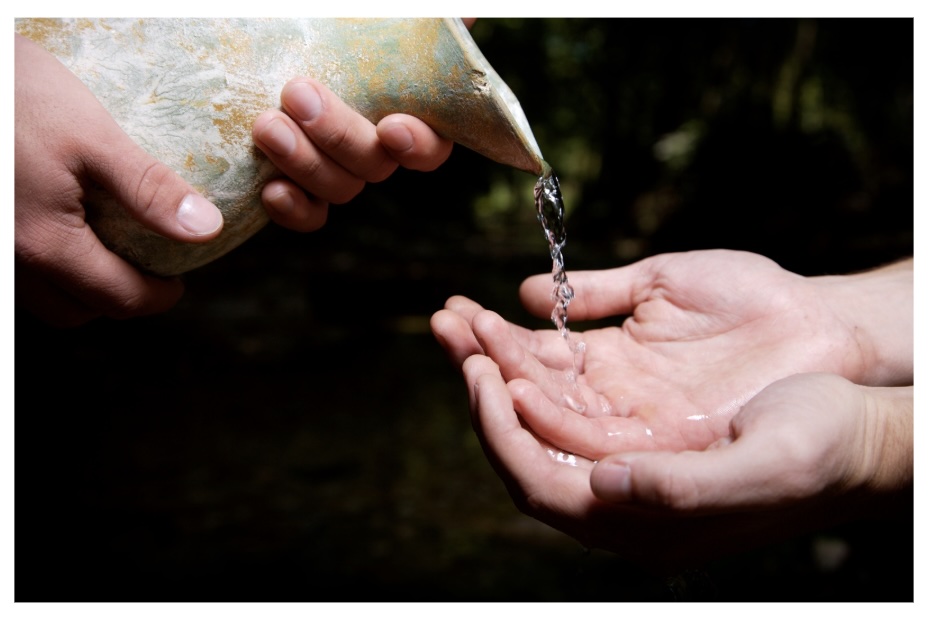
“Give me a drink.” With this simple request Jesus begins one of the most profound conversations in the Gospel. Water stands at the centre of today’s Word of God. In the first reading, the Israelites wander in the desert and cry out in thirst. Their question is not only about water but about faith: “Is the Lord among us or not?” In the Gospel, Jesus himself sits tired by Jacob’s well in Samaria and asks a woman, “Give me a drink.” In both stories, thirst becomes the doorway to discovering God. Thirst exposes the fragility of human life and the deeper longing of the human heart.
To understand the value of water, imagine this simple picture. Take a bucket that holds four litres of water. From that bucket take a small spoon and fill it once. From that spoon take a single drop on your fingertip. That tiny drop represents the usable water available to humanity on earth. Most of the earth’s water is salt water in the oceans. Of the small portion that is fresh water, most is locked in glaciers and polar ice. The little drop left is the water that sustains human life. This drop can be described in three ways: green water—the moisture in the soil and atmosphere; blue water—the water in rivers, lakes, and streams; and grey water—the wastewater produced by our homes and industries. From the beginning of the earth until today, the total amount of water has not increased or decreased. It simply circulates in a fragile cycle. The water we use is the same water that has always existed. When we realize this, the words of Jesus, “Give me a drink,” begin to carry new meaning.
Water is deeply embedded in many cultures. In Tamil culture (India and Sri Lanka), for example, water itself is seen almost as sacred. People bathe deities with water, cleanse homes with water, and mark important transitions of life with water rituals. In contrast, many northern traditions (India) emphasize fire—lamps, flames, and sacrificial fires. Climate shapes culture. In hot lands, water means survival. It is not surprising that water becomes sacred in such societies. Yet history shows that reverence for water sometimes coexisted with misunderstanding. During outbreaks of cholera in the early twentieth century, some people refused to boil water because they feared “burning the divine element,” even at the cost of their lives. Today we face another reality: water itself is becoming a political and economic issue. Experts warn that future global conflicts may be fought over water resources. Even modern technology consumes enormous amounts of water. Recently protests emerged in parts of the world against the use of underground water to cool massive computer servers for artificial intelligence systems. At the same time, industries often shift these operations to poorer regions where water is already scarce.
There is also something called “hidden water.” Every product we use carries an invisible water cost. A single egg may require about twenty litres of water to produce. One kilogram of rice may consume nearly five thousand litres. A pair of jeans may require around ten thousand litres of water. When we buy and use these items, we are also consuming water that has been used somewhere else. This hidden reality reminds us that water is not simply a personal need but a global responsibility.
The importance of water becomes clearer when we listen to real human stories. One young woman named Fathum lives in a desert region. Her day begins before sunrise. She walks to fetch water, returns to cook breakfast, walks again to collect more water, prepares grain for lunch, and walks yet again to bring water for the evening. In between she washes her children, feeds goats, cleans the house, and manages the daily life of the family. When asked when she rests, she simply smiles and says she has no time to rest. When asked which moment of the day she likes most, she answers immediately: “The time when I am not fetching water.” Her whole life is measured by the distance she must walk for water.
Another story comes from Uganda, where two teenage sisters walked long distances every day to collect water. During one of these journeys, they were assaulted and became pregnant at ages fourteen and seventeen. They were forced to leave school and now raise their children as single mothers. Yet their spirit remains strong. They say that if clean water were available in their villages, girls would not have to walk such dangerous distances. Their suffering reveals how closely water relates to dignity, safety, and the future of young women.
A third story comes from a village in Mozambique. When visitors arrived there, the villagers were celebrating because clean water had finally reached them. Five young people wearing blue shirts stood proudly as the local water committee. One introduced himself as the plumber, another as the tax collector, another as the sanitation officer. Finally, a fifteen-year-old girl named Natalia stepped forward and said, “I am the president.” Because her village now has clean water, she can attend school regularly and dream about her future. When someone asked what she wants to become, her mother said, “She wants to be a teacher.” Natalia quickly corrected her: “No, a head teacher.” Clean water had given her confidence and hope. If access to water can transform one child’s life so profoundly, imagine what it could do for millions. Nearly ninety percent of us have access to safe water, yet around 748 million people still do not.
These stories help us see the deeper meaning of the biblical narratives. In the desert, the Israelites complain because they are thirsty. But beneath their thirst lies a deeper question: “Is God with us?” When thirst strikes, human beings begin to doubt even the one who created them. Yet God answers their complaint by bringing water from the rock. The desert becomes a place where God’s presence is revealed.
In the Gospel, Jesus encounters a Samaritan woman at Jacob’s well in the town of Sychar. This meeting breaks several social barriers. She is a woman in a society where women had little public voice. She is also a Samaritan, belonging to a community that Jews often considered religiously impure because of centuries of cultural and marital mixing with foreign peoples after the Assyrian conquest. Jews worshiped in Jerusalem, while Samaritans worshiped on Mount Gerizim and accepted only the first five books of Scripture. Because of these differences, Jews and Samaritans avoided one another. Yet Jesus crosses both boundaries. He speaks to a Samaritan woman in public and even asks her for water from her vessel—something Jews usually refused to do.
There is another detail. The woman comes to draw water at noon, the hottest hour of the day. Women normally came early in the morning or late in the evening. Perhaps she comes alone to avoid others. Perhaps she feels judged or excluded. She arrives carrying an empty jar—an image of emptiness shaped by birth, background, and perhaps painful experiences. But Jesus does not focus on her past. What he sees is her empty jar and her thirst. From that simple moment he begins a conversation about water.
At first the dialogue stays on the surface. “How can you, a Jew, ask me for water?” she asks. “You have nothing to draw water with,” she points out. Jesus responds by speaking of another kind of water: “The water that I give will become a spring of water gushing up to eternal life.” Gradually the conversation moves from physical thirst to spiritual thirst. The woman begins to sense that she is speaking with a prophet.
At this point Jesus says something that has often been misunderstood: “You have had five husbands, and the one you have now is not your husband.” This statement is usually interpreted only as a comment on the woman’s personal life. Yet many biblical scholars see a deeper symbolic meaning. In the history of Samaria, five foreign peoples settled there after the Assyrian conquest, and each group brought its own deity (2 Kings 17:24–34). In Semitic languages the word “baal” can mean both “lord” or “god” and “husband.” Thus the reference to “five husbands” may also point to the **five gods worshiped in Samaria. In this sense, Jesus is not primarily exposing the woman’s moral past but revealing the spiritual history of her people—a people searching among many “lords” yet still thirsty for the true God.
Jesus then leads her beyond the debate about sacred mountains—whether God should be worshiped in Jerusalem or on Mount Gerizim—and reveals a deeper truth: God is spirit, and those who worship must worship in spirit and truth. Finally, Jesus reveals himself openly: “I am he, the one who is speaking to you.”
It is remarkable that this revelation, which Nicodemus did not fully receive during his nighttime conversation with Jesus, is given in broad daylight to an unnamed Samaritan woman. God often reveals himself where we least expect. Overwhelmed by the encounter, the woman leaves her water jar behind and runs back to the town. The jar she came to fill is forgotten. She now carries something greater. She tells the people, “Come and see a man who told me everything I have ever done. Could he be the Messiah?” Notice her humility. She does not declare with certainty but invites others with openness. Faith sometimes begins with a question rather than a proclamation.
The townspeople come to Jesus. At first, they believe because of her testimony, but after meeting him they say, “Now we believe not because of what you said, for we have heard for ourselves, and we know that he is truly the Saviour of the world.” Their faith moves from hearing to experience. The same journey must happen in our own lives. We may first learn about Jesus through preaching, teaching, and tradition. But eventually we must encounter him personally.
Throughout this Gospel, thirst keeps appearing. The Israelites thirst in the desert. The Samaritan woman thirsts at the well. Humanity thirsts for meaning. And Jesus himself says, both here indirectly and later directly on the cross, “I am thirsty.” God thirsts for human hearts. At the same time, human beings often try to satisfy their thirst with illusions—mirage waters that promise relief but never satisfy. Sometimes we even drink bitter waters that harm our lives while ignoring the living spring beside us.
The Samaritan woman shows us the path forward. She came searching for water but found the source of life. She left her empty jar behind and ran toward her village, no longer hiding from people but inviting them to meet the one who accepted her. When a person knows that someone truly receives them, the fear of rejection disappears.
Today’s Word invites us to reflect on our own thirst. The Israelites thirsted and discovered God’s presence. The Samaritan woman thirsted and discovered the Messiah. The people of her town thirsted and discovered the Savior of the world. Saint Paul reminds us that the deepest thirst of the human heart is satisfied by the love of God poured into us through the Holy Spirit.
When Jesus says, “Give me a drink,” there is clarity in his request. Where there is clarity, water is not wasted. If our prayer becomes that clear—if we ask for what truly gives life—we will not test God as the Israelites did. Instead, we will discover the living water already flowing toward us.
And on this day when we also celebrate women around the world, we remember that in many societies women are the primary guardians of water—collecting it, preserving it, and ensuring the life of their families. In a deeper sense, they become living wells within the home. The Samaritan woman stands as a symbol of that life-giving role.
The woman who went to draw water discovered the fountain of life. Those who complained of thirst discovered that God was with them. And we, too, are invited to move from thirst to encounter, from empty jars to living water, from searching for water to becoming witnesses of the One who gives life to the world.
Fr Yesu Karunanidhi
Archdiocese of Madurai
Missionary of Mercy
 Yesu Karunanidhi
Leave a comment