Daily Catholic Lectio
Mon, 2 March ‘26
Second Week of Lent, Monday
Daniel 9:4–11a. Luke 6:36–38
The Measure
In today’s Gospel, Jesus gives us a striking image: “Give, and it will be given to you. A good measure, pressed down, shaken together, running over, will be put into your lap. For the measure you give will be the measure you get back.”
The Greek word used here is metron — a measure. From this word comes our English word “meter.” A measure defines proportion, limit, and standard. Jesus is asking: What is the measure of your heart?
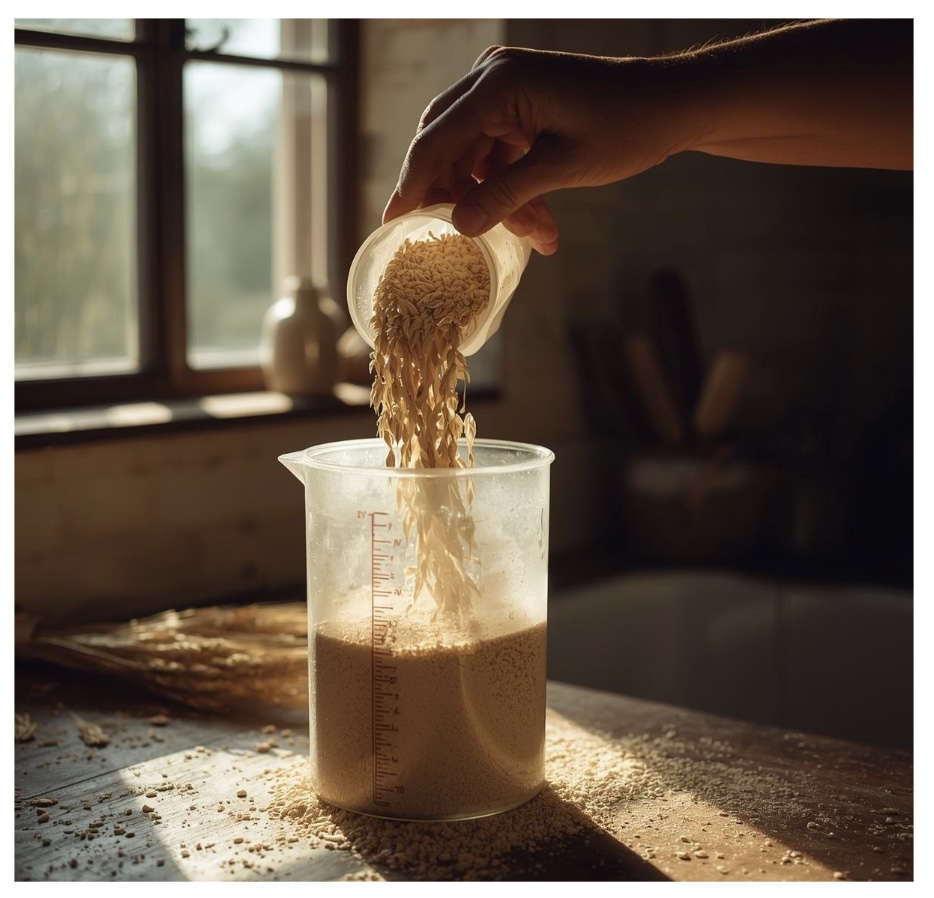
In the time of Jesus, workers were often paid not only in coins but in grain — wheat or barley. When a landowner was generous, he would fill the measuring container, press it down, shake it so that the grains settled, and pour more until it overflowed. Then he would pour it into the fold of the worker’s garment — because the hands were not enough to hold it. It was a sign of fullness. No shortage. No stinginess.
To give in that way requires a large heart. A heart that does not calculate too much.
Yet here comes our difficulty. Jesus says, “The measure you give will be the measure you get.” But our experience often tells us otherwise.
Jesus measured out mercy. He measured out forgiveness. He measured out love — pressed down, shaken together, running over. And what was measured back to Him? Rejection. Mockery. Crucifixion.
It was the same for Abel. He offered a worthy sacrifice — and was killed by his brother. Moses carried the people for forty years — and was not allowed to enter the promised land. Job lived uprightly — and was struck with suffering.
Often in life, the measure we give is not the measure we receive. How then are we to understand the words of Jesus?
If love is returned exactly as we give it, it becomes a transaction. “I give, you give — account settled.” That is business, not mercy.
But when love is given without return, something divine happens. We begin to resemble the Father. No one can repay God. God gives because He is mercy.
Jesus begins today’s Gospel with these words: “Be merciful, just as your Father is merciful.” That is the true measure. Not the measure of human fairness, but the measure of divine compassion.
Even on the Cross, Jesus continued to measure out forgiveness: “Father, forgive them.” His measure did not shrink in suffering. It expanded.
In the first reading, the prophet Daniel confesses on behalf of the people: “We have sinned, we have done wrong.” Yet he proclaims something greater: “To the Lord our God belong mercy and forgiveness.” That is God’s measure — mercy greater than sin.
We may not be able to love as God loves. But we can try. We can widen our measure little by little.
To forgive when it is not deserved. To give without calculating return. To show kindness even when misunderstood.
But generosity also requires wisdom. The generous landowner used a measuring basket. He did not simply throw the whole sack away. Mercy is abundant, but it is not foolishness. Love must be large, but also steady.
Today, let us examine our measure. Is it narrow? Is it cautious? Is it wounded? Or is it widening?
If we measure out mercy “pressed down, shaken together, running over,” we may not always receive the same from others. But we will become children of the Father.
And in the end, it is not human hands that will measure us. It is the heart of God. May our measure grow — until it resembles His.
Fr Yesu Karunanidhi
Archdiocese of Madurai
Missionary of Mercy
 Yesu Karunanidhi
Leave a comment