Daily Catholic Lectio
Wed, 25 February ‘26
First Week of Lent, Wednesday
Jonah 3:1–10. Luke 11:29–32
Greater than Jonah
Today the Word of God places before us a striking comparison. Jesus says: “Something greater than Jonah is here.” And again: “Something greater than Solomon is here.”
To understand what this means, we must first understand Jonah. In Jewish tradition, the Book of Jonah is often read more as midrashic literature than as strict prophetic history. It is a teaching story. The name Jonah means “dove.” A dove is a symbol of peace. Yet the prophet who bears this peaceful name begins his story not with peace, but with resistance and anger.
The book revolves around three characters: Jonah, God, and the people of Nineveh. At the beginning, Nineveh is sinful, God appears angry, and Jonah refuses his mission. But by the end, something surprising happens: the people repent, God shows mercy, and Jonah—though still struggling—begins to confront God’s mysterious compassion. In a way, all three are converted.
Nineveh was the capital of the Assyrian Empire. In 723–722 BC, Assyria destroyed the Northern Kingdom of Israel. For Israel, Nineveh represented oppression, humiliation, and national trauma. The people carried anger and resentment toward that city. Jonah’s attempt to flee from God’s call reflects this historical wound. He did not want mercy for his enemies.
Through this story,
Israel had to learn three painful but necessary lessons: First, anger does not save; mercy does. Second, God’s ways are unique and beyond our comprehension. We cannot control divine compassion. Third, evil cannot always be eliminated immediately; sometimes we must learn to live in a broken world while trusting God’s justice.
Jonah eventually goes to Nineveh—but only the second time. He preaches reluctantly. He proclaims destruction. Yet even this minimal effort becomes the occasion of massive conversion. The entire city repents. Nineveh’s history can be divided into two parts: before Jonah and after Jonah. His word prevents destruction.
Now Jesus enters the scene in today’s Gospel. His contemporaries ask for a sign. They want proof. They want spectacle. Jesus refuses. Instead, he gives them two signs: Solomon and Jonah.
Solomon represents wisdom. The Queen of the South travelled a long distance to hear him. Jonah represents prophetic preaching that moved an entire city to repentance. But Jesus declares: “Something greater than Solomon is here.” “Something greater than Jonah is here.”
Why is Jesus greater?
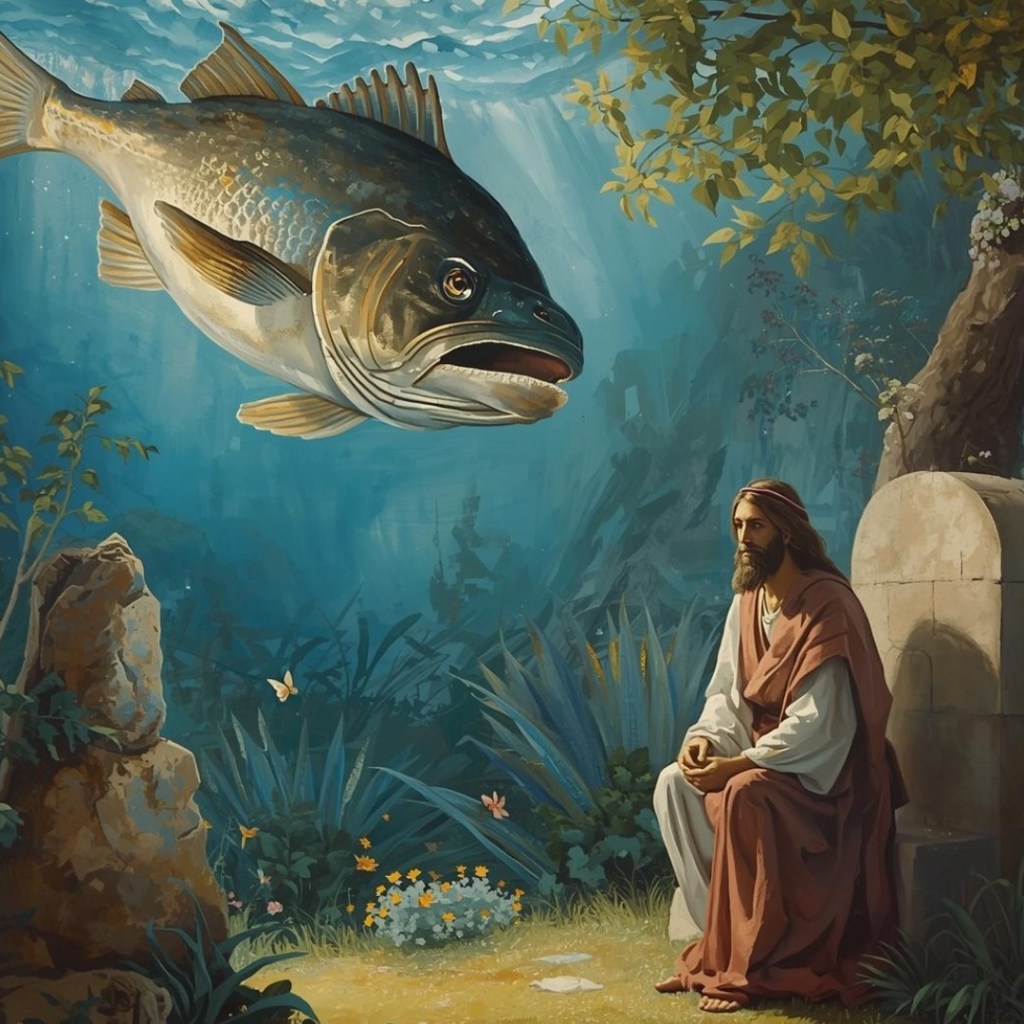
Jonah accepted his mission only after resistance; Jesus embraces his mission from the beginning. Jonah preached reluctantly; Jesus proclaims with love and authority. Jonah announced destruction; Jesus announces life. Jonah walked through Nineveh in haste; Jesus walks patiently among the poor, the sick, the rejected. Jonah offered a warning; Jesus offers salvation. Above all, in the time of Lent, Jonah’s being in the stomach of the fish represents Jesus’ in the tomb.
He is not merely a prophet. He is not merely a wise teacher. He is God’s wisdom incarnate. He is God’s mercy in action. And yet—like Jonah’s generation, like the contemporaries of Jesus—we too often ask for signs.
This leads us to two essential questions.
First: Is my faith still based on signs? Do I believe only when prayers are answered as I expect?
Only when miracles occur? Only when life goes smoothly? The people of Nineveh repented at the preaching of Jonah—a reluctant prophet. The Queen of the South believed because she heard Solomon’s wisdom. But those who stood before Jesus, the living Word, refused to believe. Faith does not begin with spectacle. It begins with openness of heart.
Second: Who is Jesus for me today? Is he only a teacher? Only a moral example? Only a religious figure of the past? Or is he truly greater than Jonah in my life? Greater than Solomon? Is he the decisive voice that divides my life into before Christ and after Christ? Nineveh had a turning point. Do I?
Lent is precisely this moment. A dividing line. A call to conversion—not superficial, but deep and generous. Jesus, greater than Jonah, does not simply ask for small adjustments. He desires a great conversion—a big-hearted transformation.
Jonah’s story teaches that mercy is stronger than anger. Jesus’ life reveals that mercy is stronger than death. If we still seek signs, we may miss the greatest sign already given: Christ himself—crucified and risen.
Today, the One greater than Jonah stands before us—not in spectacle, but in simplicity: in the Word proclaimed, in the Eucharist celebrated, in the poor who stand at our door.
Fr Yesu Karunanidhi
Archdiocese of Madurai
Missionary of Mercy

 Yesu Karunanidhi
Leave a comment