Daily Catholic Lectio
Sun, 18 January ‘26
Second Sunday in Ordinary Time
Isa 49:3, 5–6. 1 Cor 1:1–3. Jn 1:29–34
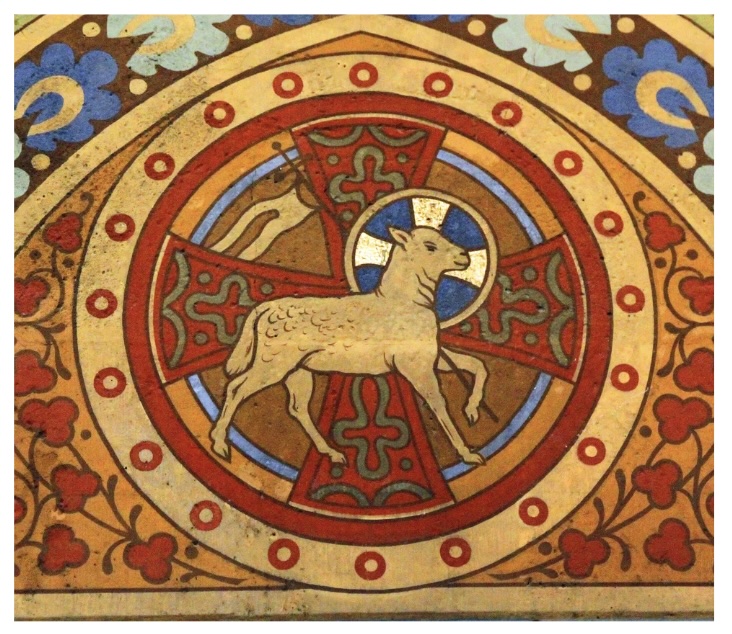
Behold, the Lamb of God
A question often raised in the search for the historical Jesus is this: Did Jesus know who he was from the beginning, or did he grow into that awareness? Closely linked to this are two deeply human and existential questions: Who am I? and For whom am I? Pope Francis reminds us that these two questions shape a meaningful life (cf. Christus Vivit, 286). The Sundays that follow Christmas help us enter precisely into this journey of identity and mission.
The three Sundays after Christmas are often called Sundays of revelation. On the feast of the Epiphany, Jesus is revealed as light to the nations. On the feast of the Baptism of the Lord, the Father reveals Jesus as the beloved Son. Today, John the Baptist reveals Jesus as “the Lamb of God.” Revelation unfolds gradually—through events, relationships, and witness. Identity is not imposed; it is discovered.
In today’s Gospel, John the Baptist points to Jesus and says, “Behold, the Lamb of God.” This declaration also clarifies the relationship and difference between John and Jesus. John is not the light; he is the witness to the light. He baptises with water; Jesus baptises with the Holy Spirit. John prepares; Jesus fulfils. True witness never draws attention to itself but directs others to Christ.
The title “Lamb of God” is rich and layered.
First, it recalls the Paschal Lamb of Exodus 12. The blood of the lamb marked the houses of Israel and became the sign of liberation from slavery. Jesus, the true Paschal Lamb, offers freedom from the deeper slavery of sin and fear.
Second, it echoes the Day of Atonement (Yom Kippur) in Leviticus 16. Two animals are central: one is sacrificed; the other carries the sins of the people and is sent away into the wilderness. In Jesus, both meanings converge. He bears sin and removes it. He is both sacrifice and bearer.
Third, the Lamb is inseparable from the image of the Good Shepherd. Jesus himself says, “The good shepherd lays down his life for the sheep” (Jn 10:11). The Lamb is not weak passivity; it is chosen self-giving love.
John says in the Gospel that Jesus “takes away the sin of the world.” In the Mass we say, “the sins of the world.” The difference matters. Sin refers to the broken condition of humanity—the power that alienates us from God. Sins refer to our concrete, personal failures. Jesus heals both: the condition and its expressions. He restores relationship and forgives personal guilt.
The first reading, from the Second Servant Song, deepens this vision. The servant—whether Israel, the prophet, the king, or ultimately Christ—is formed, chosen, valued, and accompanied by God. His mission is not narrow but universal: to be light to the nations. The Second Vatican Council takes up this image and calls the Church Lumen Gentium—the light of the peoples. The Lamb becomes light.
In the second reading, Paul introduces himself as an apostle and proclaims Jesus Christ as Lord of all. Faith is never private possession; it is always proclamation. The responsorial psalm places the right response on our lips: “Here I am; I come to do your will.” Identity leads to mission. Knowing who we are shapes what we live for.
Three simple lessons emerge for us today.
First, we must wrestle honestly with the questions: Who am I? For whom am I? We will not receive a voice from heaven as Jesus did. Our answers unfold slowly—early, midway, or even late in life. But without facing these questions, life remains fragmented.
Second, what is my proclamation of Jesus? Ours is a secularised and often de-Christianised world. God is not easily spoken of in public. Yet, in the depth of our hearts, we must be able to say who Jesus is for us—not loudly, but truthfully.
Third, can we accept the Lamb? We admire lions, horses, and elephants—symbols of power and control. We like to be called strong, dominant, successful. But would we accept being called a lamb? The Lamb heals not by force but by self-giving. At the same time, being lamb-like does not mean cultivating a victim mentality. Jesus remains free and sovereign: “No one takes my life from me; I lay it down freely” (Jn 10:18). True meekness is strength under control.
Every time we say at Mass, “Lamb of God,” we are not only naming Jesus; we are praying for inner freedom—the freedom to know who we are, to know who God is, and to live our lives with clarity, courage, and love.
Behold, the Lamb of God. In him, identity becomes mission, weakness becomes healing, and surrender becomes true freedom.
Fr. Yesu Karunanidhi
Archdiocese of Madurai
Missionary of Mercy
 Yesu Karunanidhi
Leave a comment