Daily Catholic Lectio
Sun, 11 January ‘26
Feast of the Baptism of our Lord
Isa 42:1–4, 6–7. Ac10:34–38. Mt 3:13–17
I Will Hold Your Hand
The image of a father holding a child’s hand while crossing a busy road helps us understand today’s feast. The child does not know traffic rules or dangers. She only knows one thing: whose hand she is holding. The father carries the responsibility; the child carries trust.
This is exactly the image Isaiah gives us in the first Servant Song. God says to the servant:
“I will hold your hand.”
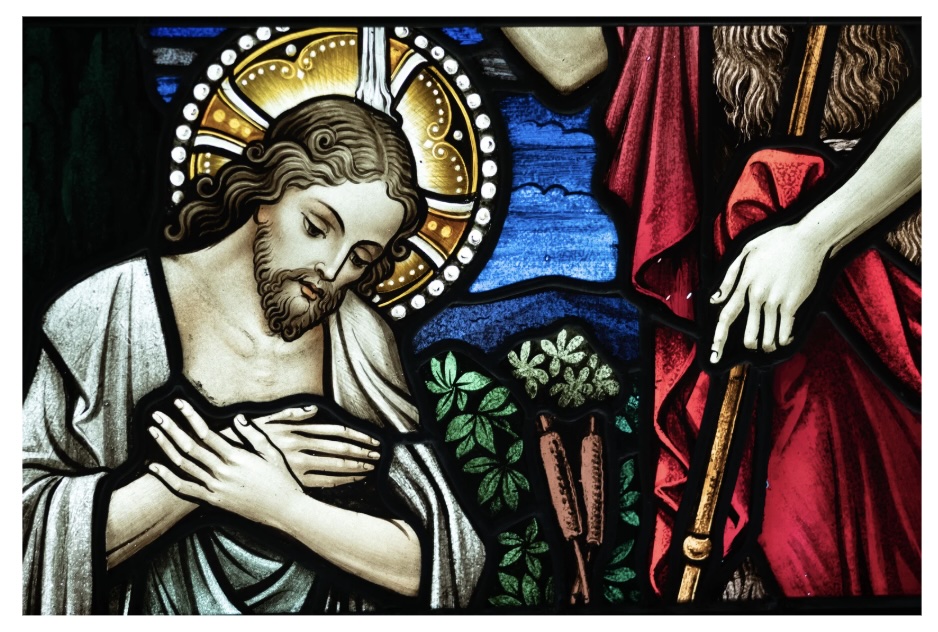
Today, on the Feast of the Baptism of the Lord, we celebrate a moment that reveals who Jesus is—and who we are called to be. At the Jordan, Jesus steps into the water. The heavens open. The Spirit descends. And the Father’s voice is heard: “This is my beloved Son, with whom I am well pleased.” This is a moment of revelation and foundation. From now on, everything Jesus will do—his preaching, healing, suffering, even the cross—flows from this truth: he is the Son, held by the Father.
Before speaking of mission, light, justice, or liberation, God speaks of relationship. The servant’s strength does not come from skill or power, but from being held by God. At the Baptism of the Lord, Jesus is revealed as that Servant. When Jesus steps into the Jordan, he is not beginning with action but with belonging. The heavens open, and the Father’s voice declares: “This is my beloved Son.” In other words: “You are not walking alone. I am holding your hand.”
This experience becomes the foundation of Jesus’ entire life. Every healing, every conflict, every moment of rejection, and even the cross will be lived with this certainty: the Father holds his hand.
The Bible is rich with this language of sonship. Israel is called God’s firstborn. The king is proclaimed God’s son at his anointing. The servant in Isaiah is chosen, upheld, and held by God: “I will take you by the hand.” In Jesus, this promise reaches its fullness. And through Jesus, it reaches us. By baptism, we are not servants driven by fear, but sons and daughters led by love. We dare to say, “Abba, Father.”
1. Holding on to the Hand of God
Isaiah’s servant is not asked to run ahead or prove himself. He is asked to walk with God.
Likewise, Jesus does not rush into ministry until this moment of assurance. For us, baptism means the same. We are not thrown into life to survive on our own. God does not push us from behind; he walks beside us. Many of our fears come from trying to cross life’s roads without holding God’s hand. Faith is not heroism; it is trust. When we hold God’s hand, responsibility shifts from anxiety to confidence.
2. An Inclusive Identity and Mission
Isaiah says the servant is called to be a light to the nations, not only to one people. God holds the servant’s hand not to protect him from others, but to send him toward others. This is confirmed in the second reading. Peter understands that God shows no partiality. Jesus, held and guided by the Father, goes about doing good for all. If God is holding our hand, then we cannot use that hand to exclude, judge, or divide. Holding God’s hand automatically opens our other hand to our brothers and sisters. Sonship creates family, not privilege.
3. Prayer and Discernment: Walking at God’s Pace
The Gospels tell us that Jesus was praying at his baptism. Prayer is where we feel God’s grip again. It reminds us that we are not dragging God into our plans; we are allowing ourselves to be guided. A child walking with a parent does not choose the speed or direction. That is the parent’s role. Prayer teaches us to walk at God’s pace, not ahead of him, not behind him. Without prayer, we panic. With prayer, we trust.
Conclusion
The title “I Will Hold Your Hand” is not sentimental. It is biblical, covenantal, and demanding.
It tells us who God is: a Father who guides. It tells us who Jesus is: the Servant-Son who trusts. It tells us who we are: children who must learn to walk by holding, not controlling.
Life is a busy road. God does not remove the traffic. He simply says: “Give me your hand.” When we accept that offer, responsibility becomes his, and life—like a child’s walk—becomes lighter, freer, and even joyful.
Fr. Yesu Karunanidhi
Archdiocese of Madurai
Missionary of Mercy
 Yesu Karunanidhi
Leave a comment