Daily Catholic Lectio
Sat, 27 December ‘25
St. John, Apostle & Evangelist – Feast
1 John 1:1–4; John 20:2–8
The Other Disciple
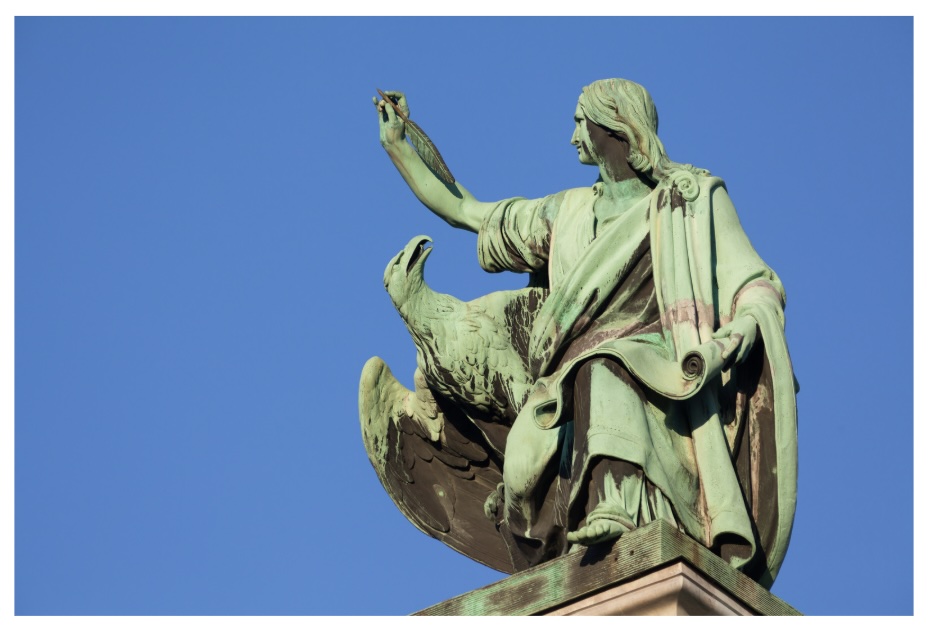
Today the Church celebrates Saint John, the Apostle and Evangelist—known in the Fourth Gospel not by his name, but by a relationship: “the disciple whom Jesus loved,” or simply, “the other disciple.” This anonymity is not accidental. John steps back so that Christ may stand at the centre. In doing so, he invites every believer to find a place within his story. The “other disciple” can be each one of us.
The readings help us see who this disciple is. In the first letter, John writes with confidence and tenderness: “What we have heard, what we have seen with our eyes, what we have touched with our hands… we proclaim.” In the Gospel, he runs to the tomb, sees the signs, and believes. John is not merely a recorder of events; he is a witness shaped by love, intimacy, and faith.
From John and his writings, we learn seven enduring lessons.
First, to live like the Good Shepherd. John presents Jesus as the Good Shepherd—an image of leadership rooted in care, responsibility, and self-giving. Life can be lived either like a shepherd or like a hired hand. The hired hand calculates, withdraws, and protects himself. The shepherd gives without counting the cost. John teaches us that true leadership—at home, in the Church, and in society—begins with personal responsibility and loving presence.
Second, discipleship shapes every area of life. To follow Jesus is not to add one more compartment to life. It is not like boarding a single train coach; it is like taking flight—everything changes. John remains a disciple in every circumstance: in intimacy at the Last Supper, in pain at the foot of the Cross, in hope at the empty tomb. Discipleship is total or it is not discipleship at all.
Third, Jesus always exceeds our understanding. Though John writes profoundly about Jesus, he ends his Gospel by admitting that the world itself could not contain all that could be written about Him. Jesus is not a problem to be solved, but a mystery to be lived. Faith grows not by mastering Christ, but by remaining open to His depth.
Fourth, the power of witness. John’s Gospel is filled with voices that testify: John the Baptist, Andrew, the Samaritan woman, the man born blind, Mary Magdalene. Faith spreads not through arguments alone, but through lived experience. John himself witnesses simply by saying, “I have seen and I believe.” Our own lives are meant to echo this quiet but powerful testimony.
Fifth, the power of dying in order to live. John weaves together glory and death. The Cross is not a failure; it is the hour of glory. Like the grain of wheat that must fall and die to bear fruit, John teaches that fruitfulness in life often passes through loss, sacrifice, and letting go. What we cling to dies sterile; what we surrender becomes life-giving.
Sixth, the power of abiding. “Come and see,” and “remain in me,” are key Johannine words. To abide is not to waste time; it is to allow transformation. In a world obsessed with speed and movement, John reminds us that depth comes from staying—staying with Christ, staying with His word, staying in love.
Seventh, the call to freedom. “For John, freedom is the highest human calling. “The truth will set you free.” Freedom here is not licence, but liberation—from fear, falsehood, sin, and inner chains. Christian life moves steadily toward this freedom, removing all that enslaves us within and without.
In the Gospel today, John runs faster than Peter, but he waits. He sees less, yet believes more. This is the mark of the “other disciple”: humility without rivalry, love without possession, faith without display.
To celebrate Saint John is to hear a quiet invitation: You too can be the other disciple.
If we live as shepherds and not hirelings,
if discipleship shapes all of life,
if we accept mystery, witness with courage,
embrace dying that leads to life,
abide faithfully, and walk toward freedom—
then we, too, take our place beside John.
May Saint John teach us to lean on the heart of Christ, to see and believe, and to become, in our own time and place, the other disciple whom Jesus loves.
Fr. Yesu Karunanidhi
Archdiocese of Madurai
Missionary of Mercy
 Yesu Karunanidhi
Leave a comment