Daily Catholic Lectio
Tue, 23 December ‘25
Christmas Novena – Day 7
Malachi 3:1-4, 4:5-6. Luke 1:57-66
God With Us
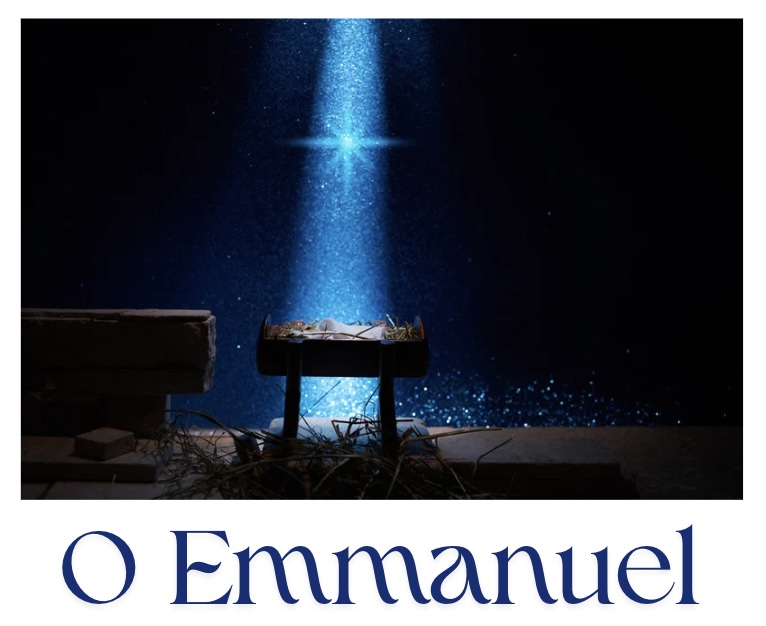
On this seventh day of the Christmas Novena, the Church places on our lips one of the most tender and consoling of the messianic cries: “O Emmanuel, come!”
This title touches the very heart of the Christian faith. Emmanuel means “God with us.” Not God above us, not God against us, not God far from us—but God who chooses to be present, close, and involved in our human story.
This promise first appears in the Old Testament, when the prophet Isaiah speaks to a frightened King Ahaz: “The virgin shall conceive and bear a son, and shall name him Emmanuel” (Isaiah 7:14). What was given as a sign in a moment of fear becomes, in the New Testament, a fulfilled reality. Matthew tells us that this prophecy finds its complete meaning in Jesus Christ (Matthew 1:23). God does not merely send help; He comes Himself.
1. God Comes in His Time and His Way (Malachi 3:1–4; 4:5–6)
The first reading from the prophet Malachi, the final book of the Hebrew Scriptures, prepares us for a turning point in history. Malachi speaks of two figures: (a) the Lord, who will suddenly come to His Temple, (b) and the messenger, who will prepare the way before Him.
This prophecy unfolds quietly but powerfully in the Gospel story. The Lord will indeed come to His Temple—not in majesty, but as a child carried in His parents’ arms (Luke 2:22). And the messenger is identified as John the Baptist, who comes “in the spirit and power of Elijah” (Luke 1:17).
What this teaches us is important: God keeps His word, but often not in the way or at the speed we expect. His promises ripen slowly, patiently, and always at the right time.
2. A Child Who Brings Joy and Questions (Luke 1:57–66)
In the Gospel, we witness the naming of John the Baptist. The moment Zechariah writes, “His name is John,” his tongue is loosened. Silence gives way to speech; doubt gives way to praise. Joy spreads among the neighbours, and a question arises on everyone’s lips: “What then will this child become?”
This joy surrounding John’s birth is not the destination; it is a preview. It prepares hearts for a greater joy—the coming of Emmanuel Himself. The birth of the forerunner awakens hope; the birth of the Messiah will fulfil it.
Here we see something beautiful: God’s nearness is often first experienced as joy—joy that stirs curiosity, faith, and expectation.
3. Emmanuel: God Truly With Us
At the centre of today’s “O Antiphon” is this profound truth: God chooses to be with us.
Yet our lived experience is often mixed. At times we feel: God is not with us — especially in suffering or disappointment. God will not be with us — when guilt or fear pushes Him away. God need not be with us — when self-sufficiency takes over. Or even, God is only with us — when faith turns into exclusion or rigidity. All these are distortions of Emmanuel. To live Emmanuel authentically is to believe that God is with us always, and therefore: we are never alone, hope is never exhausted, no situation is beyond redemption.
Emmanuel is not a theory; He is a presence. He walks with us in uncertainty, strengthens us in weakness, and comforts us in silence.
Conclusion
As Christmas draws near, the Church teaches us how to pray—not with fear, but with trust: “O Emmanuel, our King and Lawgiver, hope of the nations and their Saviour, come and save us, O Lord our God!”
May this final stretch of Advent renew our faith in a God who does not abandon, does not delay forever, and does not remain distant.
Emmanuel has come. Emmanuel is with us. Emmanuel will remain.
Fr. Yesu Karunanidhi
Archdiocese of Madurai
Missionary of Mercy
 Yesu Karunanidhi
Leave a comment