Daily Catholic Lectio
Thu, 18 December ‘25
Christmas Novena – Day 2
Jeremiah 23:5–8. Matthew 1:18–24
O Lord, Come!
As we journey through the Christmas Novena, the Church places before us, day by day, the great messianic titles of Jesus. After invoking Christ as Wisdom, today we reflect on the second messianic title with which we call Him: “Lord.” On this second day of the Novena, our prayer rises with clarity and trust: “Come, O Lord!”
This title, “Lord,” is not a polite form of address. In the faith of Israel, it is the sacred name of God Himself. Out of reverence, the people avoided pronouncing the divine name Yahweh and instead used “the Lord.” When the first Christians proclaimed, “Jesus Christ is Lord,” they were making a daring confession: the God of Israel has drawn near in Jesus. To call Jesus “Lord” is to acknowledge His authority, His presence, and His claim over our lives.
In the first reading, the prophet Jeremiah speaks to a people wounded by injustice and exile. They had been ruled by kings whose names spoke of God but whose lives denied Him. One such king was Zedekiah, whose name meant “the Lord is my justice,” yet whose unjust rule led the nation into Babylonian captivity. Human justice, detached from God, became a cause of bondage rather than freedom. Into this darkness, Jeremiah announces hope: “The days are coming… when I will raise up a righteous branch.” This future king will be called “The Lord is our justice.” No longer a justice imposed by power or convenience, but justice rooted in God Himself — a justice that restores, gathers, and saves. For a broken people, this promise becomes a prayer: Come, O Lord! Only the Lord’s justice can heal what human justice has wounded.
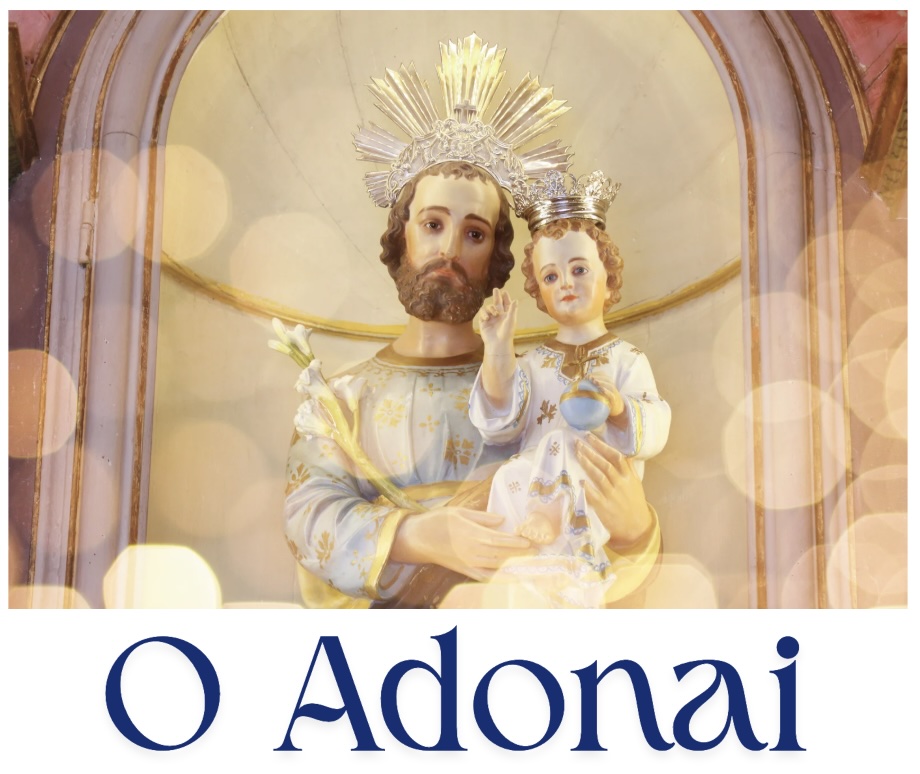
The Gospel shows how this promise begins to unfold quietly in the life of Joseph. Joseph has his own understanding of what is right. He is just and compassionate, and he plans accordingly. Yet God intervenes through a dream. Three times the word “Lord” echoes in the passage: the angel of the Lord appears; what the Lord spoke is fulfilled; Joseph does what the Lord commands. Joseph lays aside his plan and submits to the Lord’s will. His justice yields to the Lord’s justice.
Pope Francis, in Patris Corde, observes that nothing in Joseph’s life unfolded as he had planned, yet he accepted everything without complaint. His silence becomes his obedience. By surrendering control, Joseph becomes the one through whom Emmanuel — God-with-us — enters the world. The Lord comes home to humanity through the humble “yes” of a just man.
Today’s Word offers us two clear invitations:
First, human ideas of justice can enslave; the Lord’s justice liberates. Zedekiah’s justice led to exile; the Lord’s justice leads to return and restoration. Advent calls us to examine whose justice we follow — our own calculations or God’s will.
Second, to call Jesus “Lord” means more than belief; it demands surrender. If He is truly our Lord, then He must be allowed to guide our decisions, reshape our priorities, and rule our hearts. Only then will our confession and our life be one.
On this second day of the Christmas Novena, the Church teaches us to pray with humility and trust: Come, O Lord! Come and be our justice. Come and rule our hearts. Come and dwell among us.
May this Advent lead us, like Joseph, to set aside our own plans and welcome the Lord who comes — not to dominate, but to save.
Fr. Yesu Karunanidhi
Archdiocese of Madurai
Missionary of Mercy
 Yesu Karunanidhi
Leave a comment