Daily Catholic Lectio
Wed, 17 December ‘25
Christmas Novena – Day 1
Genesis 49:1–2, 8–10. Matthew 1:1–17
O Wisdom, Come!
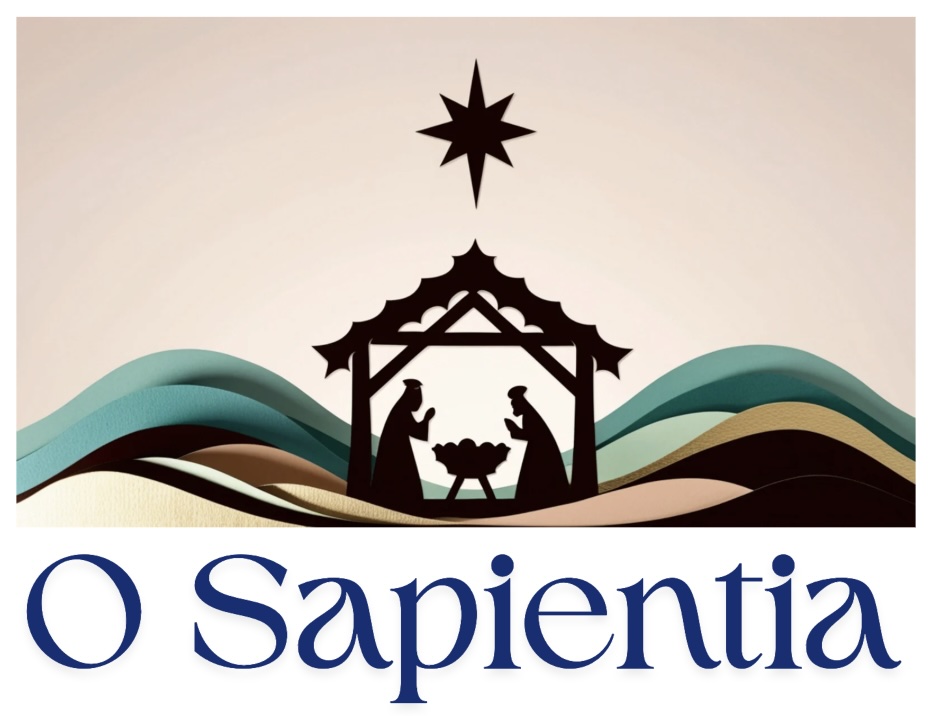
Today the Church begins the Christmas Novena and places on our lips the first of the great “O Antiphons”:
“O Wisdom, who came forth from the mouth of the Most High,
reaching from one end of the earth to the other,
ordering all things gently and mightily:
come, teach us the way of prudence.”
This cry is not poetry alone; it is a deep human longing. “O Wisdom, come!”—because without wisdom, knowledge becomes heavy, power becomes dangerous, and life loses direction.
1. Wisdom at Work in History (Genesis 49:1–2, 8–10)
In the first reading, Jacob blesses his sons. Among them, Judah receives a decisive promise:
“The sceptre shall not depart from Judah.” This blessing is not merely about political power. It is about God’s wise design unfolding through history. From a single family, through a fragile tribe, God prepares a kingly line that will culmin—not in domination—but in Jesus Christ, the eternal King. Wisdom works patiently. It does not rush. It chooses unlikely paths. It allows history, with all its failures and hopes, to become the place of salvation. What looks slow to us is often perfect timing in God’s wisdom.
2. Wisdom Written in Names (Matthew 1:1–17)
The Gospel gives us a long genealogy—names, generations, repetitions. We may be tempted to skip it. But this genealogy is a theology of wisdom. Matthew presents Jesus as: Son of Abraham – rooted in God’s promise, Son of David – heir to messianic hope, Christ – the Anointed One who fulfils history. Matthew carefully structures the genealogy in three sets of fourteen generations—a number of fullness and completion. This is not accidental. It shows that history is not chaos. It is shaped by Wisdom. Even more striking is who is included: Tamar, Rahab, Ruth, Bathsheba, Mary—women, sinners, foreigners, the unexpected. Wisdom does not erase human weakness; it works through it. God does not enter history through perfection, but through real lives.
The genealogy tells us: God sanctifies time by entering it. God becomes close by becoming one of us. God’s Wisdom is inclusive, patient, and merciful.
3. Jesus Christ: Wisdom Made Flesh
The “O Antiphon” we pray today echoes the voice of Scripture itself. Proverbs says: “Wisdom was with God at the beginning… beside him like a master worker.” And John’s Gospel proclaims: “All things came to be through him.”
Jesus is not merely wise. He is Wisdom. Not an idea, but a Person. Not a theory, but a life. This Wisdom does not dominate; it guides gently. It does not confuse; it orders lovingly. It does not distance God; it brings God near.
4. From Knowledge to Wisdom
We live in an age rich in information: knowledge, technology, even artificial intelligence. Yet wisdom is scarce. Knowledge tells us how to do things. Wisdom tells us why we live.
To pray “O Wisdom, come!” is to ask: Teach us the meaning of our lives. Show us how to choose well. Help us see God’s purpose in our family history, our struggles, our time. As God prepares to come among us at Christmas, He does not come as an answer to curiosity, but as Wisdom for life.
Conclusion
Today, at the threshold of Christmas, the Church teaches us how to wait: not with impatience,
not with noise, but with a humble prayer: O Wisdom, come! Come into our history. Come into our confusion. Come into our decisions.
May the Wisdom who shaped creation, guided Israel, and entered history through Jesus Christ,
teach us the way of truth, meaning, and fullness of life.
Amen.
Fr. Yesu Karunanidhi
Archdiocese of Madurai
Missionary of Mercy
 Yesu Karunanidhi
Leave a comment