Daily Catholic Lectio
Fri, 28 November ‘25
Thirty-Fourth Week in Ordinary Time, Friday
Daniel 7:2–14. Luke 21:29–33
You shall know!
The Scriptures today invite us into a journey of knowing—not merely knowing facts, but discerning God’s presence, God’s purposes, and God’s promises in the midst of life’s most complex realities.
1. Knowing in the midst of Confusion – Daniel’s Vision
Daniel sees terrifying beasts rising from the sea—symbols of violent empires and oppressive powers. These visions did not come true in Daniel’s own time. They were not predictions with a date; they were windows into God’s future, given to a people crushed under foreign domination. They are the hopes of a suffering community longing for freedom.
Oppressed people often imagine liberation; their dreams become a kind of wish fulfilment. Sometimes, even a self-fulfilling prophecy—the hope they speak gives them courage to rise again. Daniel’s visions carried that power.
But we must be careful. Many groups today read Daniel or Revelation as if they were straightforward predictions, forgetting the context in which they were written. Scripture must be read within its time, not lifted out of its history. God saving Daniel from the lions gives us hope, not an automatic guarantee. There are still many “Daniels” today who suffer, and we cannot say lightly, “An angel will rescue everyone.” The beasts of fear, violence, injustice still rise from the seas of our world, and many ask, “Where is the Ancient One today?”
The answer is not in predicting dates but in learning to read the signs.
2. Knowing through Discernment – Jesus’ Teaching
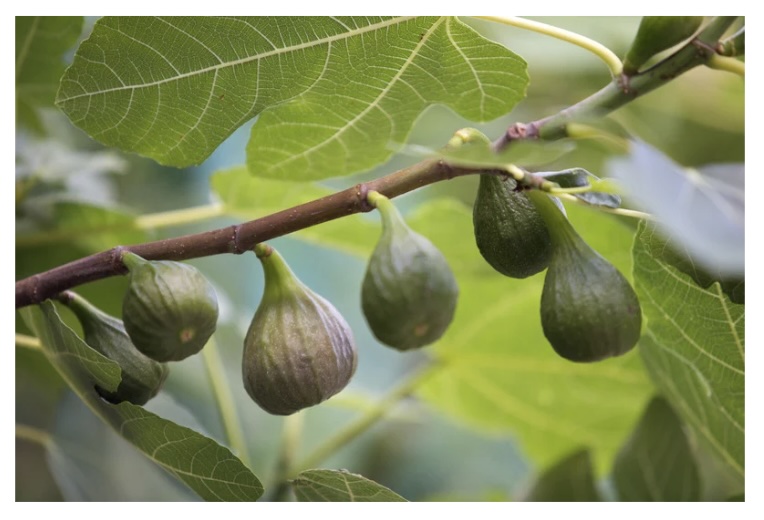
In the Gospel, Jesus invites his disciples: “Look at the fig tree… When you see the leaves, you know.” People in his time read the seasons by watching nature. Today, even with satellites and science, we often fail to read the deeper movements of life.
Jesus is clear: just as the seasons can be read, the spiritual seasons of the world can be read. The coming of the Son of Man is not meant to surprise the one who watches. Knowing the signs, however, requires three virtues.
3. First: To Know is to Discern
True discernment means weighing, separating, sifting. We must say: “Not this… not this…” until truth emerges. Like peeling layer after layer, we learn to recognise what is real, what is of God, what is merely noise. Discernment grows when our hearts are connected to our inner conscience, to the whisper of the Spirit.
4. Second: To Know is to See Cause and Effect
Nature moves in a rhythm: cause and effect. There is order beneath the seeming chaos. When something breaks that order—when grace intervenes—we call it a miracle. But ordinarily, life teaches us: actions have consequences. Choices shape destiny. Faith does not remove this law; faith helps us understand it with humility and hope.
5. Third: To Know is to Trust the Unfailing Word
“Heaven and earth will pass away, but my words will not pass away.” This is not poetry—it is a promise. Amid shifting powers, rising fears, and uncertain times, the Word of Christ remains steady. His Word sustains us. His Word wakes us. His Word prepares us to remain alert, aware, and ready.
A Call to Knowing
Today’s readings ask each of us: Do I discern the movements within my life? Do I understand the consequences of my choices? Do I rely on God’s Word as my true foundation? The beasts may roar, but they do not have the last word. The Ancient of Days still reigns. The Son of Man still approaches with glory. Christ’s Word still stands firm.
Fr. Yesu Karunanidhi
Archdiocese of Madurai
Missionary of Mercy
 Yesu Karunanidhi
Leave a comment