Daily Catholic Lectio
Sun, 23 November ‘25
Solemnity of Christ the King
2 Samuel 5:1-3. Colossians 1:12-20. Luke 23:35-43
The King Who Remembers Us
The Church concludes her annual journey by proclaiming Jesus as King of the Universe—a title majestic in sound, yet astonishing in meaning. For the King we honour today does not rule from a throne of gold but from the wood of the Cross. He remembers the forgotten, lifts up the broken, and calls even a dying sinner “friend.” He is the King who remembers us.
1. A Brief History of the Feast
The Feast of Christ the King is relatively recent. Pope Pius XI instituted it in 1925 through the encyclical Quas Primas. The world was reeling from war, nationalism, and rising totalitarian powers. Human leaders sought dominion through force and fear. In that turbulent moment, the Church declared boldly: Christ alone is King.
A King whose authority is truth, whose rule is love, whose power is service. Over time, the feast was moved to the last Sunday of the liturgical year, reminding us that all history moves toward Christ, and that His kingship is the final word on every human story.
2. The King Who Makes a Covenant to Remember
After years of civil conflict between Judah and Israel, the elders come to Hebron to ask David to rule over a united kingdom (First Reading). They recognise in him a shepherd, a leader who cared, protected, and remembered his people. David seals this moment with a covenant—an outward sign of mutual belonging and responsibility.
In Scripture, to make a covenant is to take upon oneself the duty to remember: to recall one’s promises, to be sensitive to the other, to remain faithful to the bond. Just as God remembered Noah and set the rainbow as a sign; just as He remembered Israel groaning under slavery and came down to deliver them—now David pledges to remember his people. A true king remembers.
3. Christ the Image of God and the Lord of All Creation
Paul offers us a majestic hymn, one of the earliest Christological songs of the Church (Second Reading). Christ is described as: the image of the invisible God, the firstborn of all creation, the head of the Church, and the reconciler of all things.
In Him, everything holds together. Through Him, everything is reconciled. At the heart of reconciliation lies remembrance—Christ remembers the fallen world, remembers our frailty, remembers our sin, and draws us back into communion with the Father. To reconcile is to remember. To remember is to take responsibility for the other. Our King remembers us unto salvation.
4. The King Whose Throne Is the Cross
Luke alone preserves this extraordinary dialogue between Jesus and the good thief (gospel reading). Below the cross, rulers mock Him—ironically using the very title that is true: “If you are the King of the Jews…”
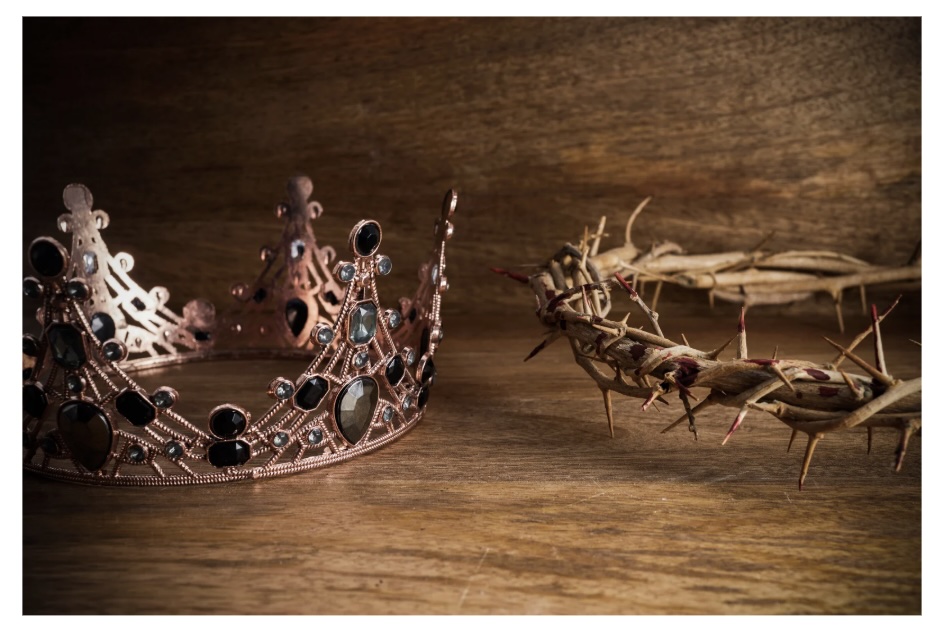
One criminal reviles Him, but the other, in weakness and humility, utters the most royal request in the Gospel: “Jesus, remember me when you come into your kingdom.” And the dying King, crowned with thorns, offers a royal decree: “Today you will be with me in Paradise.” This is His kingship: not domination, not spectacle, but remembrance. The One who refused the title when people wanted to make Him king now accepts it when a dying sinner pleads for mercy. The only person in Luke who calls Jesus by His name is this thief—and Jesus remembers him. Here, remembering is not nostalgia. It is salvation. It is royal authority expressed as compassion.
5. The Spiritual Meaning: Remembering as Responsibility
The little story of the boy in the ice-cream shop reminds us: anyone who remembers the needs of another becomes, in that moment, a king. Remembrance is a form of responsibility. It makes us attentive, sensitive, and generous.
But forgetting is the disease of our age: We forget the poor because we remember only ourselves. We forget promises because convenience becomes our guide. We forget God because we fill our hearts with noise.
Christ’s kingship is the antidote to this forgetfulness. He remembers: the lost, the sinner, the suffering, and the weak.
6. Accepting Christ as King
The question today is not, “Is Jesus the King?” The real question is: “Is He my King?” Like the good thief, we can only make this confession when we acknowledge our frailty. Strength does not make us remember God—brokenness does. Only the humble can say, “Lord, remember me,” and truly mean it. In a world that worships power, the thief recognised the true power of a powerless Christ.
7. The Call to Leadership Today
Whether in families, parishes, society, or public life, true leadership is not about authority but remembrance: remembering the weak, remembering our commitments, remembering our responsibilities. Where leaders forget, communities collapse. Where leaders remember, people flourish. Christ the King is the model of this remembrance-based leadership.
Today, as we celebrate Christ the King: let us remember our own fragility, let us ask Him to remember us, and let us allow His remembering to shape our responsibility toward one another.
The King who reigns from the Cross remembers every tear, every fear, every hope, every prayer whispered in the darkness. May His remembrance make us people who remember. And may His kingship lead us into the joy of Paradise—today and every day.
Fr. Yesu Karunanidhi
Archdiocese of Madurai
Missionary of Mercy


 Yesu Karunanidhi
Leave a comment