Daily Catholic Lectio
Sat, 22 November ‘25
Thirty-Third Week in Ordinary Time, Saturday
1 Maccabees 6:1–13. Luke 20:27–40
All are living
Today’s liturgy invites us to contemplate a profound truth at the heart of our faith: “All are living to Him.” Jesus speaks these words to the Sadducees—those who denied life after death—and reveals a horizon far greater than what they could imagine.
The Sadducees approached Jesus with a question meant to ridicule the resurrection. They invoked the ancient practice of levirate marriage, not out of devotion to the Law, but to trap Jesus with a hypothetical situation. For them, only the first five books of the Scriptures held authority; angels, spirits, and resurrection were dismissed. Their question, therefore, came from a worldview closed to mystery, confined to earthly logic.
Jesus does not merely answer them—He opens their eyes to the nature of life beyond death.
First, He says that in the age to come, there is no marrying or being given in marriage. Marriage, rooted in earthly continuity and family lineage, belongs to this world where death exists. But where death is no more, there is no need for succession. Life after death is not an extension of earthly life; it is a new mode of existence where mortality has no claim.
Next, Jesus adds that they will be “like angels,” not meaning disembodied spirits, but beings fully alive in God, beyond the limits of gender and earthly roles. Our identity in the resurrection is not defined by biological categories but by communion with God.
Finally, Jesus grounds His teaching in the very Scriptures the Sadducees accept. By citing Moses’ encounter at the burning bush—“I am the God of Abraham, the God of Isaac, and the God of Jacob”—He makes a stunning revelation:
God is not the God of the dead, but of the living.
If He names Himself as their God, it means they live in Him. They have died, yet they are alive—because God’s covenant never ends.
This truth shines through today’s first reading as well. King Antiochus, at the end of his life, realizes the emptiness of power, conquest, and pride. His earthly achievements cannot save him. Death unmasks the illusion of control and exposes what truly matters. The contrast is striking: even the mighty king fades, yet the humble patriarchs live forever in God.
What, then, does this message offer us?
1. Death gives meaning to our earthly journey.
Because our time is limited, we strive to live purposefully. The awareness that life here is passing urges us to cherish relationships, heal wounds, and do good while we can.
2. Resurrection gives direction to our hope.
If everything ended in the grave, human striving would collapse into despair. But we believe in a life that continues—renewed, transformed, eternal. This faith gives courage in suffering, patience in trials, and perseverance in love.
3. We are children of the living God.
Our identity is not tied merely to earthly markers. We belong to the One whose love defeats death. When we live as His children—seeking justice, embracing mercy, cultivating holiness—we begin even now to taste the life of the resurrection.
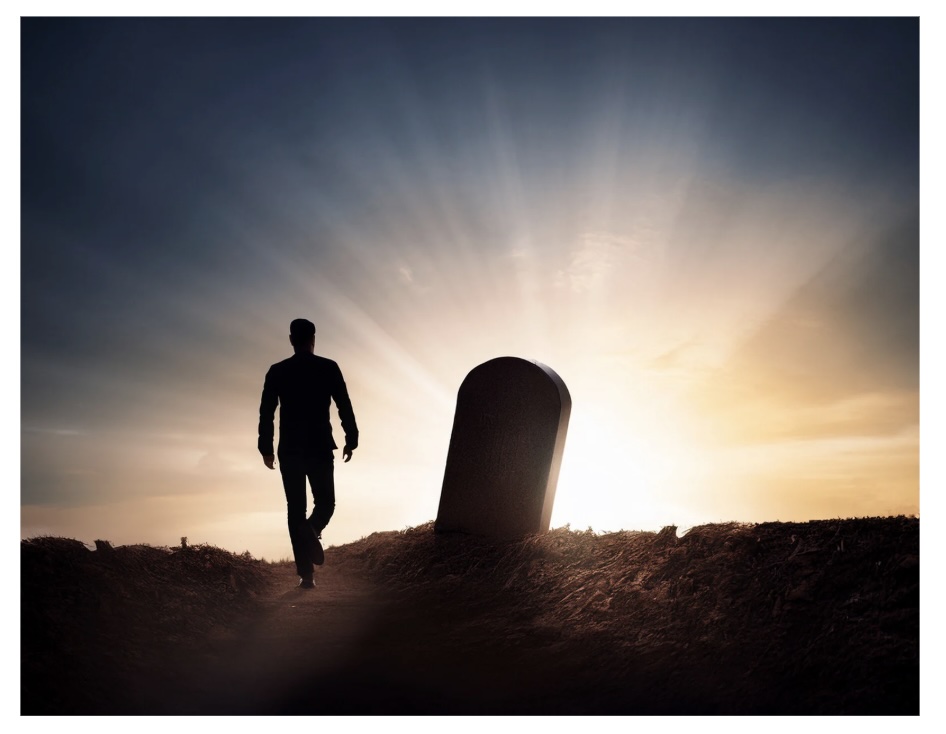
Jesus invites us to see beyond the boundaries of this world. All are living to God. Our loved ones who have gone before us are not lost; they live in His presence. Our own journey does not end in the soil of the grave but in the light of God’s face.
Let this conviction shape our days. Let it make us people of hope. Let it deepen our commitment to live well, love generously, and believe firmly. We profess each Sunday: “I believe in the resurrection of the body and life everlasting.” May this faith strengthen us until the day when we, too, will live fully in Him who is Life itself.
Fr. Yesu Karunanidhi
Archdiocese of Madurai
Missionary of Mercy

 Yesu Karunanidhi
Leave a comment