Daily Catholic Lectio
Fri, 21 November ‘25
Thirty-Third Week in Ordinary Time, Friday
1 Maccabees 4:36–37, 52–59. Luke 19:45–48
Jesus in the Temple
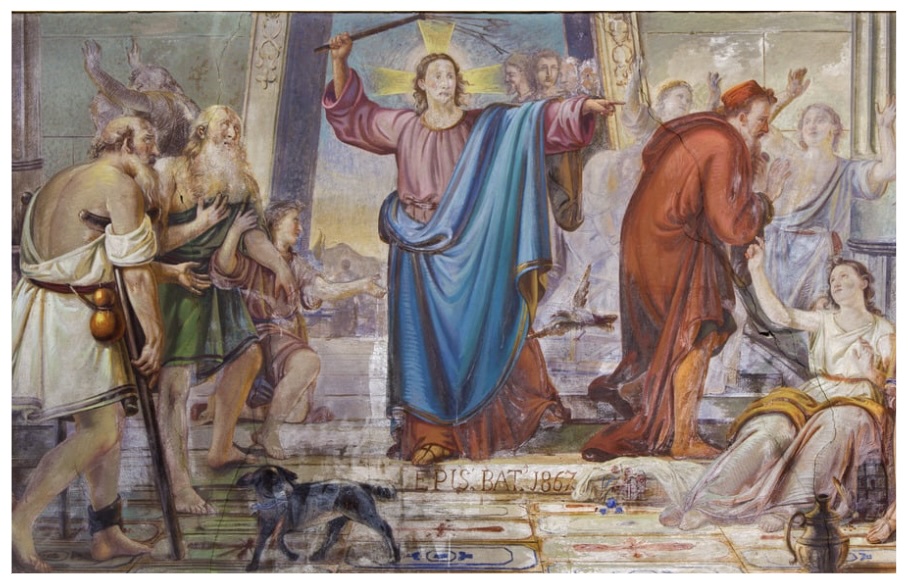
When Jesus approached Jerusalem in yesterday’s gospel reading, He wept over the city. Today, He steps into its heart—the Temple—and purifies it. The One who shed tears for Jerusalem now confronts its sin. His tears were a sign of love; His cleansing is a call to conversion.
The Gospels record this event with purpose. The Synoptic writers place it just before the Passion; John places it at the beginning of Jesus’ ministry. Either way, their message is clear: the Messiah comes to restore God’s dwelling. Jewish expectation held that when the Anointed One arrived, the Temple would be purified. Jesus’ act is not a moment of anger—it is a revelation of His identity.
At the same time, the Temple in His day had become an intersection of power, greed, and control. It was spiritually revered yet politically manipulated. Under the High Priest’s authority, temple-tax burdens fell on simple people. What was meant to be the house of God had slowly turned into a place of exploitation. So, when Jesus disrupts its system, His opponents immediately seek to destroy Him—because He touched their power.
Luke presents today’s Gospel in two movements: (1) Jesus drives out the traders, declaring the Temple to be a house of prayer. (2) His enemies plot His death, but cannot act, for the people cling to Him.
This dramatic moment invites us to three reflections.
1. Recovering the Lost Purpose
The Temple was built for worship, encounter, and communion. When that purpose was forgotten, everything became distorted. Saint Paul reminds us: “You are God’s temple.” If the purpose of the Temple was God’s dwelling, then the purpose of our life is the same. But purpose can drift. What clutters the inner sanctuary of our heart? What compromises have quietly settled in? What habits, resentments, or ambitions dim the light meant to shine within us? Jesus does not destroy the Temple; He restores it. He does not condemn us; He recalls us to our origin. His cleansing is mercy in action.
2. The Integrity of Teaching and the Teacher
Luke notes that Jesus taught daily in the Temple. People hung on His words because there was no gap between His message and His life. What He taught, He lived. There is an invitation here.
We listen to the Word; many of us preach the Word. Yet, why do contradictions linger? Why do our actions sometimes dilute our message? Jesus teaches in the open courtyard of the Temple. His life is His witness. His truth is His authority. The more our life aligns with the Word, the more the Gospel becomes credible—in our homes, ministries, communities, and relationships.
3. Moral Clarity without Compromise
Jesus embodies compassion. He heals, forgives, restores. Yet He never tolerates wrongdoing. He embraces sinners, but He confronts sin. In Him, mercy and truth meet. His action in the Temple is not violent rage; it is moral clarity. He challenges not people, but the structures of injustice. He refuses to let sacred space be dominated by greed. Do we make peace with the flaws we see within ourselves? Do we excuse patterns that diminish our spiritual integrity? Or do we allow Christ to cleanse us, heal us, reorder us? The path of discipleship is not self-condemnation—it is honest conversion.
A Temple Rededicated
The first reading recounts the rededication of the Jerusalem Temple after its desecration. That act became a celebration of fidelity, renewal, and joy. Today’s readings invite us to remember our own consecration—our baptismal calling to be living temples of God. The Lord enters the Temple of our heart not to accuse, but to renew. Not to shame, but to sanctify. Not to overthrow us, but to dwell within us.
Fr. Yesu Karunanidhi
Archdiocese of Madurai
Missionary of Mercy

 Yesu Karunanidhi
Leave a comment